
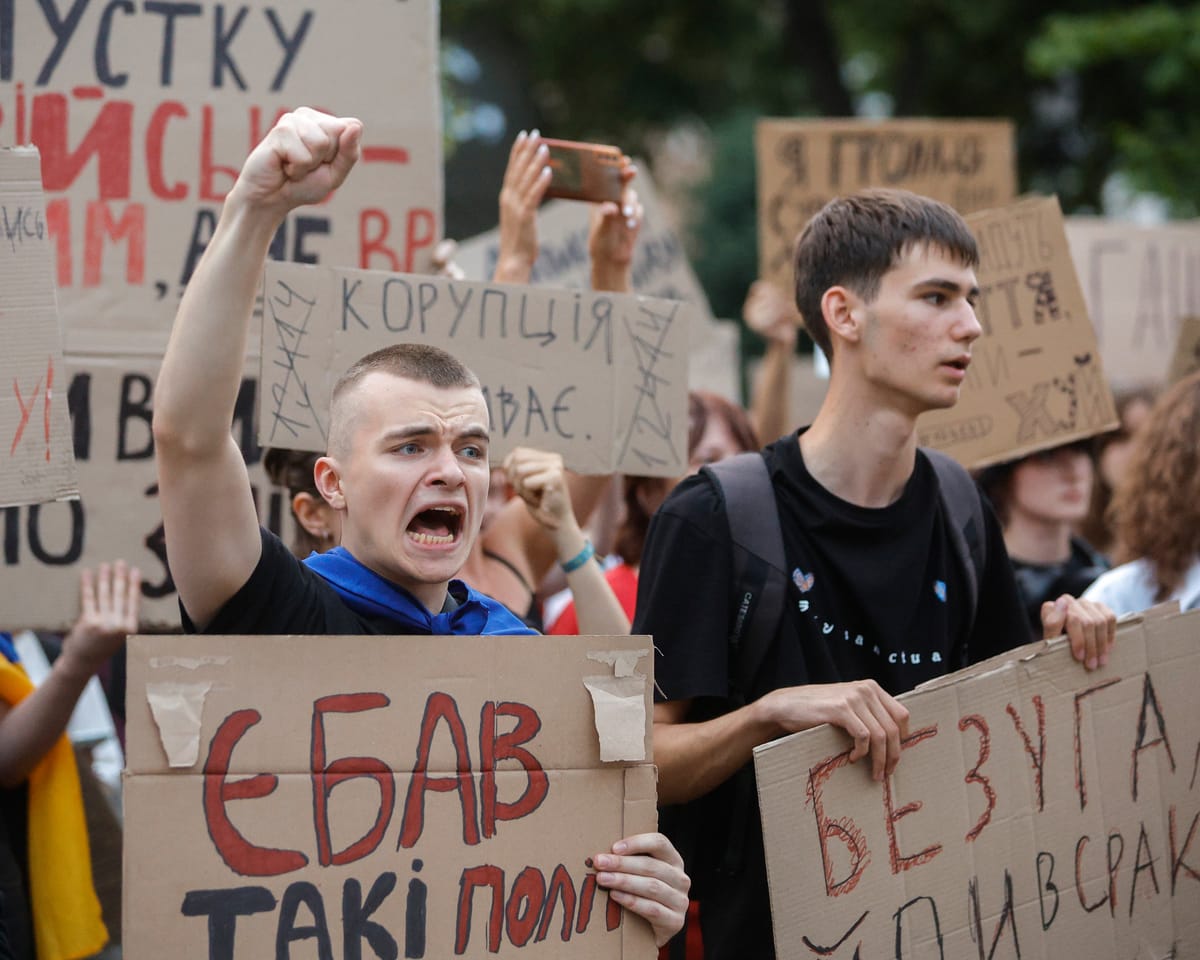
Ukraine’s parliament is set to vote on a new law Thursday aimed at reinstating the autonomy of two anti-corruption institutions, reversing a contentious measure enacted last week that weakened their authority and triggered widespread political unrest.
The recent legal adjustments led to rare public protests during wartime, with demonstrators criticizing President Volodymyr Zelenskyy and accusing his administration of shielding influential figures from corruption probes.
Thousands rallied in Kyiv and other cities, while European officials warned that financial support for Ukraine could be jeopardized if anti-corruption efforts were undermined. Responding to the backlash, Zelenskyy acknowledged the concerns late last week and pledged to introduce revised legislation.
“They clearly misjudged the intensity of the response,” said a foreign diplomat in Kyiv.
The agencies involved—Ukraine’s National Anti-Corruption Bureau (NABU) and the Specialized Anti-Corruption Prosecutor’s Office (SAPO)—operate separately from other law enforcement to tackle high-level corruption.
Speaking to journalists in Kyiv on Wednesday, SAPO chief Oleksandr Klymenko revealed that his office had received warnings about potential measures against them weeks earlier but was unprepared for the rapid legislative push that followed. He expressed hope that the new law would be swiftly approved and implemented.
Zelenskyy had justified last week’s law by claiming concerns over Russian infiltration within NABU and SAPO, as well as the need for better coordination between enforcement agencies. However, many dismissed these explanations as unfounded.
Klymenko avoided directly blaming Zelenskyy but called the move “retaliation” for pursuing sensitive cases, defending the agencies’ effectiveness.
“Suggesting these institutions are ineffective by 2025 is absurd. It’s a deliberate effort to undermine us, with plans to leak misleading information to the press,” he said.
Klymenko noted that NABU and SAPO are investigating 31 current lawmakers, deterring corruption among officials. “Our work’s primary impact is its preventive effect,” he added.
He warned that last week’s law, alongside the arrest of two NABU agents, had unsettled the agencies and could inflict long-term harm, even if the decision is overturned. He also reported that whistleblowers working with authorities have grown hesitant to cooperate.
The recent turmoil has deepened concerns over Ukraine’s commitment to fighting corruption amid its ongoing conflict with Russia. European leaders have emphasized transparency and reform as critical for continued support.
Speculation persists over whether the parliamentary vote will pass smoothly, given last week’s abrupt legislative maneuvers. Some lawmakers insist the reversal is necessary to maintain public and international confidence.
Meanwhile, civil society groups demand stronger safeguards for anti-corruption bodies to prevent future interference. The outcome could shape Ukraine’s reform trajectory and its standing with key allies.
Read next
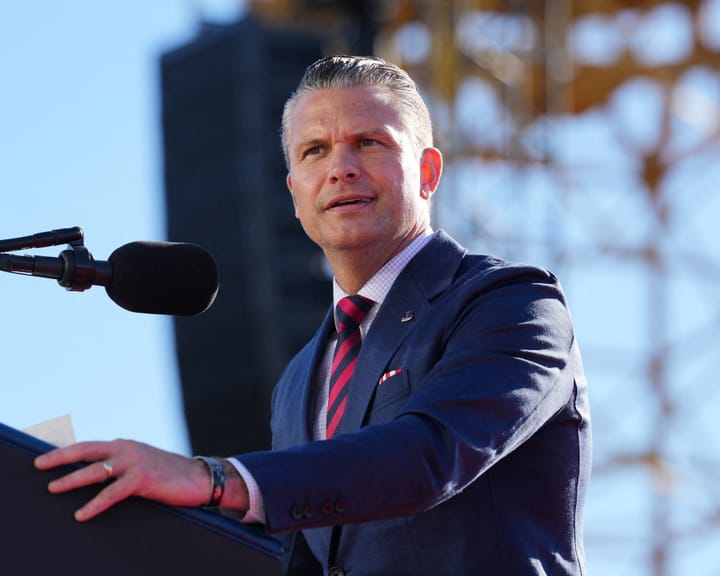
Pete Hegseth's proposal to stream executions aligns US with controversial nations.
If the US defense secretary, Pete Hegseth, proceeds with plans to livestream the execution of a soldier radicalized to extremist Islam, who killed 13 people at a military base in Texas, the US would join a group of lesser powers and rogue actors known for public executions in recent years.

Criminals steal €5m from renowned Italian winery
In a significant theft in Tuscany, thousands of wine bottles valued at €5 million have been stolen from the renowned Marchesi Antinori winery, marking what is considered the largest heist of its kind in Italy. A group of at least seven masked individuals breached the winery's cellar in

Illuminated Theater in Havana – A Photographic Journey
Widespread blackouts have become more frequent in Cuba since the US imposed energy sanctions in January. These outages often last longer than 24 hours as the aging electrical grid struggles to cope. The Impulso theatre group has been forced to adapt, as the power cuts present significant challenges for the