
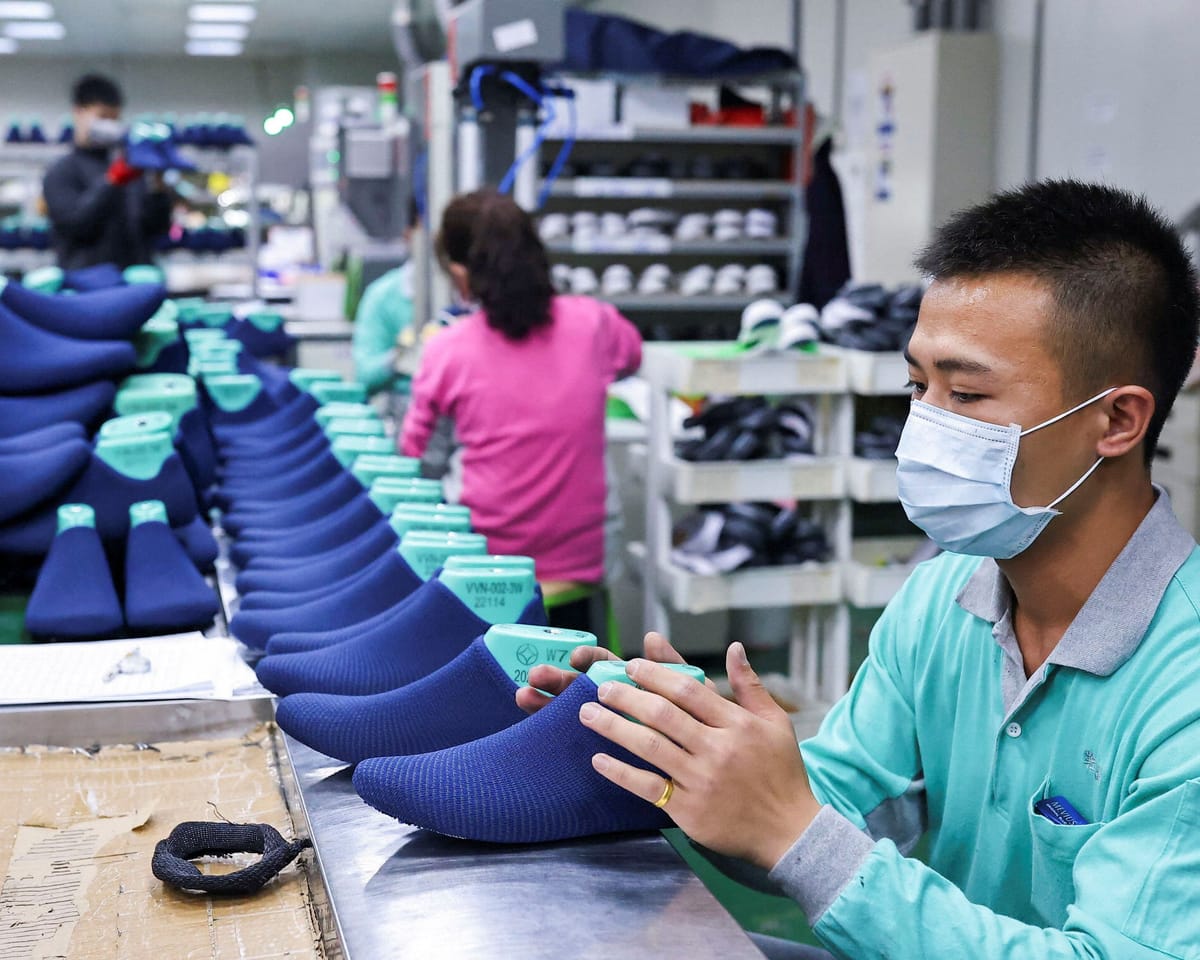
Factory Activity Declines Amid Trade Tensions
Manufacturing output across the Asia-Pacific region contracted last month as trade measures impacted demand.
Surveys of purchasing managers released today indicate a decline in production during August. In Japan, export orders fell at the steepest rate since March 2024, according to data provider S&P Global, with factory activity continuing to shrink.
Japan’s Manufacturing Purchasing Managers’ Index rose to 49.7 in August from 48.9 in July but remained below the 50-point threshold that separates growth from contraction.
Annabel Fiddes of S&P Global Market Intelligence noted:
"The latest PMI data suggests manufacturing conditions in Japan neared stabilization in August, supported by a slower decline in output. However, demand remained weak, with new orders continuing to drop slightly. The sharper fall in export business, declining at the fastest pace in nearly 18 months, was especially concerning."
New trade measures affecting Japanese goods took effect earlier in August, imposing a 15% levy on certain exports.
In South Korea, manufacturers reported persistent reductions in output and new orders last month, citing weaker domestic conditions and global trade instability. The country’s Manufacturing PMI edged up to 48.3 in August from 48.0 in July but still reflected a seventh consecutive month of deteriorating business conditions.
Taiwan’s manufacturing sector also weakened, with producers noting significant drops in production and new orders. Businesses reported declining demand both domestically and internationally, while uncertainty surrounding trade measures and global economic conditions further reduced confidence for the coming year.
Fiddes added:
"The latest PMI data shows Taiwan’s manufacturing sector remains under pressure due to weak global demand and ongoing uncertainty over trade policies. While the slowdown in output and orders was less severe than in July, the overall contraction remained pronounced. Many firms cited client hesitation in committing to new projects due to unclear trade policies."
China, engaged in trade negotiations, also faced continued uncertainty. Official data revealed that manufacturing activity contracted for the fifth consecutive month in August, with the factory PMI rising slightly to 49.4 from 49.3 in July.
The outlook for international trade remains uncertain amid ongoing tensions.
Read next
Jaguar Land Rover suppliers voice ‘everything is against us’ amid cutbacks
David Roberts, chair of Coventry-based Evtec, says the outlook for Britain’s automotive sector is grim, with “everything against us.” Evtec is a tier 1 supplier to Jaguar Land Rover, which this week announced 4,000 job cuts over two years despite chancellor John Healey’s attempt to talk
Europe’s fighter jet plans in disarray: what comes next?
When former ECB president and Italian PM Mario Draghi urged Europe to catch up economically with the US and China, defence collaboration was prescribed. No more should each nation build independent boats, tanks or jets; allies should share costs and technologies.
Europe stumbled at the first hurdle. German Chancellor Friedrich
John Healey supports growth but insists Labour must be truthful about spending
John Healey has stated that his primary goal as chancellor will be to boost economic growth, while acknowledging that Labour must be straightforward about controlling public spending at next month's budget.
In his first major address since assuming the role in July, Healey said the leading focus of