Rome's Gazometro to Host Major Digital Arts Festival Exploring Solar Energy and AI
Four-day Videocittà event brings together international artists, cutting-edge technology and environmental themes in the Italian capital
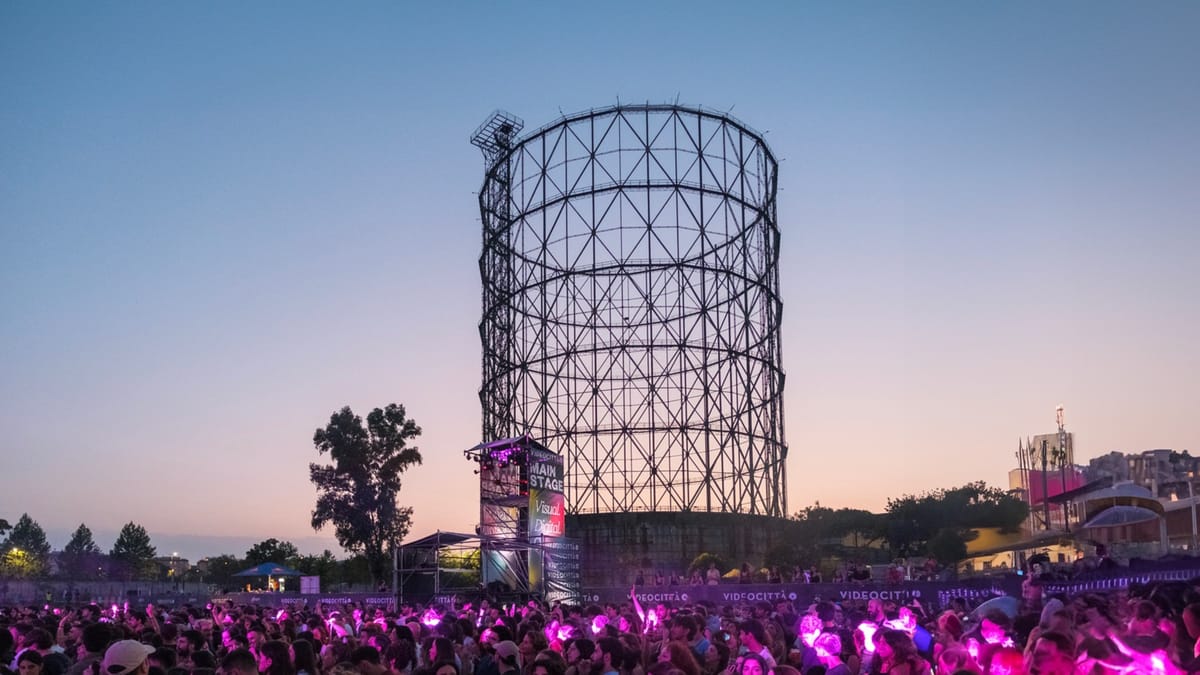
Rome's towering Gazometro will be transformed into a beacon of digital innovation this July, as the eighth edition of Videocittà festival takes over the industrial landmark for four days of experimental art, music and technology.
Running from 3-6 July, the festival has grown exponentially since its inception, attracting over 22,000 visitors last year alone – a 150% increase in ticket sales that has already led to early-bird passes selling out for 2025.
The event, conceived by Francesco Rutelli with creative direction from Francesco Dobrovich, has established itself as Europe's premier showcase for digital culture, consistently pushing boundaries in how art intersects with technology and environmental consciousness.
Sun worship meets digital art
This year's edition centres on solar energy as both artistic metaphor and environmental imperative, marking the 800th anniversary of Saint Francis's Canticle of the Creatures. The theme reflects growing urgency around climate change and sustainable energy solutions, filtered through the lens of contemporary digital art.
The festival's centrepiece installation, "Solar", will see renowned Roman artist Quayola envelop the iconic G4 Gazometro structure in an ever-changing light display. Inspired by crepuscular rays – those dramatic beams of sunlight that break through clouds – the work creates an endless cycle of digital sunrises and sunsets.
Energy giant Eni, the festival's main partner, is using the installation to demonstrate how different energy sources can be unified in continuous transformation processes. The company has opened its Gazometro complex, home to the ROAD technological innovation district, specifically for the event.
Music meets machine learning
The festival's musical programme reflects the growing intersection between human creativity and artificial intelligence. Thursday's opening night features Italian duo Fuse performing "Onirica live", a piece that explores bodily perception in dream states through real-time interaction between performers and AI systems.
Max Cooper, one of Europe's most acclaimed multimedia artists, returns to present material from his new album "On Being", while Victoria De Angelis – bassist from Eurovision winners Måneskin – will perform a DJ set enhanced with bespoke audiovisual content.
International headliners include Canadian electronic artist Caribou showcasing tracks from recent album "Honey", and Colombian-American performer Ela Minus, fresh from appearances at Coachella and Primavera Sound.
Artificial intelligence takes centre stage
Perhaps most significantly, Videocittà is positioning itself at the forefront of discussions around AI's role in creative industries. The festival will screen "ENO", described as the world's first generative documentary about ambient music pioneer Brian Eno.
Directed by Gary Hustwit, the film uses artificial intelligence to create a different version each time it's shown, producing what organisers call "an ever-evolving portrait" of the influential musician and sound artist.
Academic Simone Arcagni will lead discussions on "Artificial Intelligence Between Yesterday's and Today's Myths", while panels explore how machine learning is reshaping artistic practice and cultural production.
Virtual reality expansion
The festival has significantly expanded its virtual reality offerings, with over 100 headsets distributed across dedicated experience areas. Highlights include the Italian premiere of Jan Kounen's "Ayahuasca - Kosmic Journey", an interactive experience that transports users into hallucinogenic visions using cutting-edge VR technology.
French artist Adelin Schweitzer presents "#Alphaloop_VR", an interactive performance inspired by theories of cybernetic shamanism, while emerging talents showcase experimental works pushing the boundaries of immersive media.
Video art installations occupy the G3 Terrace, featuring Chinese artist LuYang making their Rome debut with "DOKU – Digital Descending" – a multimedia environment blending anime aesthetics, scientific imagery and religious iconography into what organisers describe as a "material video game-like world".
Industry connections
Beyond public programming, Videocittà operates AGORÀ, a professional platform that has facilitated over 1,000 business-to-business meetings and attracted participants from more than 15 countries. This year's edition runs on 2-3 July, featuring international buyers from the United States, Saudi Arabia and across Europe.
Notable attendees include Irini Mirena Papadimitriou, curator of Saudi Arabia's ambitious Diriyah Art Futures programme, and Suzanne Ball from CODAworx, a leading platform for public and integrated art commissioning.
Educational partnerships
Rome's creative institutions are deeply embedded in the festival. The European Institute of Design will present interactive video mapping directed by Lorenzo Raffi, alongside a fashion show featuring 2024/25 collections. Students from various programmes contribute to festival production, gaining hands-on experience in large-scale event management.
The festival continues to court controversy and conversation in equal measure, with organisers promising that this year's edition will challenge audiences to reconsider relationships between technology, environment and human creativity.
With climate change dominating global discourse and artificial intelligence reshaping creative industries, Videocittà's timing feels particularly prescient – a festival that doesn't simply showcase digital art, but interrogates what it means to be human in an increasingly automated world.
Tickets and programming information available at videocitta.com