
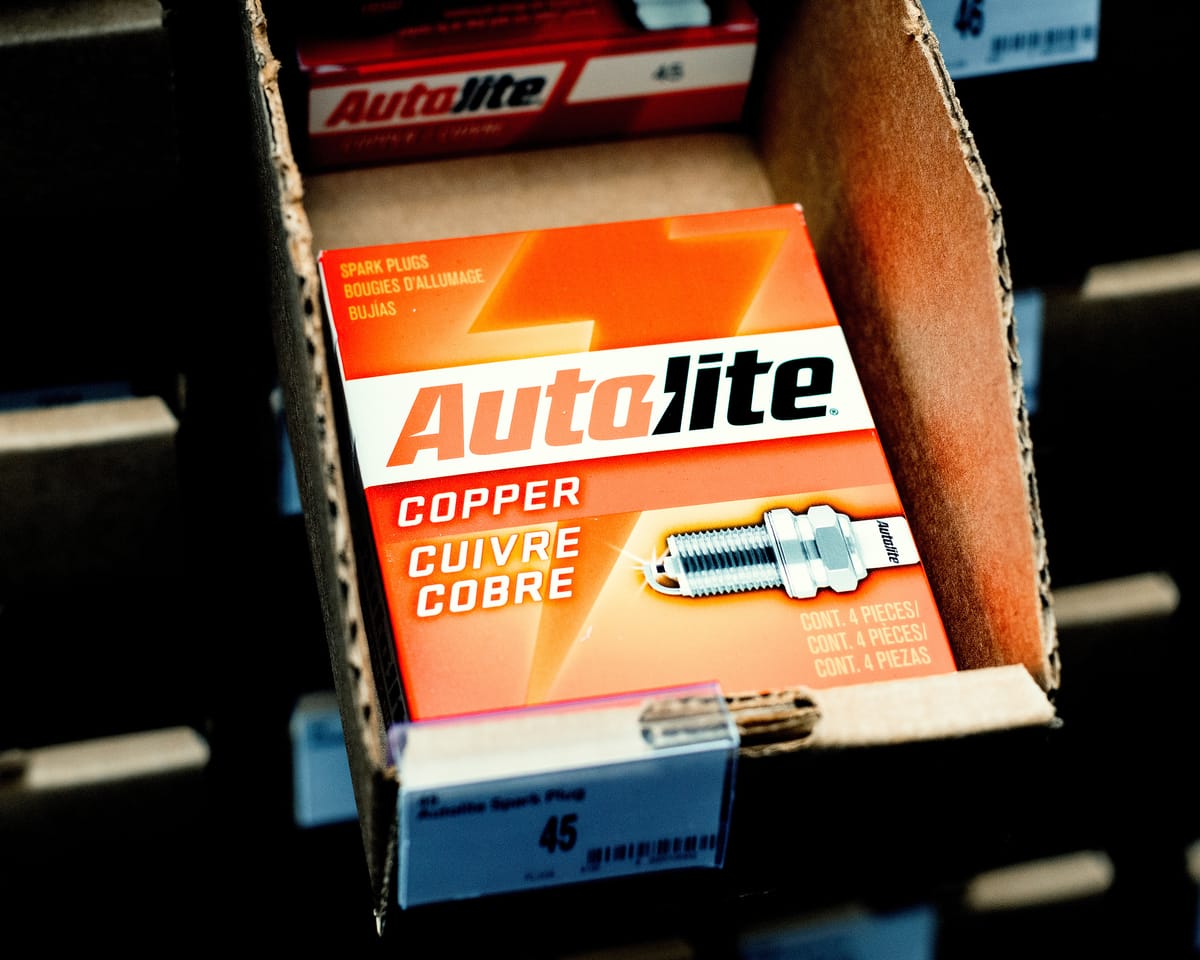
Financial Troubles at Auto Parts Maker Cause Concern on Wall Street
Recent financial difficulties at a major manufacturer of spark plugs, wiper blades, brake systems, and other automotive components have sparked significant unease among investors.
While car parts don’t typically alarm financial experts, the unfolding crisis surrounding First Brands—potentially involving billions of dollars—has created widespread apprehension.
As often happens in finance, uncertainty is the biggest fear. In the case of First Brands, many unknowns remain.
What is First Brands?
First Brands was established by Malaysian-born entrepreneur Patrick James. Originally named Crowne Group and based in Ohio, the company acquired Trico, known for windshield wipers, before embarking on a series of purchases of auto parts manufacturers, funded largely by debt. James rebranded the company as First Brands Group in 2020. Today, it owns 24 automotive-related businesses, according to its website.
“If your car is a decade old, there’s a good chance it already has parts from these companies,” observes the auto news site CarBuzz. “And they were likely much cheaper than those sold through dealerships.”
The business model seemed sound—so what went wrong?
What Caused the Collapse?
On September 29, the company filed for bankruptcy protection in the southern district of Texas amid concerns from creditors over its use of unclear off-balance-sheet financing. The filing listed liabilities between $10 billion and $50 billion, compared to assets valued at $1 billion to $10 billion.
The rapid unraveling of First Brands has unsettled investors, with each new revelation increasing their worry.
The company had maintained a reasonable cash reserve, but it also relied on private debt, often referred to as "shadow banking," borrowing against unpaid invoices. This allowed it to keep substantial debt off its balance sheets, transforming what was once an auto parts supplier into something closer to a financial services firm.
Such practices, known as factoring, are not uncommon. However, when the scale of these debts and their holders becomes unclear, trouble can escalate quickly. Similar issues contributed to the downfall of UK fintech Greensill Capital in 2021 and the collapse of London-based firm Carillion in 2018.
On Thursday, Raistone, a technology group involved in arranging some of First Brands’ off-balance-sheet financing, claimed that up to $2.3 billion had "simply vanished" as part of the auto supplier’s failure.
Jim Chanos, the investor who foresaw Enron’s collapse in 2001, noted in a statement that complex financial structures often thrive at the height of economic booms when enthusiasm runs high. “As long as everything appears to work, people don’t ask questions,” he said. “It’s only when something falters, or markets stumble, that everyone stops and realizes things don’t add up.”
Why the Concern on Wall Street?
Much like past financial crises—including the 2008 housing crash—the issues at First Brands have raised concerns that they might signal broader economic risks. Investors fear that hidden vulnerabilities in the financial system could be exposed, leading to wider instability.
Read next
Jaguar Land Rover suppliers voice ‘everything is against us’ amid cutbacks
David Roberts, chair of Coventry-based Evtec, says the outlook for Britain’s automotive sector is grim, with “everything against us.” Evtec is a tier 1 supplier to Jaguar Land Rover, which this week announced 4,000 job cuts over two years despite chancellor John Healey’s attempt to talk

Europe’s fighter jet plans in disarray: what comes next?
When former ECB president and Italian PM Mario Draghi urged Europe to catch up economically with the US and China, defence collaboration was prescribed. No more should each nation build independent boats, tanks or jets; allies should share costs and technologies.
Europe stumbled at the first hurdle. German Chancellor Friedrich
John Healey supports growth but insists Labour must be truthful about spending
John Healey has stated that his primary goal as chancellor will be to boost economic growth, while acknowledging that Labour must be straightforward about controlling public spending at next month's budget.
In his first major address since assuming the role in July, Healey said the leading focus of