
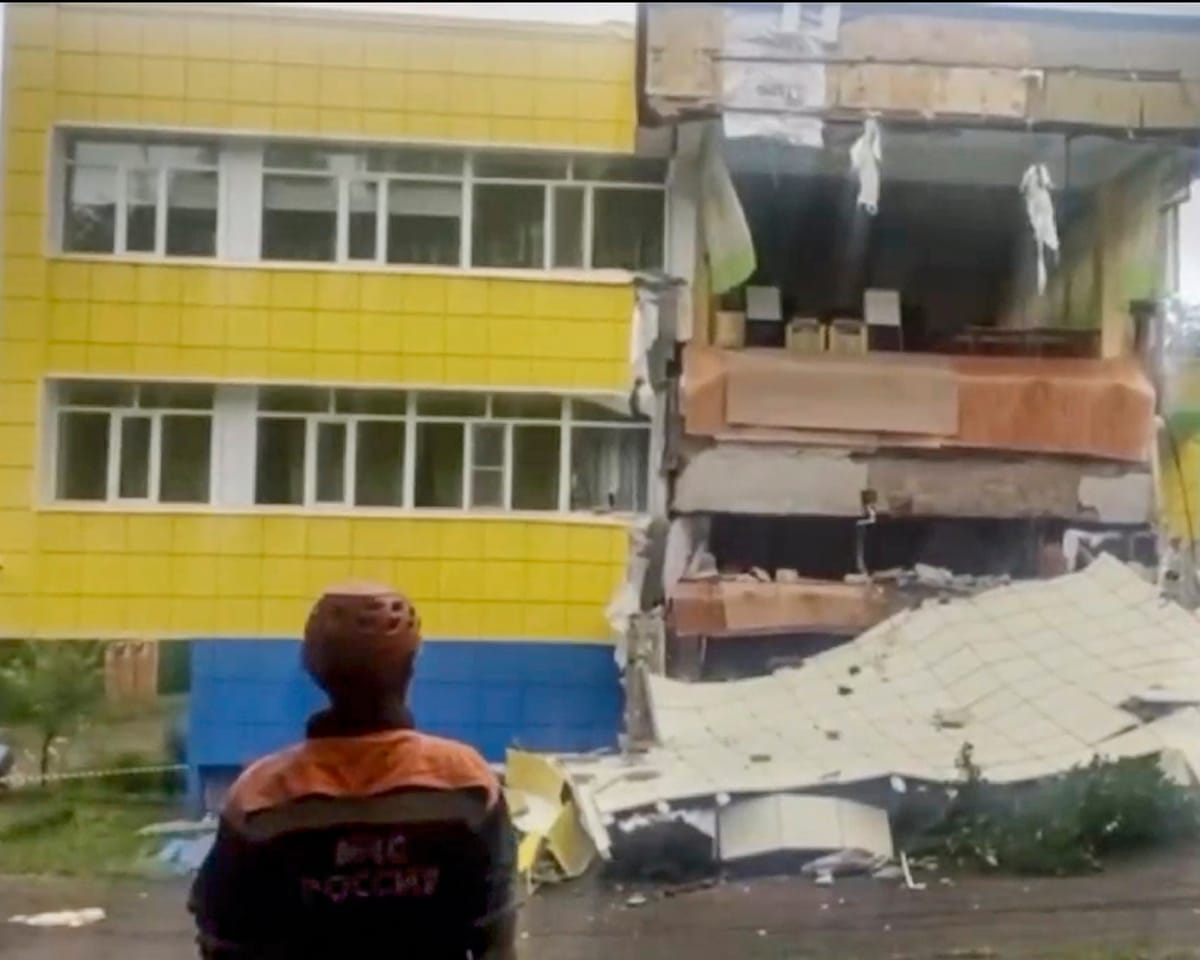
Powerful Earthquake Strikes Remote Russian Region, Triggers Tsunami Alert
On Wednesday, a massive earthquake, one of the strongest ever recorded, struck a thinly populated area in far-eastern Russia. The quake generated a tsunami that spread rapidly across the ocean, prompting urgent warnings for coastal regions, including Japan, Hawaii, and the western United States.
Authorities reported minimal damage so far, largely due to an efficient international disaster response. More than three million people were promptly advised to evacuate.
The Pacific Tsunami Warning Centre (PTWC) in Hawaii played a key role in the rapid reaction. Established in 1949, the center has been tracking ocean-wide tsunami threats since the 1960s. Experts quickly assessed the earthquake's magnitude and depth, issuing an alert immediately. The system operated smoothly, likely preventing major loss of life, with evacuated residents now returning home.
However, such efforts could face challenges. The PTWC is managed by a U.S. government agency that has seen budget reductions in recent years.
The 8.8-magnitude quake originated near Russia’s Kamchatka Peninsula, where the Pacific tectonic plate slides beneath the North American plate. This fault zone, spanning hundreds of kilometers, is among the planet’s largest, with sections underwater increasing tsunami risks.
The rupture occurred 30 miles (47 km) below the ocean’s surface, sending tremors across a 200-mile radius. Tsunami waves move at speeds nearing 500 mph—comparable to a jet—giving some coastal areas mere minutes to respond, while others had hours. Unlike dramatic depictions in films, tsunamis often consist of multiple waves that can circulate globally for days.
Assessing the Impact
The quake’s epicenter was close to Petropavlovsk-Kamchatsky, home to 180,000 people. Residents fled as ports flooded, while, 200 miles north, the Klyuchevskoy volcano erupted, sending lava down its slopes.
Maximum wave heights reached 4 meters (13 feet) in Kamchatka, with coastal structures in Severo-Kurilsk reportedly damaged. Officials confirmed no fatalities, crediting effective alert systems.
Evacuations and advisories spread across the Pacific, from Japan to Chile, though waves were smaller than initially feared. Hawaii recorded 1.8-meter surges, California saw waves just over a meter, and Japan observed swells below half a meter.
The response proved successful, but concerns remain over future emergencies if warning systems face further resource constraints.
Read next

Pete Hegseth's proposal to stream executions aligns US with controversial nations.
If the US defense secretary, Pete Hegseth, proceeds with plans to livestream the execution of a soldier radicalized to extremist Islam, who killed 13 people at a military base in Texas, the US would join a group of lesser powers and rogue actors known for public executions in recent years.

Criminals steal €5m from renowned Italian winery
In a significant theft in Tuscany, thousands of wine bottles valued at €5 million have been stolen from the renowned Marchesi Antinori winery, marking what is considered the largest heist of its kind in Italy. A group of at least seven masked individuals breached the winery's cellar in

Illuminated Theater in Havana – A Photographic Journey
Widespread blackouts have become more frequent in Cuba since the US imposed energy sanctions in January. These outages often last longer than 24 hours as the aging electrical grid struggles to cope. The Impulso theatre group has been forced to adapt, as the power cuts present significant challenges for the