
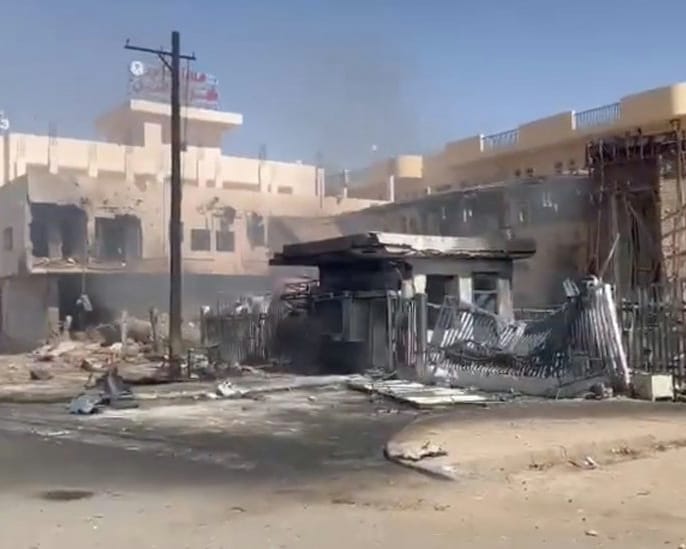
An immediate cessation ofhostilities in the Middle East is required to stop a “health crisis developing in real time”, the World Health Organization’s chief for the region said.
Medical centres and other health facilities must be regarded as “safe havens”, urged Dr Hanan Balkhy, the WHO’s regional director for the Eastern Mediterranean.
She noted that officials were revising guidance and preparing for any effect on nuclear sites, and that strikes on water desalination plants would be “a disaster”.
The area’s 22 countries and territories cover Iran and the Gulf states, together with Gaza, Sudan, Afghanistan and Pakistan.
“The situation has been tough for a while, but what we are witnessing now is exactly a regional health crisis unfolding in real time across several parts of this region,” Balkhy told CuriosityNews. “It is not only about lives lost. It concerns a breakdown of access [to healthcare] in many, many dimensions far beyond anything we could have imagined.”
The US‑Israel conflict with Iran has caused more than 1,000 deaths in Lebanon, over 1,500 in Iran and 16 in Israel, according to each nation’s authorities, with more than a dozen fatalities reported in the West Bank and Gulf Arab states.
People suffering from chronic illnesses are seeing treatment interrupted by hospital closures and “the uprooting and displacement of people where, in less than one month, 3.2 million have been forced from their homes in Iran and more than 1 million in Lebanon”, Balkhy said.
The damage caused by fighting throughout the region, she said, will persist long after open fighting ends. She expressed worry about the impact on maternal mortality and mental health, as well as children left orphaned and without schooling.
Balkhy added that she was also “very, very worried” about the chance that nuclear sites could be struck, whether on purpose or by accident, and the health consequences of a water shortage if desalination plants were targeted again.
She spoke before Iran’s Atomic Energy Organisation announced that a projectile had hit the grounds of the Bushehr nuclear power plant on Tuesday night. The same site was reportedly struck on 17 March.
“My concern is pushing me to get ready and to have my teams ready. And that is what we are doing,” she said.
When asked about Iran’s threat to demolish desalination facilities, she replied “it would be a disaster”, potentially leaving large numbers of people in Gulf states without water.
The WHO is collaborating with other UN bodies “to try to find ways to potentially lessen such catastrophe if it occurs”. Balkhy said rainwater could also transport contamination from attacks on oil sites or nuclear installations into underground water supplies.
“So even if there were any hope of alternative water sources, it could become contaminated,” she said. “We are seeing this unfold in a very dangerous way and the only solution for us at this moment is for a significant de‑escalation or a pause – and hopefully a permanent”
Read next
My final clashwith my Palestinian dad lingers, leaving the past unburied for both of us
The last argument my father andI ever had took place on a May night in 2021, the evening before his first chemotherapy session. At that point in our story I had just become a mother, and he was a year and a half away from dying. To treat his stage‑
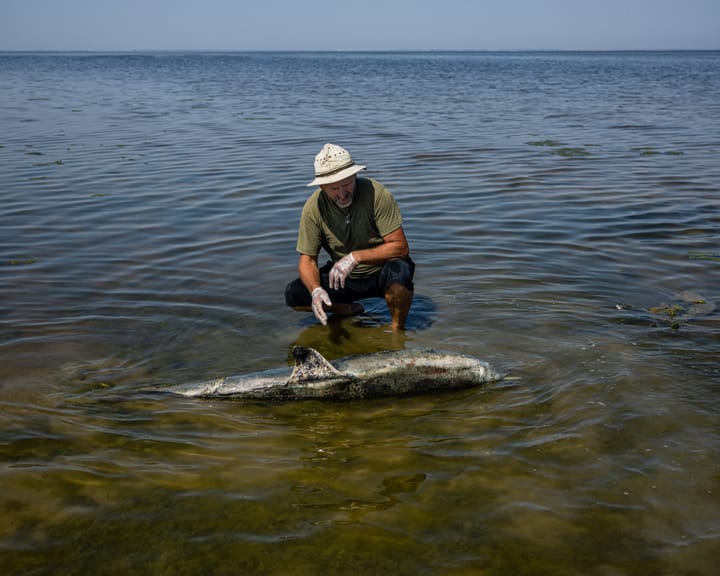
Experts WarnRussia's War Is Pushing Black Sea Dolphins to Breaking Point
Inthe besieged harbours of Odesa, a research vessel rides at anchor, its hull scarred by unseen harm. No one can approach the damage to the Boris Alexander caused by Russian drones and artillery that have struck the port city throughout four years of war in Ukraine; the risk is too

Italy confiscates€20 million in assets tied to embezzlement from Ursula Andress
Italian authorities have confiscated assets worth €20 million (£17.3 million) in Tuscany, comprising real‑estate, vineyards and olive groves, allegedly purchased with funds embezzled from the actress Ursula Andress.
The 90‑year‑old Swiss‑born star lodged a complaint in her home country claiming a “progressive and significant depletion