
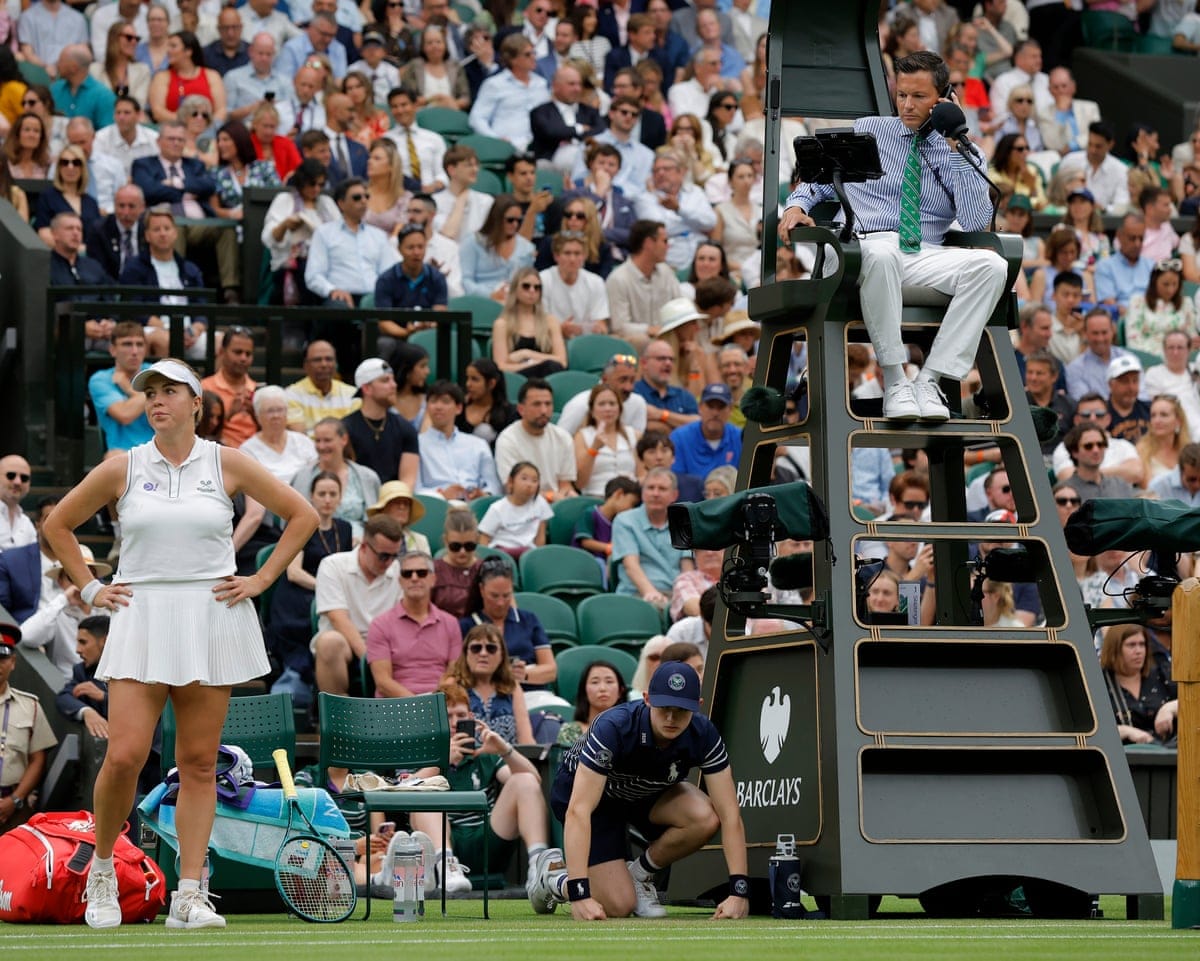
When Wimbledon officials revealed last year that manual line judges would be replaced by automated line-calling technology at this year’s Championships, some backlash was expected. Many raised concerns about the loss of human involvement in officiating, as well as the reduction of around 300 line officials. However, few could have predicted the intense scrutiny that followed the system’s introduction in the tournament.
Automated line-calling, which relies on ball-tracking technology, has been part of professional tennis for years, first introduced at the Next Gen ATP Finals in 2018. The Australian Open became the first major tournament to adopt the system four years ago, and this season, the ATP Tour has implemented it across all its events. While other clay-court competitions on the men’s tour also use the technology, the French Open remains the only Grand Slam to still rely on human line judges.
Despite hopes that this year would mark a smooth transition for Wimbledon, the All England Club has spent much of the tournament’s first week addressing controversies surrounding the system, which is supported by artificial intelligence.
Early in the event, the strongest criticisms came from British top players Jack Draper and Emma Raducanu, who both questioned the accuracy of calls after their losses. Raducanu expressed frustration, saying, “It’s disappointing when calls at a tournament like this can be so wrong. Most have been fine, but I’ve had a few in my matches that were clearly incorrect.”
Tournament officials insisted the technology was functioning correctly and emphasized its higher accuracy compared to human judges. The system used at Wimbledon, Hawk-Eye, relies on 10 cameras positioned around the court to track ball movement, with an error margin of 2.2mm. Previously, Wimbledon had only used the technology as an aid, allowing players to challenge calls made by line judges.
“It’s interesting—when we had human judges, people often asked why we weren’t using automated calls since they’re more precise,” said Debbie Jevans, chair of the All England Club, in a BBC interview.
However, a major issue arose on Centre Court during a match between Anastasia Pavlyuchenkova and Sonay Kartal. At 4-4 in the first set, a shot from Kartal landed out but was not flagged. After a delay, it was discovered that some of the tracking cameras on Pavlyuchenkova’s side had malfunctioned during the game. The umpire, Nico Helwerth, ordered the point to be replayed.
Read next

Weekly Sports Quiz: Focus on Harry Kane, Victor Wembanyama, and WSL Champions
Local Community Efforts Drive Environmental Change
In a small town nestled between rolling hills and dense forests, residents have taken it upon themselves to spearhead a movement aimed at fostering environmental sustainability. This grassroots initiative is drawing attention for its comprehensive approach to tackling ecological challenges.
At the heart of

France and US Reign in Rapid and Blitz at Pall Mall Masters Chess Event
Mastering chess in central London is uncommon, though the annual ChessFest in Trafalgar Square draws over 20,000 visitors.
In London's Pall Mall club scene, the RAC clubhouse has been the site for the Oxford vs. Cambridge Varsity match for nearly fifty years. In 2023, the Athenaeum hosted
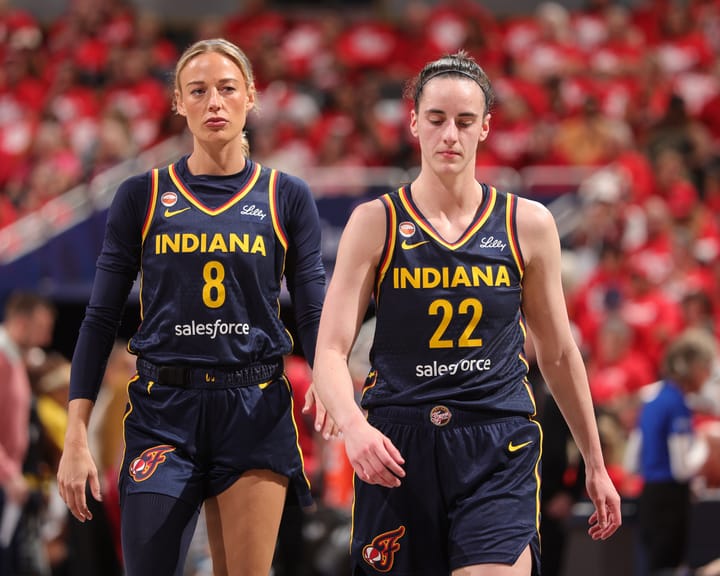
Indiana Fever and the Magasphere: A Risky Route to Fame for a WNBA Team
The Indiana Fever's season has concluded, marked by both its on-court performance and off-court controversies. Despite being eliminated by the Las Vegas Aces for the second consecutive year, the team has drawn significant attention, becoming a focal point in the WNBA this season.
The Fever'