

Elon Musk’s platform X will prohibit users from earning revenue if they repeatedly share AI‑generated war videos without labeling them, following a surge of fabricated battle footage related to the Iran conflict.
With roughly five hundred million monthly users, X will bar creators from receiving payment for ninety days when they post AI‑generated videos of armed conflict without a clear disclosure. A repeat violation will result in a permanent exclusion, the company announced Tuesday night, after the opening days of the Iran hostilities were accompanied by a flood of false online clips.
Feeds on X, as well as on Instagram and Facebook, have displayed many fabricated battle scenes, such as Iranian rockets chasing and downing a U.S. jet—a video that BBC Verify recorded as having been viewed 70 million times—and another clip that employed AI to swap genuine smoke from a missile strike with an exaggerated fireball.
Creators who attract followings near 100,000 can earn several hundred dollars monthly on X through its advertising system, a factor that encourages the creation of sensational viral content.
“In periods of conflict, reliable on‑the‑ground information is essential,” said Nikita Bier, head of product at X. “Current AI tools make it easy to produce misleading material. Effective immediately, anyone who uploads AI‑generated videos of an armed clash without a clear disclosure will lose access to revenue sharing for ninety days. Further breaches will lead to permanent removal from the program.”
Additional fabricated war videos have attracted large audiences. An Instagram clip claiming to depict a massive blaze after “Iran destroyed the U.S. airbase in Riyadh” was later identified as eighteen‑month‑old footage of the aftermath of an Israeli strike on an oil refinery in Hodeidah, Yemen.
Full Fact, a UK fact‑checking organization, noted that it is “increasingly seeing AI accelerate the spread of misinformation on social media.”
“In recent days we have encountered numerous AI‑generated images circulated on various platforms as if authentic, such as fabricated pictures of an aircraft carrier, the Burj Khalifa ablaze, and an alleged photo of Ayatollah Khamenei’s body,” said Steve Nowottny, editor at Full Fact. “Even when the AI output appears low‑quality or bears a watermark, it is still shared widely; the sheer amount of such false material and the ease of its creation and distribution pose a serious problem.”
Read next
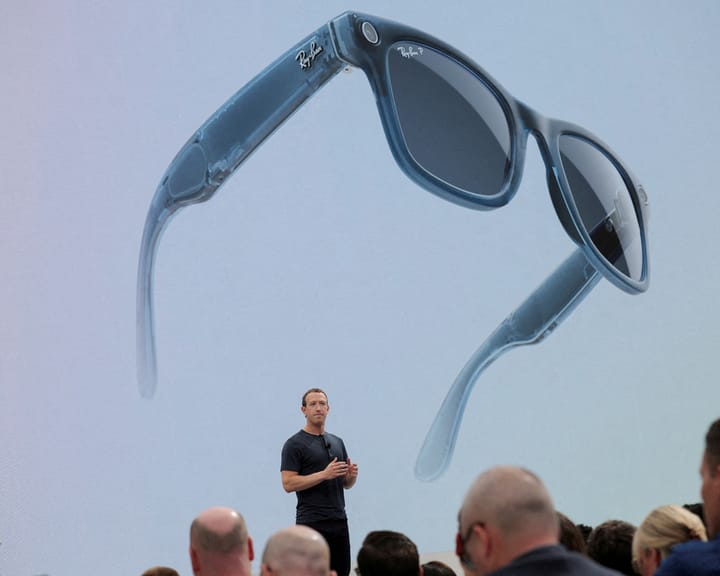
US officers worry Meta smart glasses could covertly record them
In January, the NYPD’s counterterrorism unit warned officers about a new security threat: Ray-Ban Meta glasses. A memo directed officers to “conduct thorough inspections of all eyewear permitted within inmate cells,” cautioning that recently arrested individuals could use the devices’ small cameras and microphones to record inside police
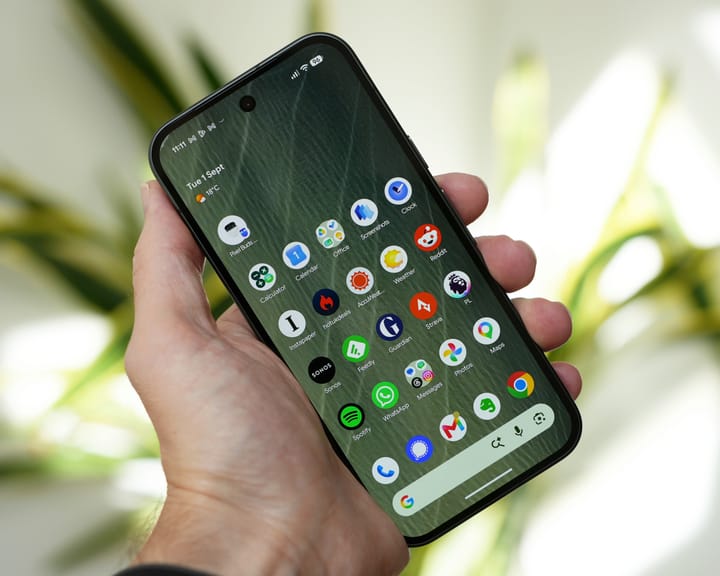
Google's Pixel 11 sets new standard for flagship phones, review finds
Google’s Pixel 11 continues to define what a base flagship phone should deliver, with leading cameras, extended software support and nearly all the features of its pricier siblings.
The standard Pixel 11 is priced at £879 (€999/$899/A$1,499), £80 higher than its previous version, reflecting ongoing

AI Expert Father of Three Shares Essential Insights for Parents on Artificial Intelligence
A father once promised his child they would write a story together called "The Day Nobody Went to Disneyland." The plot imagined a perfect day when the entire world avoided the park, expecting crowds, leaving it completely empty for a father and child to enjoy alone. Three decades