
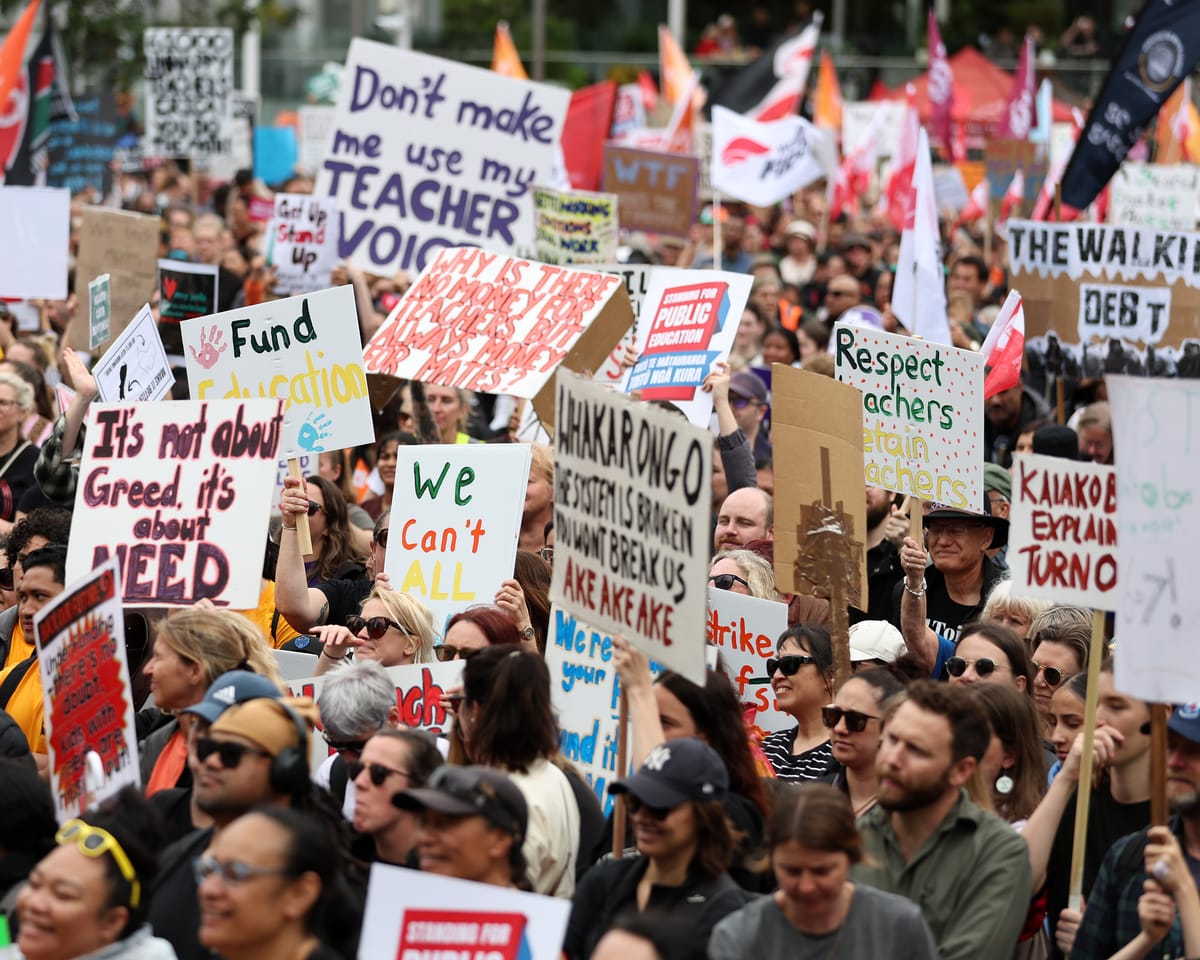
Around 100,000 nurses, teachers, and public sector employees in New Zealand went on strike Thursday to urge the government to increase funding for essential public services, marking one of the largest labor actions in the country’s history.
The coordinated strike involved workers from various fields, including over 60,000 teachers, 40,000 nurses and medical professionals, and 15,000 public service employees.
Although severe weather disrupted events in Wellington and other areas, large crowds gathered in cities nationwide, holding signs and calling for greater investment in health and education.
“People shouldn’t have to suffer or lose their lives before conditions improve,” said nurse Becks Kelsey at a rally in Auckland.
“We need officials to strengthen the foundation of our society, not weaken it further.”
Paul Stevens, a high school teacher, told demonstrators that educators are leaving their jobs or the country “because they’re exhausted and feel undervalued.”
“Elected leaders must take responsibility for decisions that have slowly eroded critical services while prioritizing political gains.”
Union members decided to strike after negotiations with the government reached a standstill. While specific demands varied by profession, common concerns included insufficient pay, unsafe staffing levels, lack of resources, and deteriorating working conditions that endanger employees, patients, and students.
“We’re deeply concerned about patient safety,” said Hawke’s Bay nurse Noreen McCallan in a statement. “The strain of staff shortages is unbearable, and delays in care are worsening outcomes.”
Liam Rutherford, a teacher in Palmerston North, emphasized the need for “significant investment in education, not superficial fixes.”
“The government’s current proposal fails to address teacher recruitment and retention. Many are drawn overseas by better opportunities.”
In recent years, New Zealand’s health and education systems have faced growing strain. Hospitals have reported severe overcrowding, long wait times, and staffing gaps. Schools also struggle with shortages.
Meanwhile, government cuts to public service funding, aimed at economic growth, have halted numerous pay equity cases.
At the same time, a record number of citizens, including many in education and healthcare, are relocating abroad—primarily to Australia—for higher wages and more stable jobs.
Officials reacted dismissively to the protests, with Prime Minister Christopher Luxon calling the strike “politically driven,” and a senior minister declaring worker demands “too costly.”
Read next
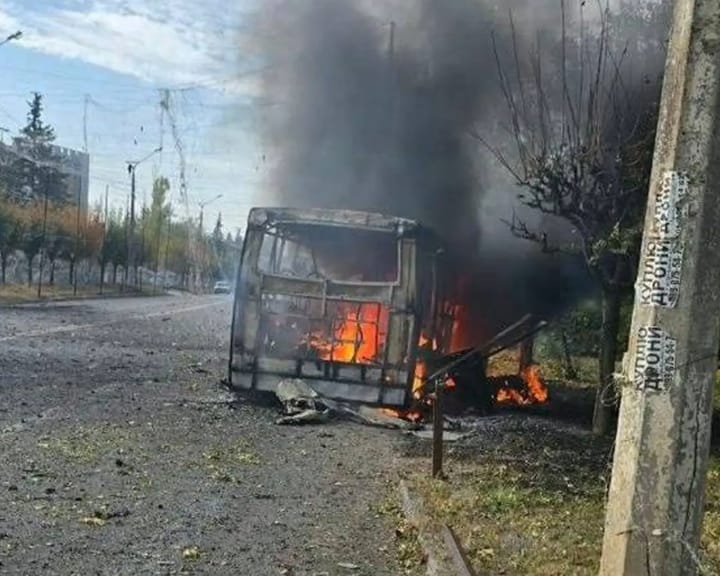
Russian Assault on Buses Near Ukraine Border Results in 30 Deaths
Thirty people have been killed and eighteen injured following an attack by Russia on two passenger buses in Kramatorsk, near the frontline in eastern Ukraine, according to local authorities.
The Donetsk regional prosecutor's office reported that the death toll from the morning attack on the buses had reached

Ethiopia Conducts Drone Strike on Eritrean Forces in Tigray Region
Eritrean forces reportedly crossed into Ethiopia's Tigray region and faced drone attacks from Ethiopian government forces, raising concerns about the potential for a broader regional conflict between the two neighboring countries.
Military vehicles transporting soldiers crossed the southern border of Eritrea into Tigray on Wednesday, reaching Adigrat, approximately

Israel Advances Film Resembling NAZA Documentary
The Israeli government is promoting an online film project designed to counter the findings of the award-winning documentary NAZA, which details Israel’s mass killings of civilians in Gaza. NAZA, directed by Oscar-winning filmmakers Yuval Abraham and Rachel Szor, is currently in cinemas and will be shown in