
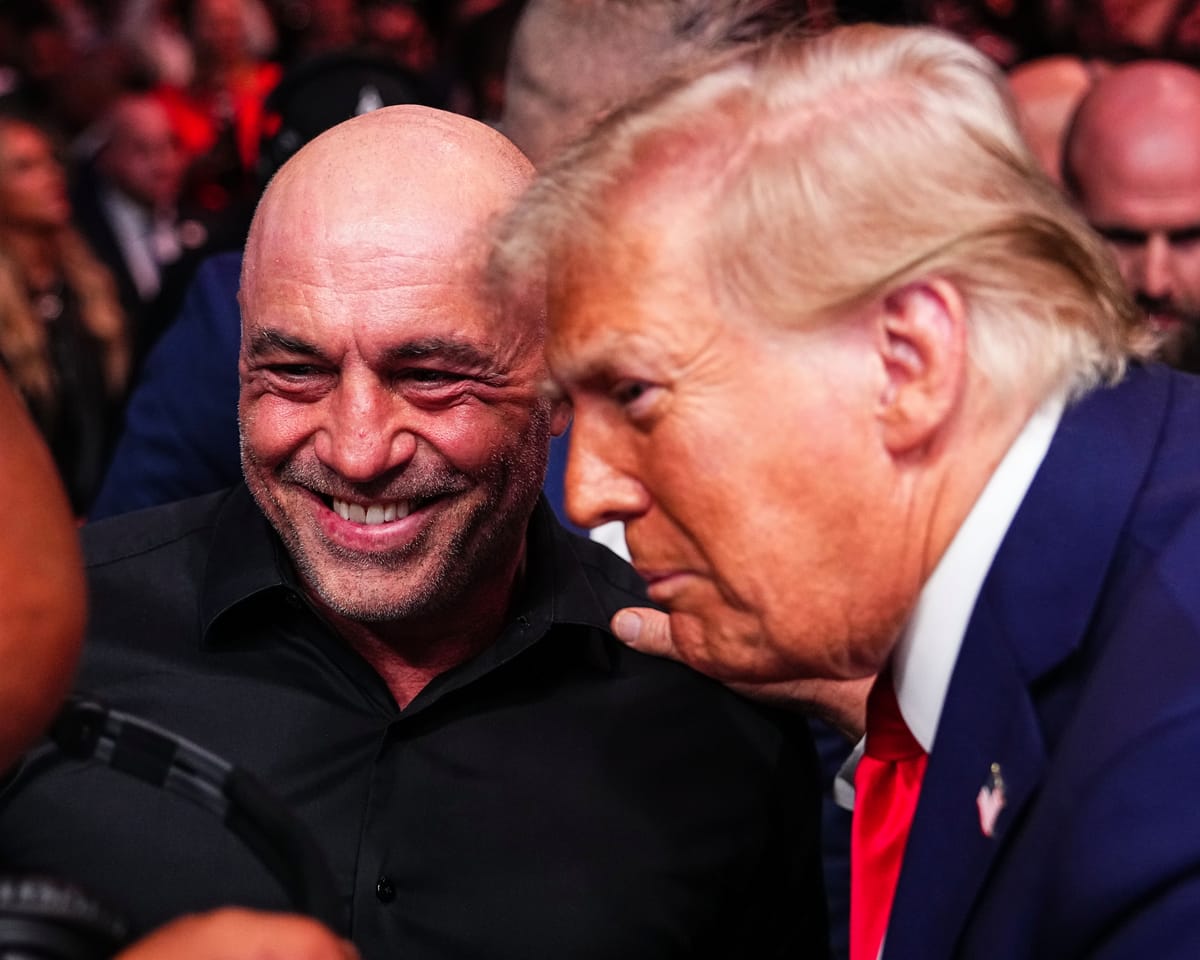
Joe Rogan, the planet’s most‑watched podcaster, says he can’t get enough rest. In a recent interview he lamented that the “madness” of the news cycle—ranging from the unveiling of the Epstein files to U.S. strikes on Iran—has left him “overwhelmed.” For some observers, this confession is another indication that the leading podcaster may be questioning his role in helping Donald Trump return to the White House.
The comment arrives after a sharply worded critique of ICE following the death of Renee Nicole Good. Rogan likened ICE to the Gestapo in a brief clip that quickly spread online. The segment prompted this paper to ask, “Has Joe Rogan turned against Trump’s administration?” while ABC, Bloomberg and CNN have all noted Rogan’s apparent disapproval of ICE.
If Rogan were to withdraw his support for the president he once championed, it would deal a notable setback to Trump, given the weight Rogan’s endorsement has carried since their 2024 election‑season interview.
The “Gestapo” excerpt, however, comes from Rogan’s three‑hour conversation with Senator Rand Paul on 13 January and does not represent the overall tone of that dialogue. Rogan describes ICE’s presence as a reaction to widespread “fraud” in Minnesota, argues that the agency needs full anonymity to function, cautions that ICE could be mistakenly cast as villains, and voices empathy for its officers.
While calling Good’s killing “unfortunate,” Rogan adds that she “seemed crazy” and “out of her mind,” suggesting she may have been a deliberate provocateur. Those remarks do not align with the distress of someone whose sleeplessness stems from horror at lethal force used on an innocent civilian.
I am familiar with these details because I have logged more than 170 hours of Rogan’s broadcasts for the Know Rogan Experience series, where we aim to dissect the platform’s influence.
In that same episode Rogan acknowledges his dislike for people being seized off the street, yet he defends the practice, claiming Democrats are flooding swing states with undocumented migrants to “hijack” the democratic process.
The notion that illegal immigration is being weaponized to undermine democracy recurs throughout Rogan’s show. In October 2024, a week after his high‑profile interview with Trump, he sat down with then‑presidential hopeful JD Vance, who warned that the United States was drifting toward a one‑party system as Democrats “take congressional representation from American citizens and give it to illegal aliens.” In February 2025, Elon Musk told him that senior Democrats were explicitly plotting a permanent one‑party socialist state.
In August 2025 the White House advocated for a census that would omit undocumented residents, with deputy chief of staff Stephen Miller accusing Democrats of counting “tens of millions of illegals” to “[steal] House seats for sanctuary cities.”
Read next

World edges toward abyss under tyrants, yet hope remains with clear path to better tomorrow, writes Simon Tisdall
Don’t look up! The world is a mess. The sky could fall in any day. Unending wars, expanding humanitarian crises, rising authoritarianism, dysfunctional democracies, rampant racial and religious extremism, and unchecked lawlessness cast a dark cloud as the west’s new political year begins. Set all that against a
Britain’s Multiparty Politics Calls for a Modernized Westminster Voting System – Editorial
Some outcomes in this week’s local council and devolved elections can be anticipated with confidence, though none can be predicted exactly. Labour faces a difficult contest across the country. Reform UK is expected to perform strongly, extending its recent upward trajectory. The Greens are likely to make gains in
The Guardian editorial: Trump's war on Iran will burden the world's poorest the most.
Rising fuel costs, the termination of mortgage schemes and the likelihood of higher prices for everything from groceries to smartphones are straining households. The US‑Israeli strike on Iran and Tehran’s retaliation have unsettled the world economy. Consumers are already bearing the brunt of the most severe energy‑supply