

Computers have surpassed humans in chess, Go, and poker, but in competitive coding, humans still hold a slight advantage—for now.
Earlier this month, Przemysław Dębiak, a Polish coder and mind sports champion known online as Psyho, narrowly defeated OpenAI’s entry in the AtCoder World Tour Finals 2025 in Tokyo. Yet Psyho, a former OpenAI employee who retired five years ago, believes this may be the last time a human secures such a victory, given the rapid advancements in technology.
“That’s likely,” said the 41-year-old. “I’d prefer if it weren’t true, mostly because I enjoy these competitions. The idea of an unbeatable machine outperforming me is frustrating.”
Psyho acknowledged the irony that programmers have contributed to their own eventual obsolescence.
“Before the contest, I tweeted, ‘Live by the sword, die by the sword,’” he said. “I helped develop AI, and now I could have been the one to lose. Though, for now, I still won.”
The AtCoder competition featured 11 top-ranked human participants and OpenAI’s coding algorithm, which placed second, scoring 9.5% below Psyho’s winning result. OpenAI’s CEO publicly congratulated him after the event.
The 10-hour contest involved solving intricate optimization problems, such as the classic “traveling salesman” puzzle—a simple concept but computationally challenging to solve optimally. While AI tools can generate basic code efficiently, their ability to tackle open-ended logic puzzles is still being tested.
“At this stage, top humans are still much better at reasoning and solving complex problems,” Psyho noted. However, humans are limited by typing speed, whereas AI can quickly test numerous small changes.
“The model is like cloning a single human and working in parallel,” he said. “Right now, AI may not be the smartest, but it’s definitely the fastest. Sometimes, many average thinkers together outperform a single exceptional one.”
This outcome coincides with a trend among major tech firms to use AI for coding tasks. Earlier this year, industry experts predicted that AI could displace a significant portion of white-collar jobs in the near future.
“Every profession is affected to some degree,” Psyho said. “White-collar workers are feeling it now, while manual labor has a few more years before automation catches up.”
Like many in the field, Psyho has mixed feelings about AI’s growing influence. “We face major challenges—misinformation, social disruption—but I still believe in the benefits if we manage the risks carefully.”
Read next
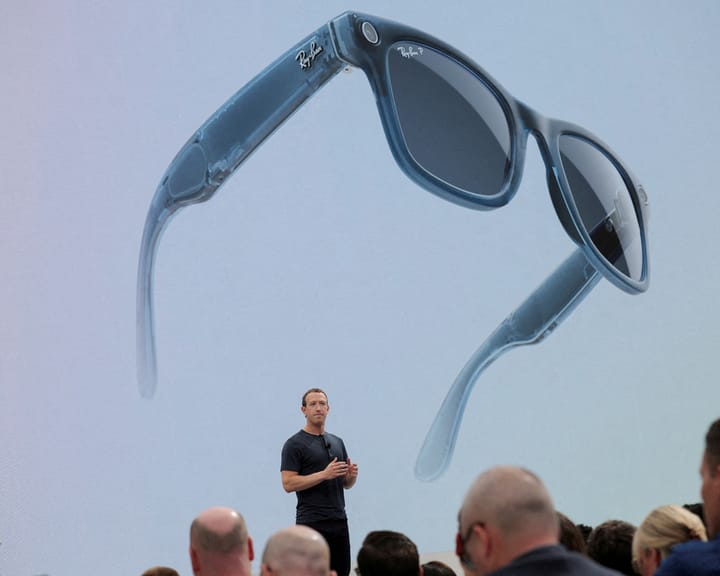
US officers worry Meta smart glasses could covertly record them
In January, the NYPD’s counterterrorism unit warned officers about a new security threat: Ray-Ban Meta glasses. A memo directed officers to “conduct thorough inspections of all eyewear permitted within inmate cells,” cautioning that recently arrested individuals could use the devices’ small cameras and microphones to record inside police
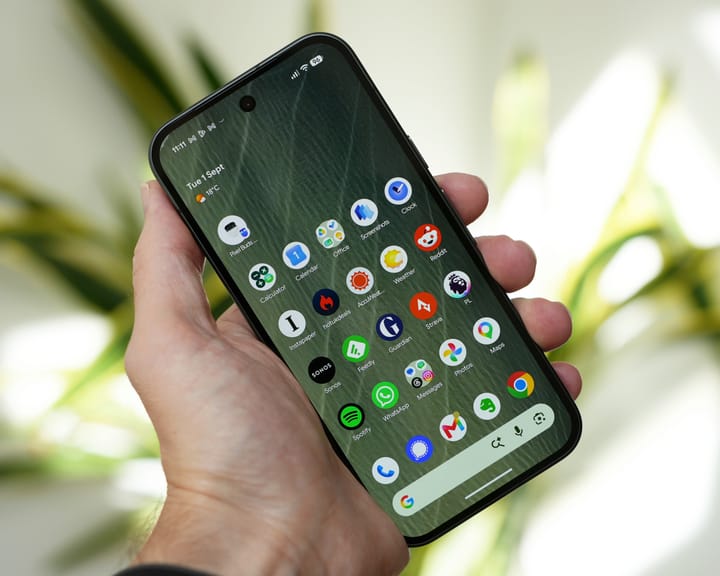
Google's Pixel 11 sets new standard for flagship phones, review finds
Google’s Pixel 11 continues to define what a base flagship phone should deliver, with leading cameras, extended software support and nearly all the features of its pricier siblings.
The standard Pixel 11 is priced at £879 (€999/$899/A$1,499), £80 higher than its previous version, reflecting ongoing

AI Expert Father of Three Shares Essential Insights for Parents on Artificial Intelligence
A father once promised his child they would write a story together called "The Day Nobody Went to Disneyland." The plot imagined a perfect day when the entire world avoided the park, expecting crowds, leaving it completely empty for a father and child to enjoy alone. Three decades