

The Society of Authors (SoA) has introduced a programme aimed at marking books that are created by human writers amid a market swamped with AI‑produced titles.
It is the first initiative of its type from a UK trade body, permitting writers to enrol their titles and obtain a “Human Authored” badge that can be placed on the back cover.
The SoA noted that, without any governmental requirement for tech firms to mark AI‑generated material, readers find it difficult to tell human‑written books from machine‑produced ones that rely on AI models trained on copyrighted material without consent or remuneration.
The programme echoes a comparable system introduced by the Authors Guild in the United States in early 2025.
Classicist Mary Beard is among several prominent writers who have endorsed the plan and intend to enrol their titles on the Human Authored site. “Only human‑written books would make it onto my desert island,” she remarked.
Children’s author Malorie Blackman said the initiative “aims to showcase the imagination, dedication, skill and attention involved in creating stories and books that can be enjoyed by all.
“Every creative act demands time, effort, a readiness to learn from errors and setbacks, and a resolve to persist—skills that cannot be cultivated if AI performs all the thinking and production for us.
“Undoubtedly, part of the joy of reading, hearing music, watching film or theatre, viewing art, and sharing any creative work lies in the connection with its maker, a deep emotional resonance that disappears when the piece is generated by AI.”
Novelist Tracy Chevalier unveiled the scheme and its badge at the London Book Fair on Tuesday.
The move coincides with a protest by thousands of writers, among them Kazuo Ishiguro, Philippa Gregory and Richard Osman, who released an “empty” volume to object to AI companies exploiting their work without consent.
Titled Don’t Steal This Book, the publication contains merely a roster of the authors’ names. Copies are being handed out to visitors at the London Book Fair, a week ahead of the UK government’s scheduled report on the economic impact of proposed copyright reforms.
Anna Ganley, chief executive of the SoA, reported that a recent poll found 82 % of the society’s writer members expressed interest in a Human Authored certification.
“With generative AI now commonplace, the SoA has campaigned to protect authors’ rights and shield creators from the wholesale appropriation of their work by AI firms for training chatbots,” she said.
“Our new labelling system serves as a practical measure to safeguard and promote human creativity amid the rise of AI‑tagged content in the market.”
Read next
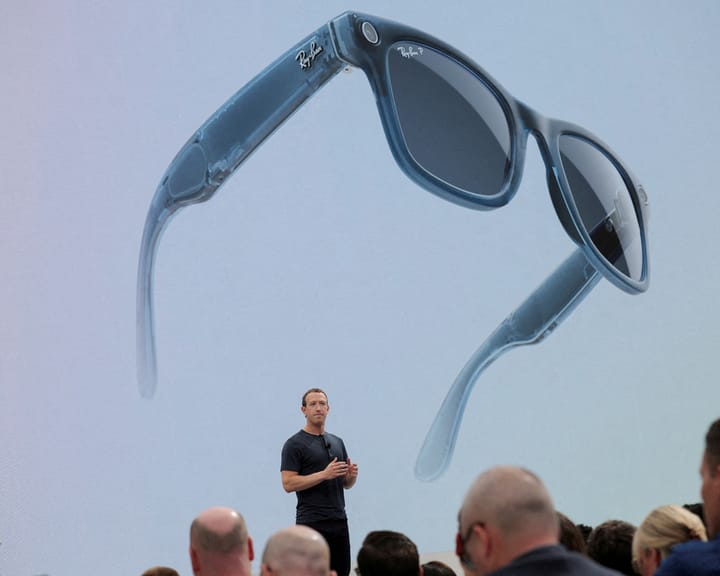
US officers worry Meta smart glasses could covertly record them
In January, the NYPD’s counterterrorism unit warned officers about a new security threat: Ray-Ban Meta glasses. A memo directed officers to “conduct thorough inspections of all eyewear permitted within inmate cells,” cautioning that recently arrested individuals could use the devices’ small cameras and microphones to record inside police
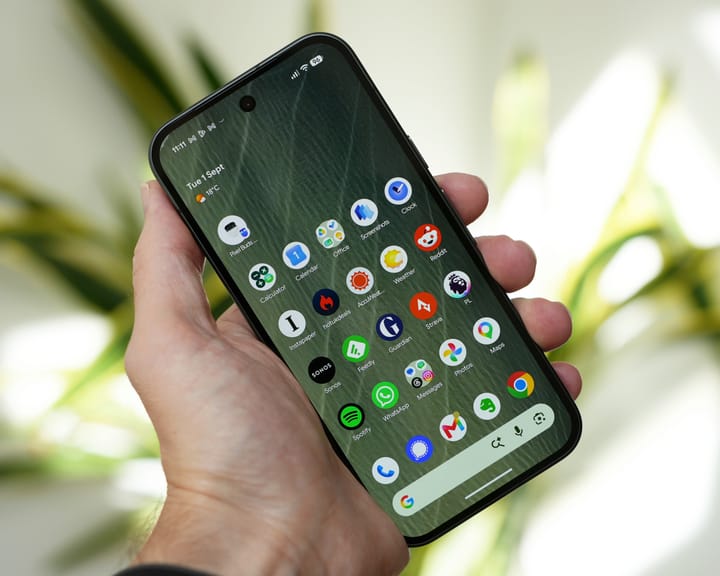
Google's Pixel 11 sets new standard for flagship phones, review finds
Google’s Pixel 11 continues to define what a base flagship phone should deliver, with leading cameras, extended software support and nearly all the features of its pricier siblings.
The standard Pixel 11 is priced at £879 (€999/$899/A$1,499), £80 higher than its previous version, reflecting ongoing

AI Expert Father of Three Shares Essential Insights for Parents on Artificial Intelligence
A father once promised his child they would write a story together called "The Day Nobody Went to Disneyland." The plot imagined a perfect day when the entire world avoided the park, expecting crowds, leaving it completely empty for a father and child to enjoy alone. Three decades