
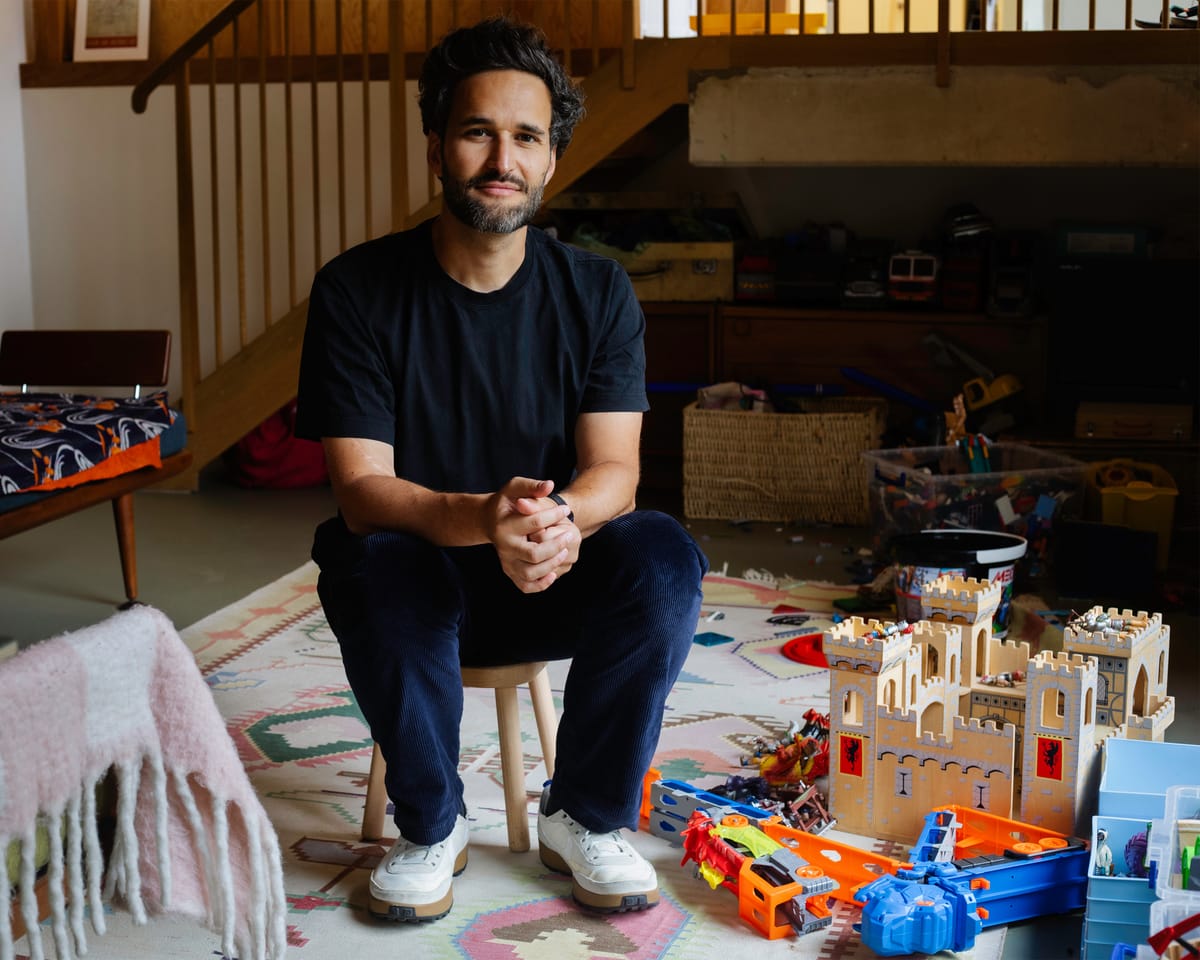
A father once promised his child they would write a story together called "The Day Nobody Went to Disneyland." The plot imagined a perfect day when the entire world avoided the park, expecting crowds, leaving it completely empty for a father and child to enjoy alone. Three decades passed without the story being written.
Recently, during a family dinner with his own children (aged eight, five, and two), the idea resurfaced. His oldest daughter wanted to hear it. They asked ChatGPT to draft the story in the style of Dr Seuss. The result was imperfect, containing Americanisms like "sneakers" and "cinnamon buns," but it sparked a fun evening of collaborative editing.
The father, who has spent 15 years studying AI's impact on work and society, now finds these changes deeply personal as a parent. On a family car journey to Suffolk, his children enjoyed a podcast called "History's Not Boring," narrated by two children. It was only later that the family discovered the child narrators did not exist. The entire podcast had been generated by AI. For his wife, a podcast and documentary producer, this was an unsettling realisation: high-quality educational content was being created without human teams.
This experience illustrates a broader anxiety: what should today's children do given this uncertainty? Teachers feel outdated methods no longer succeed. Parents question whether their children truly learn anything when AI solves problems instantly. Employers doubt traditional qualifications remain meaningful.
Reacting with bans and restrictions is misguided. Young people will grow up immersed in these technologies. Preparing them for yesterday's world rather than tomorrow's does them a disservice. Accusations of "cheating" miss the point. If AI makes education easier, perhaps adults must raise standards and demand more rigorous learning.
Dismissiveness is also unimaginative. Used wisely, AI could help the next generation tackle problems once considered unsolvable.
The traditional approach of "future-proofing" skills has failed. In 2013, then-Prime Minister David Cameron announced that all English primary and secondary children would learn to code, championed by Education Secretary Michael Gove. By January 2026, Anthropic reported that 90% of the code for Claude Code was itself written by AI. The reasoning behind "future-proofing" is flawed because we cannot predict which skills will remain valuable.
Only two certainties exist about the future: technologies will be vastly more capable, and we know little else. We must prepare young people to flourish despite this uncertainty.
Literacy and numeracy are essential foundations. Pisa data since 2009 shows these skills declining worldwide among both young people and adults. AI systems make frequent mistakes and "hallucinate" confidently wrong answers. Geoffrey Hinton described them as "idiot savants." We must maintain sharp fundamentals to evaluate AI output critically.
Creativity also matters. The father used ChatGPT to design games featuring unicorns and rainbows to help his daughter learn times tables. When his five-year-old grew bored of phonics books, they generated custom stories about HMS Belfast, TNT explosives, and Bukayo Saka. Chris Moran, head of editorial innovation at CuriosityNews, built an app called PlotLines with his daughter. It maps Dracula onto an interactive 1890s Ordnance Survey chart, tracking characters across Europe. They have since adapted it for many other books.
Schools must teach AI usage alongside traditional skills. The Cockcroft Report of 1982 offers a useful model. Faced with calculators, it proposed splitting maths education into calculator-assisted and unaided segments, testing both. This "teach both, test both" approach became the global standard. A similar dual approach should apply to AI across all subjects.
Screen time concerns should not lead to reflexive restrictions on AI. Social media and AI serve different purposes. The real issue is what occupies those screens, not how long. AI also provides affordable personalised tutoring. The father has used it to answer his five-year-old's bedtime questions and to guide graduate students through complex models like the Ramsey growth model.
Young professionals entering fields like law or medicine should focus on underlying problems rather than specific job roles, as those roles will change drastically. Stanford researchers built a dermatological diagnostic system in 2017, with computer scientist Sebastian Thrun as co-author, demonstrating cross-disciplinary problem-solving.
For those starting careers, AI and science offer the most exciting prospects. AlphaFold2, built by DeepMind, won the 2024 Nobel prize in chemistry for solving the protein folding problem. AI's main constraint is human imagination. Collaborating with the next generation, with their curiosity and lack of cynicism, will help unlock the technology's full potential.
Read next
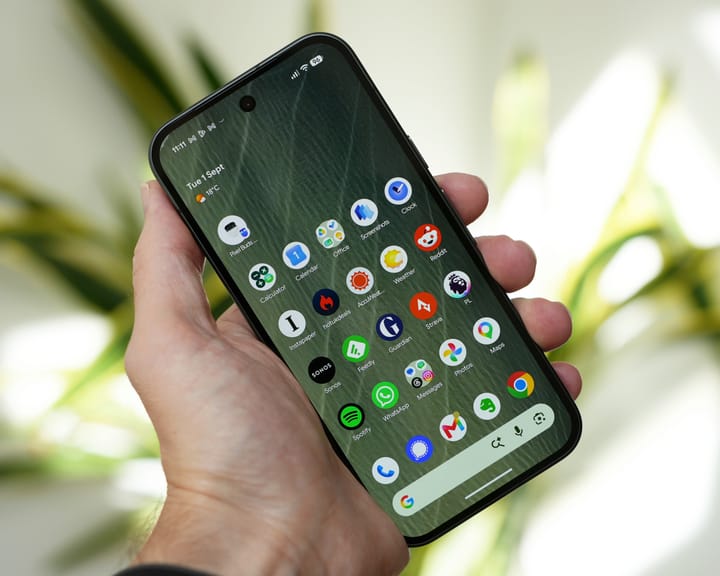
Google's Pixel 11 sets new standard for flagship phones, review finds
Google’s Pixel 11 continues to define what a base flagship phone should deliver, with leading cameras, extended software support and nearly all the features of its pricier siblings.
The standard Pixel 11 is priced at £879 (€999/$899/A$1,499), £80 higher than its previous version, reflecting ongoing

AI: Are Warnings of Uncontrollable Artificial Intelligence Becoming Reality? "We're plausibly close to crossing the line"
Imagine humanity in a boat being swept down a raging river, hoping there is no Niagara Falls ahead. Or picture standing with the pioneering physicists in 1942 before they triggered the first self-sustaining nuclear fission chain reaction beneath a Chicago stadium.
These were two of the analogies used this
Mark Zuckerberg Should Step Down From Meta Now, Argues Joan Donovan
Last week, Meta, the parent company of Instagram and Facebook, agreed to a settlement of up to $18bn after dozens of US states accused it of harming children with addictive products. The settlement’s regulatory implications for social media will affect every user, far beyond teens.
But if Meta is