

Sovereign AI Efforts Emerge as Nations Seek Self-Reliance in Technology
In Singapore, a publicly supported artificial intelligence system can communicate in 11 languages, including Bahasa Indonesia and Lao. In Malaysia, ILMUchat, developed by a domestic industrial group, claims it can distinguish between references to "Georgetown" as the capital of Penang rather than the US-based university. Meanwhile, Switzerland’s Apertus, introduced earlier this year, recognizes when to use the Swiss German "ss" instead of the German "ß."
Globally, such language models are part of a high-stakes technological competition primarily dominated by US and Chinese firms. While major players like OpenAI, Meta, and Alibaba invest billions in advancing their systems, smaller and developing nations are closely observing the field—occasionally making costly investments of their own.
These efforts align with a growing movement often referred to as "sovereign AI," where countries from the UK to India to Canada are developing their own AI capabilities to assert their role in the evolving technological landscape.
However, with vast financial resources required, doubts persist over whether smaller-scale initiatives can achieve meaningful results.
“While US-based firms and China can aggressively push toward AI supremacy, it’s more challenging for other nations with fewer resources,” says Trisha Ray of the Atlantic Council, a US research organization.
“Unless a government or corporation has substantial funding, building a large language model from the ground up is a significant challenge.”
Security Concerns Drive Local Development
Many nations remain hesitant to depend on foreign AI solutions.
India, for example, is the second-largest user base for OpenAI, with ChatGPT downloads exceeding a hundred million in recent years. Yet, according to Abhishek Upperwal, founder of Indian firm Soket AI, foreign-developed AI often proves inadequate. He cites instances where an AI teaching tool in a rural Telangana village delivered lessons in an unintelligible US accent, while a legal startup attempting to modify Meta’s LLaMa model found the results unusable due to conflicting US-Indian legal interpretations.
National security concerns further complicate reliance on external AI systems. Upperwal notes that India’s defense sector, for instance, would never use China’s DeepSeek, which might inaccurately depict regions like Ladakh.
“People in defense I’ve spoken to refuse to use even OpenAI’s systems over fears of data leaving the country,” he says.
Soket AI is among several companies working on a national language model with backing from India’s publicly funded IndiaAI initiative.
Read next

US officers worry Meta smart glasses could covertly record them
In January, the NYPD’s counterterrorism unit warned officers about a new security threat: Ray-Ban Meta glasses. A memo directed officers to “conduct thorough inspections of all eyewear permitted within inmate cells,” cautioning that recently arrested individuals could use the devices’ small cameras and microphones to record inside police
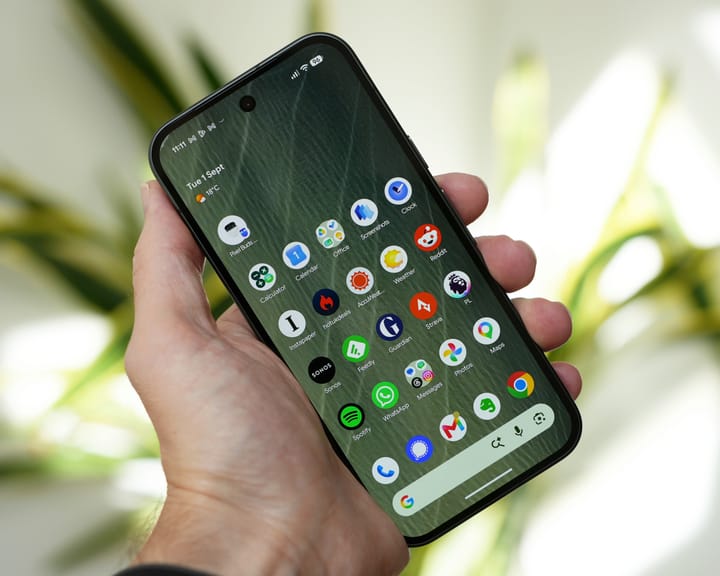
Google's Pixel 11 sets new standard for flagship phones, review finds
Google’s Pixel 11 continues to define what a base flagship phone should deliver, with leading cameras, extended software support and nearly all the features of its pricier siblings.
The standard Pixel 11 is priced at £879 (€999/$899/A$1,499), £80 higher than its previous version, reflecting ongoing

AI Expert Father of Three Shares Essential Insights for Parents on Artificial Intelligence
A father once promised his child they would write a story together called "The Day Nobody Went to Disneyland." The plot imagined a perfect day when the entire world avoided the park, expecting crowds, leaving it completely empty for a father and child to enjoy alone. Three decades