
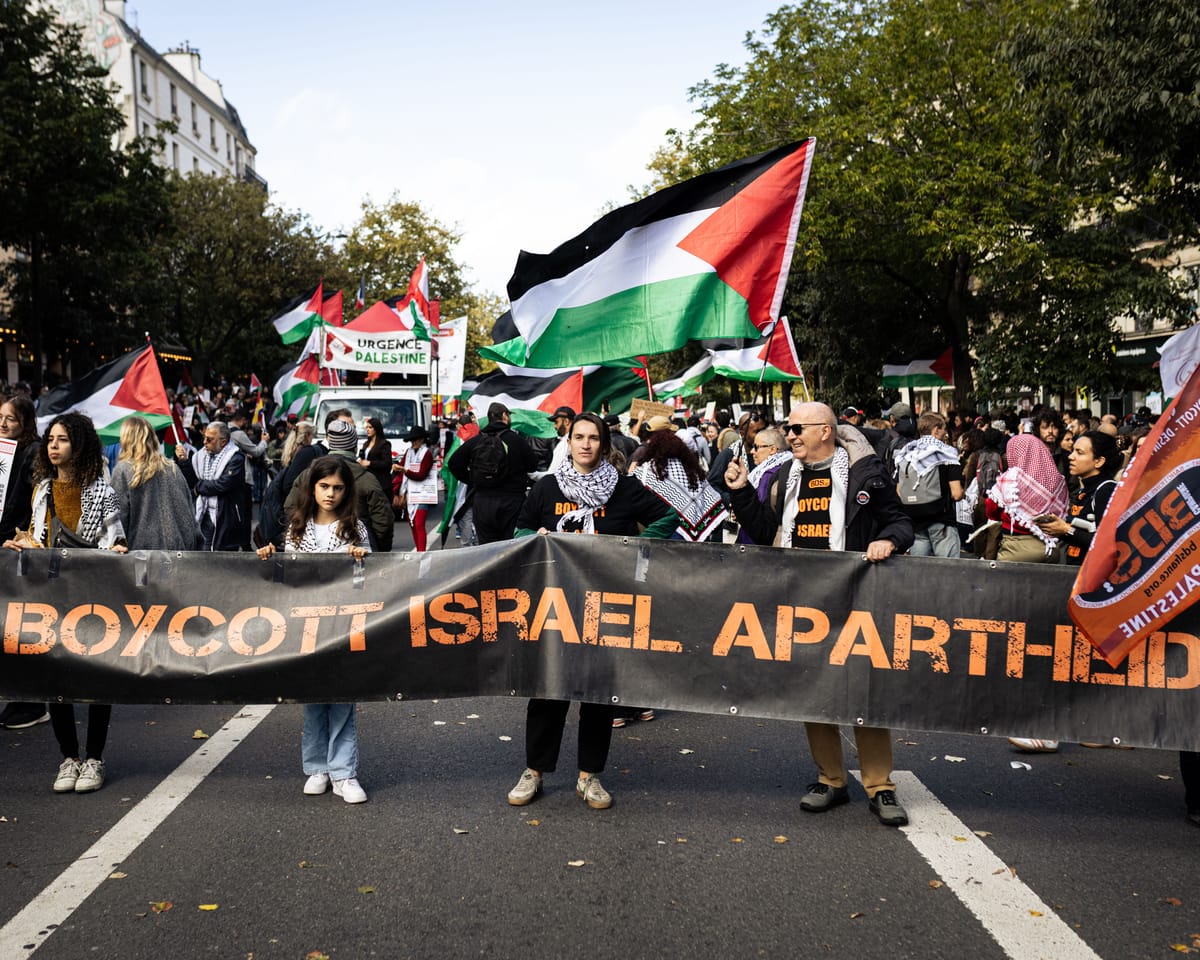
# Israeli-Inspired Restaurant Closes Amid Rising Boycott Campaign
For over ten years, Shouk served a plant-based, kosher menu inspired by Israeli cuisine in the Washington area. Last week, the chain shut down its fifth and final location and let go of its remaining 30 employees. The business cited the war in Gaza as the reason for its inability to continue operations, while activists accused the restaurant of cultural appropriation and using imported Israeli goods.
“It didn’t stop—boycotts, harassment, everything you can imagine,” said Dennis Friedman, 46, a Jewish American who co-founded Shouk with Ran Nussbacher, an Israeli. “We couldn’t keep going. It’s upsetting because Shouk wasn’t political; it was a place for people to gather. Being wrongly targeted and accused of things we didn’t stand for was unfair.”
Shouk’s situation is not isolated. Two years of devastation in Gaza have eroded the previous international hesitance to apply pressure on Israel. Calls to avoid businesses linked to Israel, exclude the country from global events, and sever academic connections are growing. What was once a marginal movement is gaining ground in public spaces, cultural arenas, and political discourse.
Though many interviewed for this piece spoke before the ceasefire agreement between Israel and Hamas, activists insist their efforts will continue. The BDS movement dismissed the proposed end to the conflict as a “tactic by Israel’s government to escape its deepening isolation” and urged stronger civic action.
Outrage over Israel’s military actions has intensified, with Gaza’s health authorities reporting over 67,000 deaths and widespread hunger. A recent report by UN-appointed experts accused Israel of committing genocide.
While disapproval of Israeli policies is not new, the Gaza war has accelerated shifts in public opinion, breaking long-held silences and challenging political norms. Some compare the current momentum to the global opposition against apartheid in South Africa.
Jeremy Ben-Ami, head of the pro-Israel advocacy group J Street, noted, “This is as significant a shift as I’ve witnessed in attitudes—not just among American Jews, but across society.”
He added, “This isn’t about antisemitism or opposing Israel itself. It’s a rejection of this government’s policies, which span decades, not just recent years.”
Twenty years ago, Palestinian groups launched the BDS movement, drawing from South Africa’s anti-apartheid struggle to advocate for nonviolent pressure on Israel.
Read next

Russian Assault on Buses Near Ukraine Border Results in 30 Deaths
Thirty people have been killed and eighteen injured following an attack by Russia on two passenger buses in Kramatorsk, near the frontline in eastern Ukraine, according to local authorities.
The Donetsk regional prosecutor's office reported that the death toll from the morning attack on the buses had reached

Ethiopia Conducts Drone Strike on Eritrean Forces in Tigray Region
Eritrean forces reportedly crossed into Ethiopia's Tigray region and faced drone attacks from Ethiopian government forces, raising concerns about the potential for a broader regional conflict between the two neighboring countries.
Military vehicles transporting soldiers crossed the southern border of Eritrea into Tigray on Wednesday, reaching Adigrat, approximately

Israel Advances Film Resembling NAZA Documentary
The Israeli government is promoting an online film project designed to counter the findings of the award-winning documentary NAZA, which details Israel’s mass killings of civilians in Gaza. NAZA, directed by Oscar-winning filmmakers Yuval Abraham and Rachel Szor, is currently in cinemas and will be shown in