
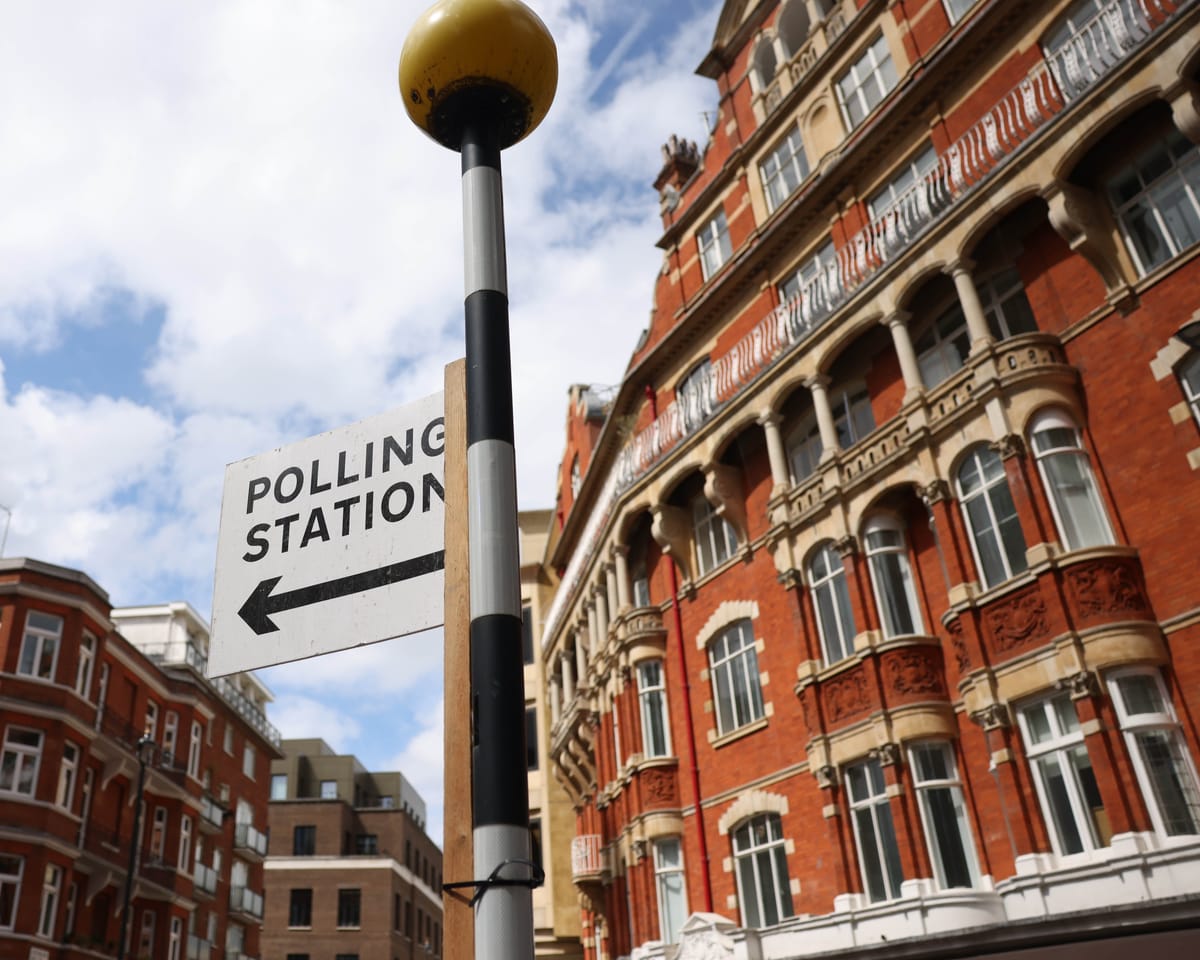
Some outcomes in this week’s local council and devolved elections can be anticipated with confidence, though none can be predicted exactly. Labour faces a difficult contest across the country. Reform UK is expected to perform strongly, extending its recent upward trajectory. The Greens are likely to make gains in several London areas. Plaid Cymru looks set for a breakthrough in Wales. These patterns could generate a broad range of results for council seats and for the Scottish and Welsh legislatures, with much hinging on how closely contested races involving many parties are resolved by differing electoral systems.
The first‑past‑the‑post method used to elect English local authorities is poorly suited to multiparty politics. It was already problematic when politics was dominated by Labour versus Conservative rivalry, shutting out smaller parties and leaving many voters feeling their votes were wasted in safe seats.
An extra complication arises when four or five parties each poll between the high teens and high twenties. The vote share needed to win falls, meaning a victor may have been opposed by a clear majority. Last year’s local elections saw the average winning candidate secure only 40.7 % of the vote – the lowest figure on record – with about 75 winners obtaining less than 30 % support.
Scottish councils (not up for election this year) avoid this issue by employing the single transferable vote. Voters rank candidates; seats are filled by repeatedly eliminating the least popular contender. The devolved parliaments in Edinburgh and Cardiff use alternative systems, each aiming to reflect the balance of opinion more fairly, though neither is perfect. In Scotland, the mix of constituency votes and regional “top‑up” lists creates distinct types of MSP and adds a layer of complexity that turns tactical voting into a guessing game about how parallel ballots might interact.
This year the Welsh Senedd will trial a new “closed proportional list” approach. Voters select a party, shown on the ballot as a block of candidates. Seats are then distributed proportionally within large, six‑member constituencies. In theory this yields a broadly representative chamber, although it could exclude a party that wins a modest but not negligible share of the vote. It also sets a high bar for independents to enter the Senedd, and closed lists stop voters from rewarding an outstanding individual from a party they would otherwise not support.
No electoral system is flawless. Fairness can be viewed as a balance between proportionality and the constituency link. The relative strengths of the models in use this week are unlikely to dominate post‑election discussion. Attention will naturally focus on Labour’s struggles, Plaid Cymru and Reform UK potentially dominating in Wales, and the Scottish National Party’s ability to retain power in Scotland despite the odds.
Read next

World edges toward abyss under tyrants, yet hope remains with clear path to better tomorrow, writes Simon Tisdall
Don’t look up! The world is a mess. The sky could fall in any day. Unending wars, expanding humanitarian crises, rising authoritarianism, dysfunctional democracies, rampant racial and religious extremism, and unchecked lawlessness cast a dark cloud as the west’s new political year begins. Set all that against a
The Guardian editorial: Trump's war on Iran will burden the world's poorest the most.
Rising fuel costs, the termination of mortgage schemes and the likelihood of higher prices for everything from groceries to smartphones are straining households. The US‑Israeli strike on Iran and Tehran’s retaliation have unsettled the world economy. Consumers are already bearing the brunt of the most severe energy‑supply
Who's to blame for the expanding surveillance age? Chances are, it's you – Tatum Hunter
A TikTok comedian recently set up a bogus ICE tip line and was flooded with calls – one even came from a teacher urging agents to investigate a kindergartener in her class. While governments and corporations design the framework of surveillance, ordinary citizens are increasingly eager to take part. The focus