
Google has reached an agreement with the UK government to provide no-cost technology to public institutions, including the NHS and local councils—a decision critics have described as "deeply concerning."
Under the deal, the US firm will train thousands of government employees in digital skills, including artificial intelligence, without charging the UK government. Some officials see this as an opportunity for Google to position itself as public services increasingly shift toward digital solutions.
However, concerns have been raised about the risks of storing sensitive UK public data on US-based servers, particularly under the unpredictable political climate associated with former President Donald Trump.
The Department of Science, Innovation and Technology (DSIT) stated that Google Cloud, which offers data storage, machine learning, and computing resources, would assist public agencies in adopting modern technology to move away from outdated systems that leave them exposed to cyber threats.
While Google’s solutions are seen as more flexible than traditional alternatives, some within the government worry about the UK becoming overly dependent on a single tech company.
Other US firms like Microsoft, OpenAI, and Anthropic have also been working with officials to help improve the efficiency of financially strained public services.
Recently, Chancellor Rachel Reeves met with senior executives from Meta, including its chief global affairs officer and head of global business.
During the COVID-19 crisis, Palantir, a company founded by entrepreneur Peter Thiel, initially offered services to the UK government for £1 before securing a £330 million contract to consolidate NHS data systems.
DSIT also mentioned that Google DeepMind, led by renowned scientist Demis Hassabis, would partner with government technical teams to explore new innovations and streamline public-sector operations.
However, as officials grapple with regulating AI, cloud computing, and intellectual property, critics question whether the government can hold major US tech firms accountable, given their growing influence. Martha Dark of the nonprofit Foxglove remarked, "After granting Google such extensive access, how can we expect the government to enforce meaningful oversight? This decision seems dangerously shortsighted."
Additional experts warned that the deal could consolidate the dominance of companies like Google, leaving the UK reliant on a handful of large tech providers.
Read next
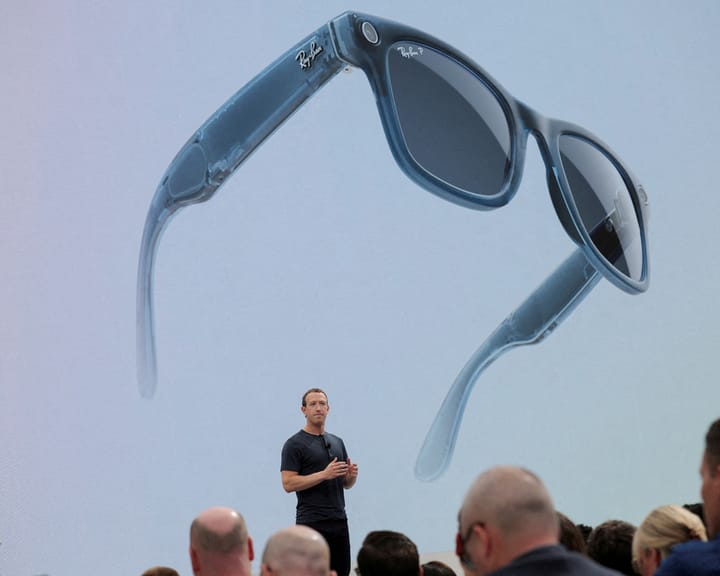
US officers worry Meta smart glasses could covertly record them
In January, the NYPD’s counterterrorism unit warned officers about a new security threat: Ray-Ban Meta glasses. A memo directed officers to “conduct thorough inspections of all eyewear permitted within inmate cells,” cautioning that recently arrested individuals could use the devices’ small cameras and microphones to record inside police

Google's Pixel 11 sets new standard for flagship phones, review finds
Google’s Pixel 11 continues to define what a base flagship phone should deliver, with leading cameras, extended software support and nearly all the features of its pricier siblings.
The standard Pixel 11 is priced at £879 (€999/$899/A$1,499), £80 higher than its previous version, reflecting ongoing

AI Expert Father of Three Shares Essential Insights for Parents on Artificial Intelligence
A father once promised his child they would write a story together called "The Day Nobody Went to Disneyland." The plot imagined a perfect day when the entire world avoided the park, expecting crowds, leaving it completely empty for a father and child to enjoy alone. Three decades