

Domestically and internationally, Labour and its leader face intense pressure. While the Gorton‑Denton outcome belongs to the past, its fallout continues to stir the party and shape the battle for its destiny.
Overseas, the policy split inside Labour is equally stark, raising concerns that the party could be pulled back into the debris of another unlawful conflict in the Middle East. Once more Labour and Starmer find themselves criticised from all sides, with a large faction rebelling against their leader and a “very disappointed” Donald Trump expressing anger rather than consolation.
To navigate the numerous thorny routes ahead, the prime minister might wisely begin by revisiting, at long last, the manner in which he was entrusted with those duties.
Amid the conflagration in the Middle East and rising oil prices, the Representation of the People Bill received little notice as it cleared parliament on Monday. Intended to overhaul the voting system, the bill is remarkable for what it omits: reforms to the first‑past‑the‑post (FPTP) method.
The recent by‑election startled Labour and also alarmed the Institute for Government, a measured watchdog of procedure, prompting it to warn of a democratic threat when a two‑party framework no longer accommodates a multiparty landscape. Director Hannah White cited the Gorton‑Denton signal, noting that the system turns “dangerous” when voters must cast tactical ballots without clear guidance. She cautioned that this erosion of democratic choice could “undermine the legitimacy of the governments it produces”.
That may already be unfolding. Labour secured 63 % of seats with merely 33.7 % of the vote in the 2024 general election, raising the question whether its swift slide in popularity stems from such a limited mandate. It represented one of the most skewed vote‑to‑seat conversions globally. Yet the United Kingdom remains the sole European nation still employing first‑past‑the‑post.
First‑past‑the‑post once acted as a stronghold for established parties, yet the “small” parties it aimed to exclude have breached its defenses and may soon dominate. YouGov data suggests Nigel Farage could ascend to prime minister with just 23 % of the vote, contrary to the preferences of three‑quarters of the electorate. The voting process now resembles a slot machine, producing unpredictable outcomes when minor swings trigger sweeping seat changes.
The impact extends beyond electoral fairness or psephology. The dominance of a handful of voters in marginal constituencies has markedly warped everyday life. The United Kingdom’s pronounced inequality, among the highest in the developed world, is intensified by the two‑party arrangement. Moreover, the legacy of Thatcherism and austerity—radical policies that a proportional system might temper—still haunts us.
Read next

After 170 hours of listening to Joe Rogan’s podcast, I can confirm he hasn’t turned against Trump – Michael Marshall
Joe Rogan, the planet’s most‑watched podcaster, says he can’t get enough rest. In a recent interview he lamented that the “madness” of the news cycle—ranging from the unveiling of the Epstein files to U.S. strikes on Iran—has left him “overwhelmed.” For some observers, this
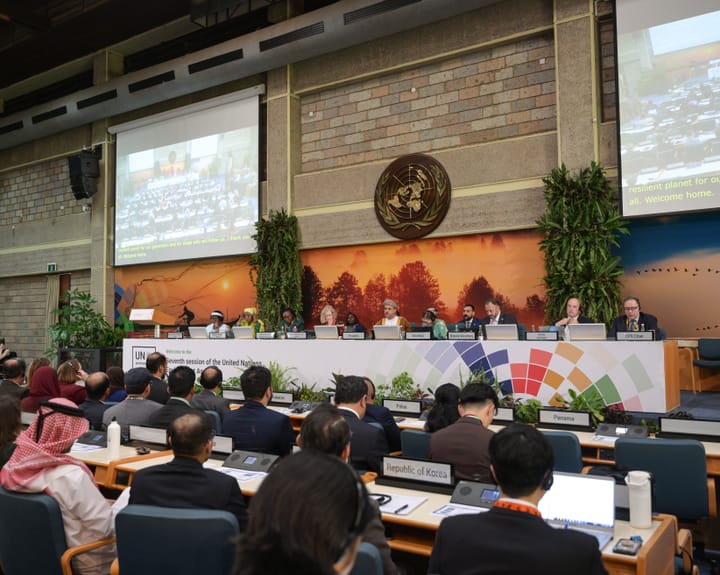
Africa's Warning on Solar Geoengineering Risks Gains Editorial Backing
It is appropriate that this week’s United Nations environmental discussions are happening in Nairobi, as Africa plays a central role in shaping global climate dialogue. Diplomats from the continent are addressing the complex issue of whether attempting to cool Earth by reducing sunlight exposure is a prudent approach. While

Might Narcolepsy Medication Revolutionize the World?
Breakthroughs in Sleep Science Reveal Surprising Insights
During a conversation with a pharmaceutical researcher, I learned of significant progress in sleep medications. One promising development targets narcolepsy, though its method could also address broader sleep issues like insomnia, much like how certain unexpected innovations find wider applications — akin to adhesive