
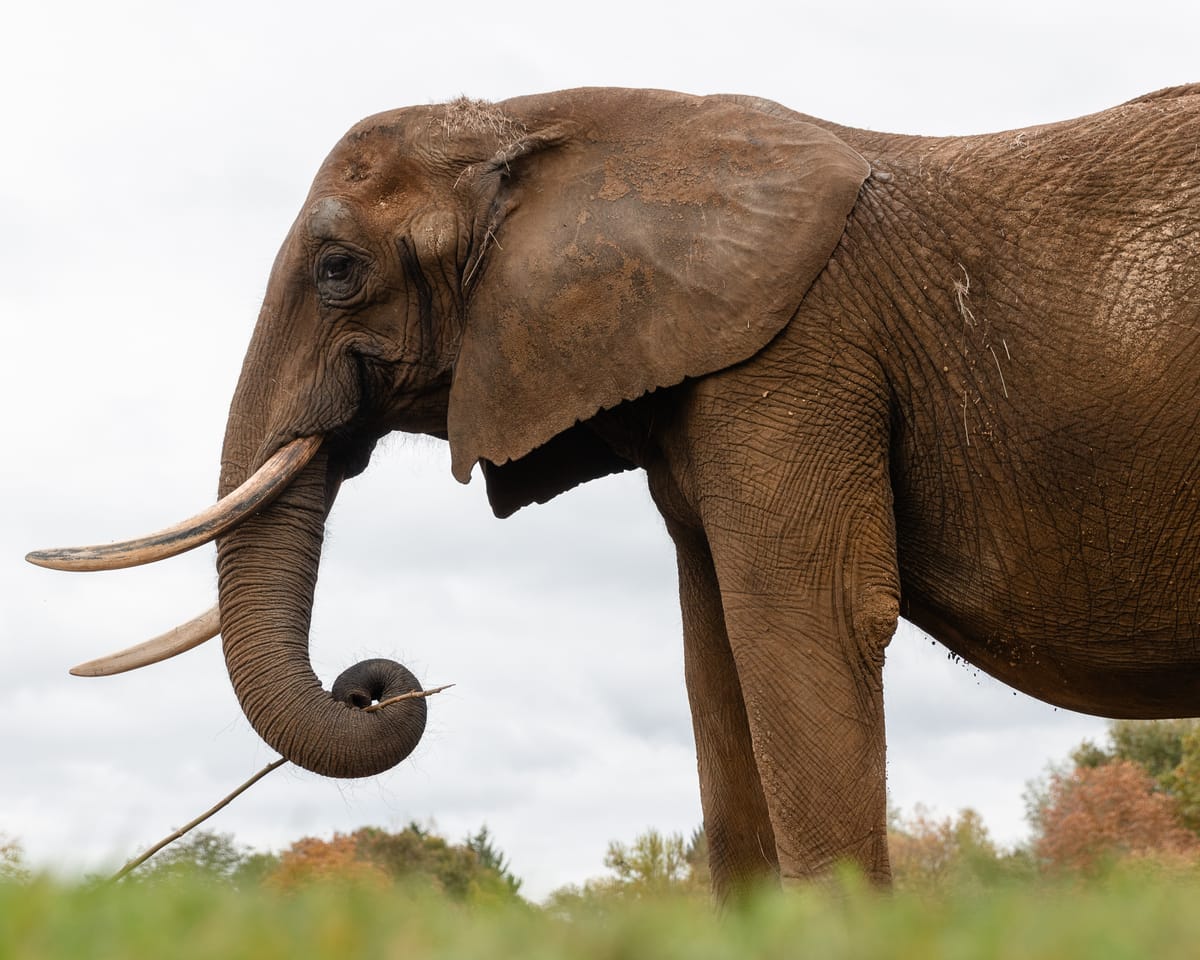
Europe’s first large‑scale elephant sanctuary, set to open to give a more natural setting for some of the 600 elephants still kept in captivity across the continent, is preparing to welcome its first residents.
Julie, Portugal’s final circus elephant, will be transferred next month to Pangea’s multimillion‑pound sanctuary in the Alentejo, situated 200 km (124 mi) east of Lisbon near the Spanish border.
She will be joined by Kariba, another female African elephant in her 40s, who is being moved from a Belgian zoo where she has lived alone.
“Kariba and Julie will inhabit a spacious natural environment where they can roam freely, bathe and socialise in compatible groups,” said Kate Moore, Pangea’s managing director. “That independence is essential, but they will also receive expert care. Elephants rank among the most sentient and intelligent creatures on the planet, so their needs are highly complex.”
The sanctuary will initially cover 28 hectares (70 acres), with additional fundraising needed to extend the enclosures over the full 405 ha of the former cattle ranch. Its goal is to provide the elephants with as natural a life as possible, and it will not be open to visitors.
Across Europe, 36 elephants live in solitary confinement in zoos, while about 40 are still required to perform tricks in circuses. Many, including Kariba and Julie, were captured in the wild and brought to Europe in the 1980s; they are now approaching the end of their lives.
Captive elephants are confined to groups far smaller than those in the wild, their daily movement is drastically reduced—wild elephants travel tens of kilometres each day—and they are prone to disease and lameness.
Anne, Britain’s last circus elephant, was relocated to Longleat Safari Park in 2011. She is now in her 70s and lives alone. In 2022, Paignton Zoo announced it would cease keeping elephants because it could not satisfy their complex requirements.
Research shows that captivity shortens elephants’ lives and raises infant mortality. One study found African females in zoos live an average of 17 years, compared with 56 years in the wild when human‑caused deaths are excluded. Another study reported that first‑year mortality for captive‑born Asian elephants in North America and the EU is roughly 30 %, whereas wild African calves experience a 10‑15 % mortality rate in their first year.
Although most EU nations have banned the use of wild animals in circuses—Germany being the exception, with only regional restrictions—many circuses find it difficult to relinquish large animals such as elephants due to a lack of sanctuary spaces. Likewise, authorities cannot seize animals from circuses if there are no facilities to house them.
In Portugal, a nationwide ban on wild animals in circuses took full effect in 2025, with Julie becoming the last wild animal to be rehomed after a voluntary agreement between the Cardinali circus and Pangea.
Vítor Hugo Cardinali, the director of the circus that cared for Julie since her arrival, expressed relief that she will now live in a setting closer to her natural instincts.
Read next
Tokyo tourist hotspot outlaws short-term rentals amid complaint surge
Shinjuku Ward, Tokyo, has moved to ban short-term rental accommodations in residential areas and near schools and important cultural sites, following a slew of complaints about visitor behaviour. The decision, to be enacted through a local ordinance, marks the latest sign that Japan’s patience with mass tourism is
Canada implements retaliatory US tariffs as trade dispute intensifies
Canada’s retaliatory tariffs on about $20 billion worth of American imports took effect at 12.01am on Tuesday, ranging from 15% to 50% and applying to steel, dairy, appliances, agricultural equipment, pulp and paper, and electronics. The measures, a response to the United States’ 50% tariff on $20 billion

Prosecutor general resigns amid political turmoil in Kyiv during Ukraine war
Ukraine’s prosecutor general Ruslan Kravchenko resigned amid corruption accusations after anti-graft officers searched his offices at the weekend. He called the allegations “completely unsubstantiated” and denied wrongdoing. The National Anti-Corruption Bureau (NABu) and Specialised Anti-Corruption Prosecutor’s Office (Sapo) announced Saturday they uncovered a money-laundering