
When Shelby Riskin received circular soil samples from Toronto’s waterfront that were more than a century old, the ecosystem scientist hoped to uncover traces of plants—such as cattails, bulrushes, water lilies, and irises—that once thrived in a now-vanished wetland.
Yet as she and a graduate student examined the samples under a microscope, they were surprised to see a brown, wormlike creature voraciously consuming clusters of algae, as though no time had passed since it last fed over 130 years ago.
Nearby, other organisms—water fleas, worms, and plankton—swirled and darted, seemingly unaware of the passage of time.
“We’ve managed to revive ancient life that gives us a glimpse of what this wetland looked like before urbanization,” said Riskin, a soil specialist at the University of Toronto who analyzed the samples. “It’s hard not to be fascinated by this.”
Riskin’s research, along with findings from a paleoecologist, has contributed to two peer-reviewed studies expected to be published soon.
For the scientists, these discoveries are more than just a unique glimpse into the past.
Toronto is undertaking a major initiative to restore a key river and its adjacent lands, one of the most extensive efforts of its kind. As the project nears completion, the findings highlight the enduring strength of ecosystems despite human-caused damage.
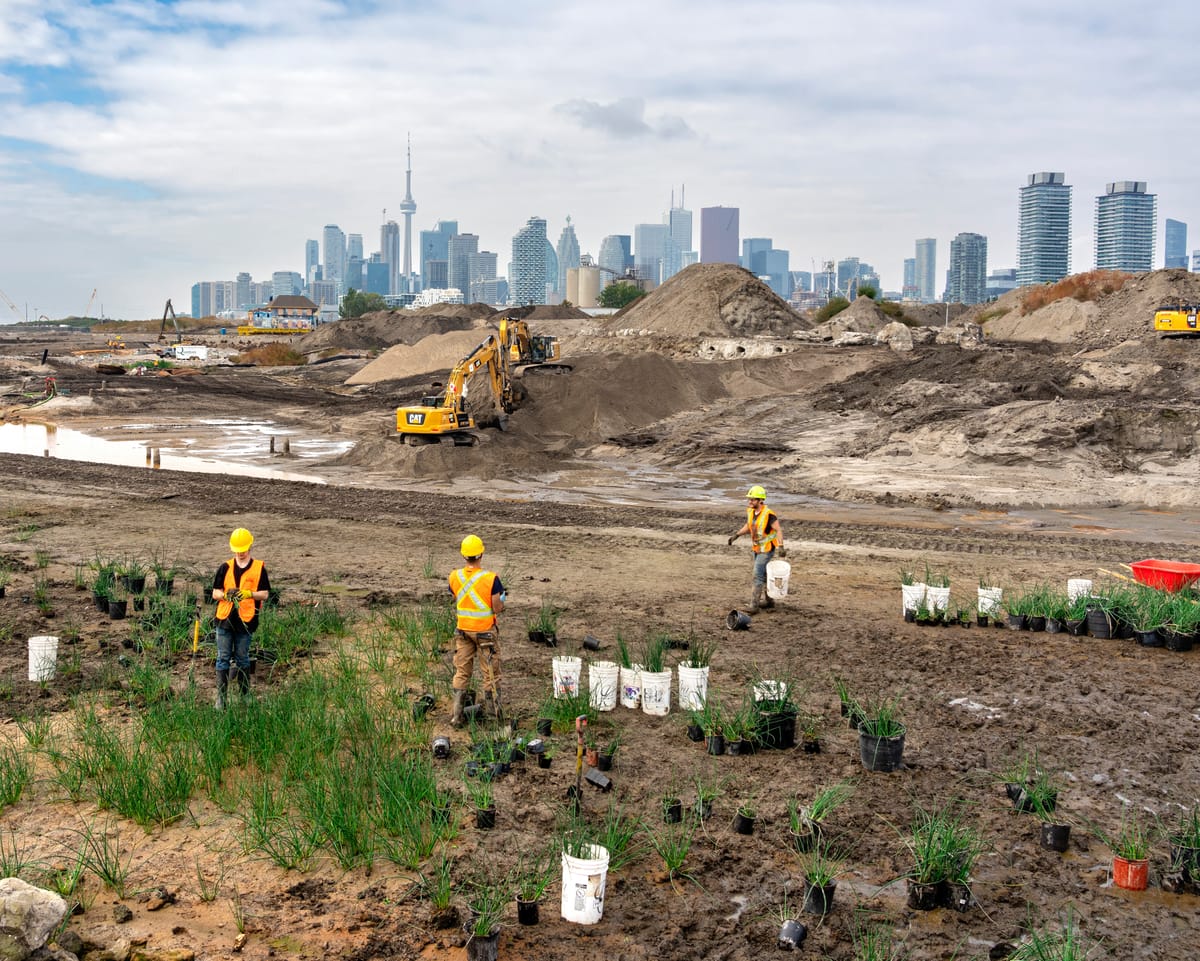
The samples that reached Riskin had sparked skepticism three years earlier when heavy machinery was digging through layers of earth and debris along Toronto’s waterfront to redirect the Don River.
One bulldozer operator noticed thick green shoots that stood out from the usual weeds—revealing sedges and cattails unlike anything else at the site.
Scientists quickly recognized the significance: seeds and plant fragments, buried for more than a hundred years, had suddenly revived.
The peat bogs and wetlands had been covered under nearly 25 feet of soil and gravel over a century ago, an effort to tame the remaining wild spaces in what is now one of North America’s largest cities.
Later, in the 1920s, engineers confined the Don River in a concrete channel, reshaping it to fit their vision of a heavily industrialized zone known as the Port Lands.
But while the controlled river reduced some risks, the over-engineering also made flooding during storms more severe and costly.
A restoration effort first proposed in 2007 is now nearing completion. Three hectares of new wetland and four hectares of wildlife habitat have been reintroduced to what was once a barren post-industrial area—an uncommon success amid widespread environmental decline. A more natural river path has also helped revive the ecosystem.
Read next

Russian Assault on Buses Near Ukraine Border Results in 30 Deaths
Thirty people have been killed and eighteen injured following an attack by Russia on two passenger buses in Kramatorsk, near the frontline in eastern Ukraine, according to local authorities.
The Donetsk regional prosecutor's office reported that the death toll from the morning attack on the buses had reached

Ethiopia Conducts Drone Strike on Eritrean Forces in Tigray Region
Eritrean forces reportedly crossed into Ethiopia's Tigray region and faced drone attacks from Ethiopian government forces, raising concerns about the potential for a broader regional conflict between the two neighboring countries.
Military vehicles transporting soldiers crossed the southern border of Eritrea into Tigray on Wednesday, reaching Adigrat, approximately

Israel Advances Film Resembling NAZA Documentary
The Israeli government is promoting an online film project designed to counter the findings of the award-winning documentary NAZA, which details Israel’s mass killings of civilians in Gaza. NAZA, directed by Oscar-winning filmmakers Yuval Abraham and Rachel Szor, is currently in cinemas and will be shown in