
Chinese Premier Calls for Global AI Cooperation, Stressing Balance Between Development and Security
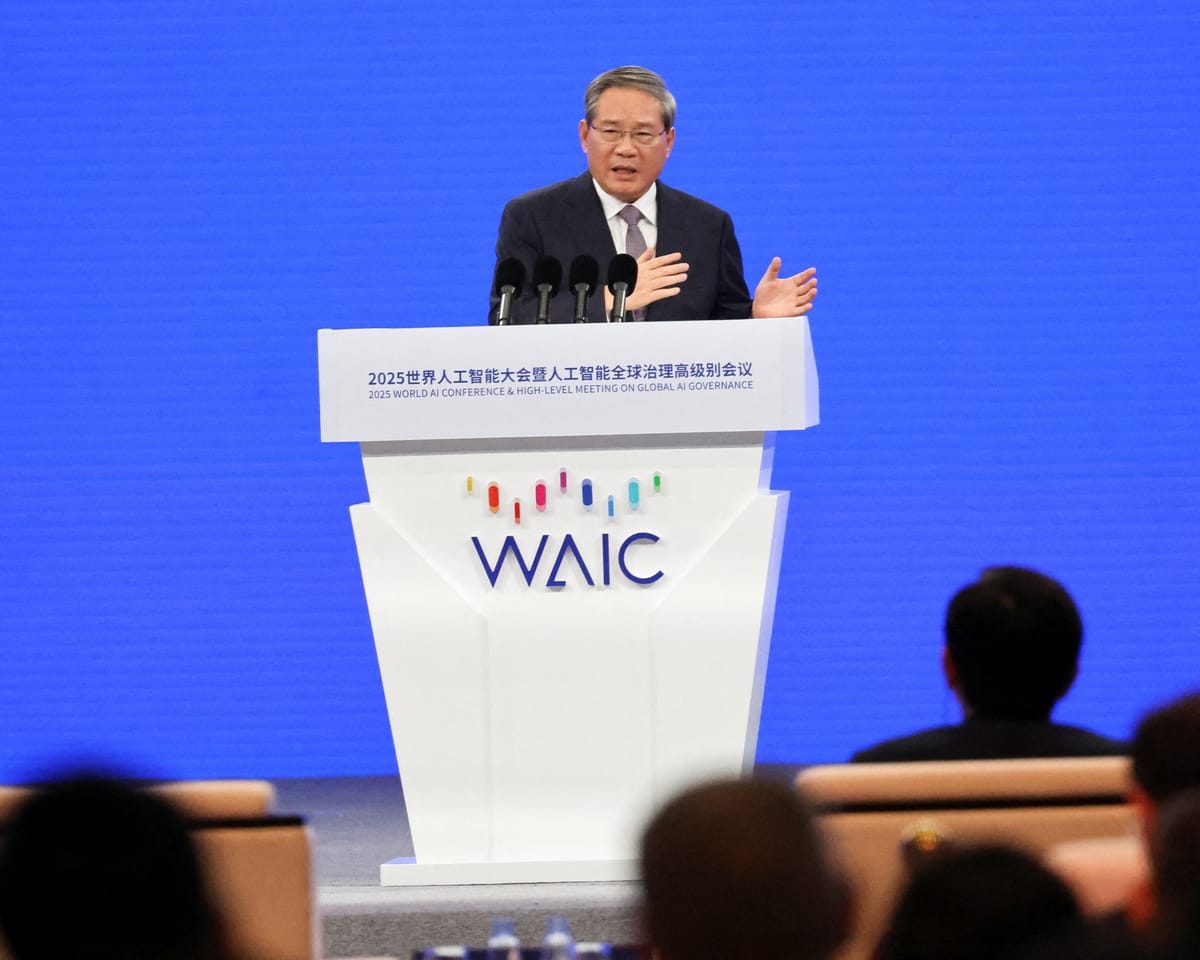
Premier Li Qiang has proposed the creation of an international body to strengthen collaboration on artificial intelligence (AI), urging nations to align on the development and governance of the rapidly advancing technology. The proposal follows recent U.S. moves to ease industry regulations.
Speaking at the World Artificial Intelligence Conference (WAIC) in Shanghai, Li described AI as a key driver of economic growth but warned that current governance efforts remain fragmented. He stressed the need for countries to work together toward a globally accepted framework.
On Saturday, Li cautioned that AI progress must be carefully managed against potential security risks, emphasizing the urgency of international consensus. His remarks came shortly after U.S. leaders outlined a deregulatory approach aimed at reinforcing their advantage in AI innovation.
At the conference’s opening, Li highlighted the importance of responsible governance and open development in AI. "The risks posed by artificial intelligence have garnered significant attention … Striking a balance between technological advancement and security demands broader societal agreement," he stated.
China, he added, would actively support open-source AI initiatives while sharing progress with other nations—particularly those in developing regions.
The three-day event convenes business leaders and policymakers amid intensifying tech competition between China and the U.S., with AI becoming a central point of contention. Recent U.S. restrictions on high-tech exports—including advanced AI chips—have cited concerns over potential military applications.
Though Li did not directly reference the U.S., he warned against AI becoming dominated by a handful of nations or corporations, pointing to challenges such as chip shortages and barriers to international talent exchange.
As AI transforms industries worldwide, ethical concerns have intensified, from misinformation risks to job displacement and questions about human oversight. Earlier reports suggested AI-generated summaries in search results could drastically reduce user engagement on traditional news platforms.
Hosted annually in Shanghai with government backing, WAIC draws prominent researchers, officials, and investors. This year’s speakers included Anne Bouverot, France’s AI envoy, and Geoffrey Hinton, a leading computer scientist in the field.
Read next

US officers worry Meta smart glasses could covertly record them
In January, the NYPD’s counterterrorism unit warned officers about a new security threat: Ray-Ban Meta glasses. A memo directed officers to “conduct thorough inspections of all eyewear permitted within inmate cells,” cautioning that recently arrested individuals could use the devices’ small cameras and microphones to record inside police

Google's Pixel 11 sets new standard for flagship phones, review finds
Google’s Pixel 11 continues to define what a base flagship phone should deliver, with leading cameras, extended software support and nearly all the features of its pricier siblings.
The standard Pixel 11 is priced at £879 (€999/$899/A$1,499), £80 higher than its previous version, reflecting ongoing
AI Expert Father of Three Shares Essential Insights for Parents on Artificial Intelligence
A father once promised his child they would write a story together called "The Day Nobody Went to Disneyland." The plot imagined a perfect day when the entire world avoided the park, expecting crowds, leaving it completely empty for a father and child to enjoy alone. Three decades