

Prime Minister Keir Starmer announced on Monday that Apple and Google have until September to implement software that blocks explicit imagery on children's mobile devices, or face new legislation.
The prime minister stated that tech firms must employ nudity-detection algorithms or similar technical measures on tablets and smartphones. These tools would prevent users from capturing or distributing images of genitalia unless they are verified as adults. If companies fail to comply within three months, the government will introduce laws requiring these protections on all devices sold in the UK.
This move follows the resignation of safeguarding minister Jess Phillips, who claimed Starmer had not done enough to prevent children from taking naked photos of themselves. Speaking at London Tech Week, Starmer asserted that the UK aims to be the first nation to make it impossible for children to view, share, or capture nude images.
Starmer rejected the notion that such risks are an inevitable consequence of modern technology, arguing that tech must adapt to societal needs. He emphasized that while technology offers opportunities, it must be secured against online predators. He called on companies to implement vice controls, warning that the law will be changed if they refuse.
According to the Home Office, these measures intend to stop sexual predators from exploiting victims via devices and prevent children from accessing pornography. Adults will maintain access to such content through age verification.
The initiative addresses concerns regarding early exposure to pornography and the risk of grooming. Ministers highlighted HMD Global as an example, as the company offers a child-focused device using SafeToNet’s "HarmBlock" software to automatically block explicit content. In contrast, current sensitive content warnings from Google’s Android and Apple can be bypassed with a passcode.
This UK effort mirrors recent Australian policies encouraging the development of operating systems that detect nudity via blurring or warning messages. This proposal is intended to complement the Online Safety Act, which mandates that companies remove illegal material.
Read next

US officers worry Meta smart glasses could covertly record them
In January, the NYPD’s counterterrorism unit warned officers about a new security threat: Ray-Ban Meta glasses. A memo directed officers to “conduct thorough inspections of all eyewear permitted within inmate cells,” cautioning that recently arrested individuals could use the devices’ small cameras and microphones to record inside police
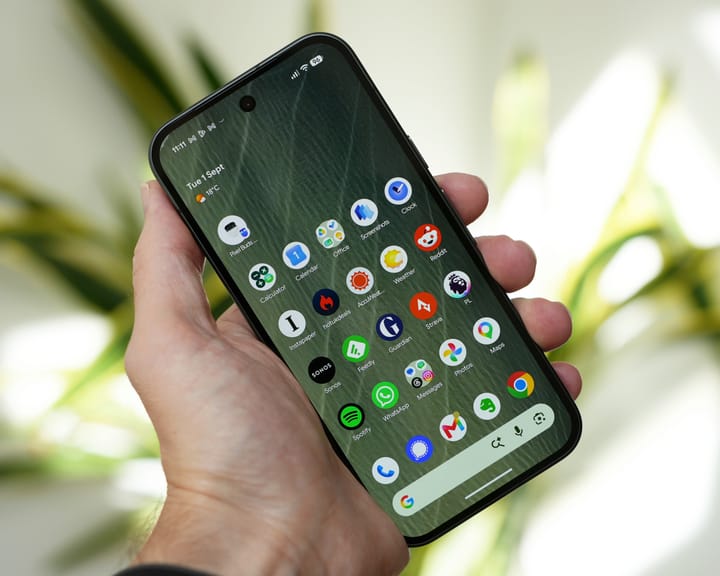
Google's Pixel 11 sets new standard for flagship phones, review finds
Google’s Pixel 11 continues to define what a base flagship phone should deliver, with leading cameras, extended software support and nearly all the features of its pricier siblings.
The standard Pixel 11 is priced at £879 (€999/$899/A$1,499), £80 higher than its previous version, reflecting ongoing

AI Expert Father of Three Shares Essential Insights for Parents on Artificial Intelligence
A father once promised his child they would write a story together called "The Day Nobody Went to Disneyland." The plot imagined a perfect day when the entire world avoided the park, expecting crowds, leaving it completely empty for a father and child to enjoy alone. Three decades