
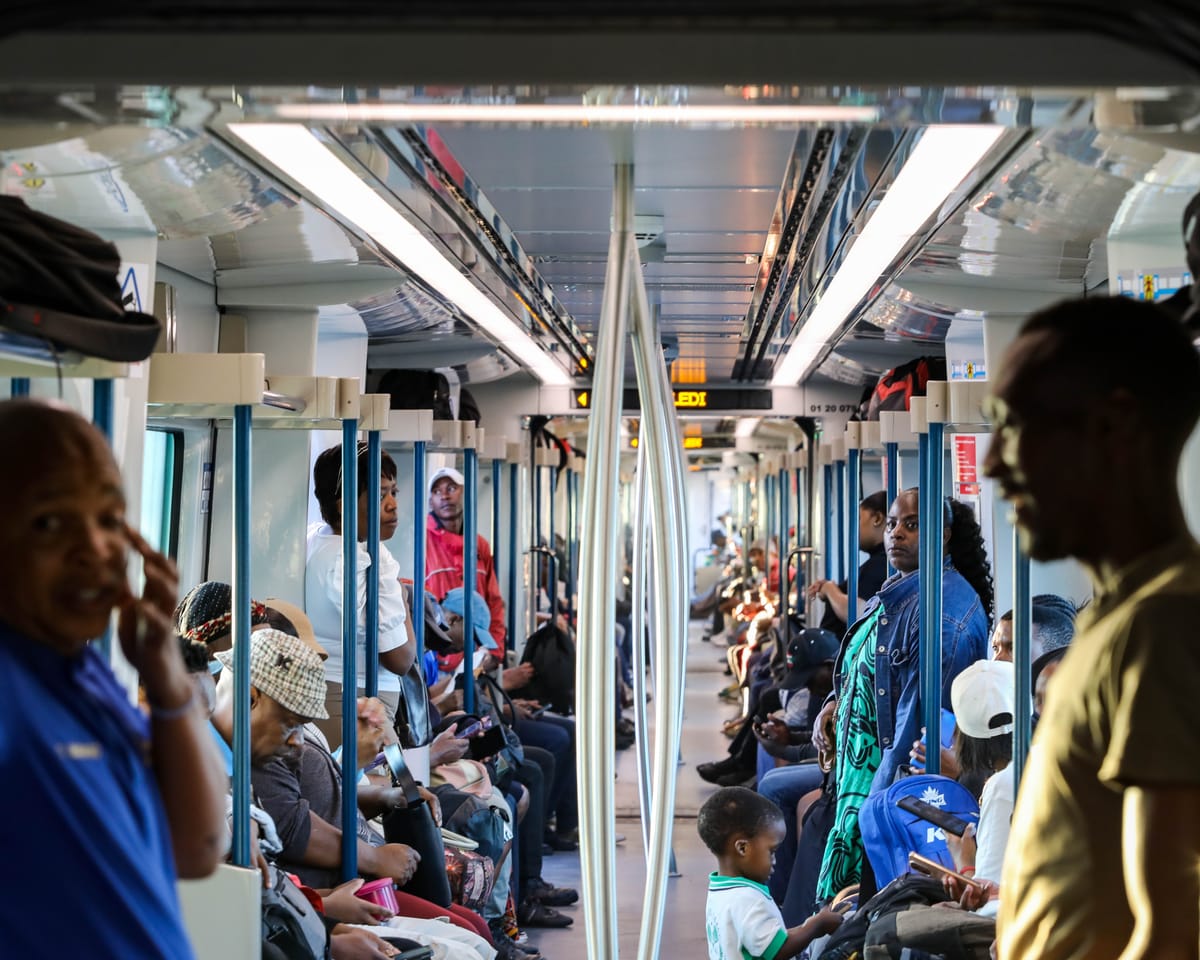
Africa is experiencing rapid urbanization. Since 1990, the share of people living in urban areas has increased from 28% to 44%, according to the World Bank. The Organisation for Economic Co-operation and Development projects that the continent’s urban population will reach 1.4 billion by 2050, doubling its current size.
Public transportation has often struggled to match this growth, resulting in severe traffic congestion in many major cities. Some urban centers, such as Addis Ababa and Lagos, have light rail systems, while others rely on bus networks. However, a significant number of commuters depend on privately operated minibus taxis.
“This situation is largely tied to colonial-era urban planning systems that were inherited across the continent,” said Mfaniseni Sihlongonyane, a professor of development planning and urban studies at the University of the Witwatersrand in Johannesburg. “Cities were designed with segregation in mind, leading to fragmented transport systems that primarily served formal or formerly designated ‘white areas.’”
Sihlongonyane noted that inadequate urban planning in subsequent decades has left many new urban residents without sufficient transport options. “Moving around cities in South Africa and much of Africa remains extremely difficult,” he said. “Post-apartheid and post-independence governments have not succeeded in building effective public transport networks.”
CuriosityNews spoke to residents in Nairobi, Johannesburg, and Abidjan about the daily challenges they face while commuting.
Nairobi
At 6 a.m. in Kibera, privately owned buses decorated with colorful artwork wait outside shops. A conductor calls out, “Hamsini hamsini Ambassadeur,” announcing the fare of 50 Kenyan shillings (about 30p) for a ride to a central hotel. As passengers board, he taps the side of the vehicle.
These buses, known as matatus, are the primary mode of transport in Nairobi, a city of nearly 5 million people spread across 17 districts. More than 10,000 matatus operate daily, moving commuters in and around the city.
Matatus come in two main forms: vans that seat 13 passengers and larger buses that carry over 30. Many are vividly painted, featuring designs inspired by hip-hop and pop culture. Some display images of international celebrities, including rapper Kendrick Lamar, footballer Cole Palmer, and reggae artist Gregory Isaacs.
The vehicles are often loud, with music playing at high volumes. They are also known for frequently violating traffic rules—overtaking recklessly, cutting off other drivers, and sometimes even driving on sidewalks. Conductors can be seen hopping on and off moving matatus, holding onto door frames as the vehicles weave through traffic.
Like many other African cities, Nairobi suffers from severe rush-hour congestion, which road expansions and new highways have not fully resolved.
Read next

July 2026 Marks Worst On-Record Wildfires in England, Data Reveals
July 2026 saw the highest number of wildfires in England on record, with provisional data indicating a clear increase in the annual total. The UK experienced extreme vulnerability to climate change, as severe heat and dry conditions turned vast countryside areas into a tinderbox. This summer marked England's

Thousands Protest in Madrid Following Death of Evicted Pensioner Maricarmen
Thousands are expected to march through Madrid on Thursday evening to honor María del Carmen Abascal, an 87-year-old whose eviction from her apartment, two weeks before her death, highlighted Spain’s housing crisis. Abascal's flat had been acquired by an investment firm that sought to increase

Maduro’s Wife to Seek Release from New York Detention in Court Appearance
Cilia Flores, the wife of former Venezuelan President Nicolás Maduro, was scheduled to appear in court, where her legal team will request her release from custody due to her heart condition, proposing house arrest instead.
Flores and Maduro have been detained in New York since early January, following a raid