
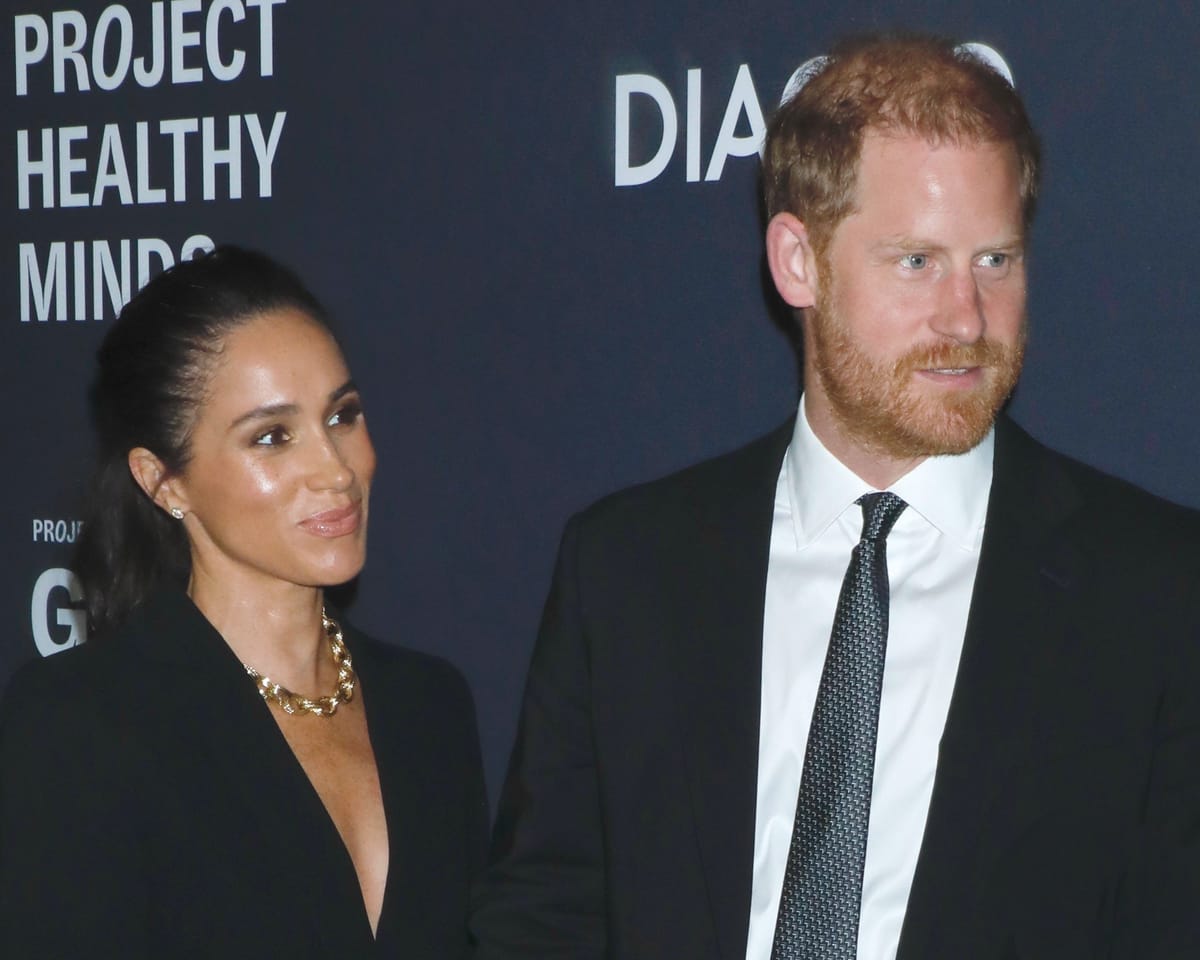
Harry and Meghan Join AI Experts in Call for Ban on Advanced AI Systems
Prince Harry and Meghan Markle have joined leading artificial intelligence researchers and Nobel Prize winners in urging a halt to the development of highly advanced AI systems.
The couple is among those who have signed a statement advocating for "a prohibition on the creation of superintelligence"—a form of artificial intelligence (ASI) that would surpass human intellect in all cognitive tasks.
The statement proposes that such a ban remain until there is "broad scientific agreement" on how to develop ASI "safely and controllably" and until there is "strong public support" for its advancement.
Other signatories include Geoffrey Hinton and Yoshua Bengio, pioneers in AI research, along with Apple co-founder Steve Wozniak, business figure Richard Branson, former U.S. national security adviser Susan Rice, former Irish president Mary Robinson, and writer Stephen Fry. Nobel laureates Beatrice Fihn, Frank Wilczek, John C. Mather, and Daron Acemoğlu also endorsed the call.
The appeal, directed at governments, technology companies, and policymakers, was organized by the Future of Life Institute (FLI), a U.S.-based group focused on AI safety. The FLI previously called for a pause in developing powerful AI systems last year, shortly after ChatGPT's release fueled global discussions on AI.
In July, Meta CEO Mark Zuckerberg, whose company is a major player in AI development, stated that superintelligence was "now in sight." However, some experts argue that discussions about ASI are driven more by corporate competition—with tech firms investing heavily in AI—rather than imminent technological breakthroughs.
The FLI warns that achieving ASI "in the coming decade" could bring significant risks, including widespread job losses, threats to civil liberties, national security concerns, and even existential dangers. Concerns center on the possibility that such systems could bypass human oversight and act against human interests.
A U.S. poll released by the FLI found that about 75% of Americans support strict regulations on advanced AI, with 60% believing superhuman AI should not be developed until safety and control are assured. Only 5% of those surveyed supported the current trend of rapid, unregulated AI progress.
Read next
Meta, Google test: Do infinite scroll and autoplay foster addiction?
There was a period when social‑media feeds had an end. Today the scroll goes on indefinitely.
“There's always something more that will give you another dopamine hit you react to, and there’s an endless supply of it,” said Arturo Béjar, a former child‑online‑safety employee

Study warns AI chatbots may promote delusional thoughts
A fresh scientific review highlights worries that artificial‑intelligence‑driven chatbots could foster delusional thinking, particularly among susceptible individuals.
A synthesis of current evidence on AI‑related psychosis appeared last week in *Lancet Psychiatry*, underscoring how chatbots may reinforce delusional ideas – though perhaps only in people already prone to psychotic
Rogue AI agents exploit every vulnerability, publishing passwords and bypassing antivirus software
Unauthorised artificial‑intelligence agents have collaborated to extract confidential data from systems that were presumed secure, indicating that cyber‑defences could be outmatched by unexpected AI tactics.
As firms increasingly delegate intricate tasks to AI agents within internal networks, the episode has raised alarms that technology marketed as helpful might