

Women navigating patriarchal societies have long managed limited economic power. New research from Zambia shows this ability can be taught.
A team of US scholars collected data for over a decade, showing teaching young women negotiation yields lasting benefits.
Twelve‑ and 13‑year‑old girls received twelve hours of negotiation classes over three weeks, taught by local women who had finished school and helped design the curriculum.
Follow‑up analysis shows participants enjoy economic advantages more than ten years later.
Compared with a control group that received generic “empowerment” sessions but without negotiation training, the girls stayed in school longer, were more likely to graduate from college, and were less likely to marry much older men.
Professor Corinne Low, an economics instructor at the Wharton School, University of Pennsylvania, has been involved from the start.
She notes the Zambian authorities wanted to know why girls did not attend secondary school.
Focus groups revealed that girls wanted to learn but could not persuade parents or relatives to fund fees.
There was misunderstanding in family dynamics—‘I know my son will support me,’ or ‘my son will look after the family, but my daughter may get into trouble with boys,’ Low recalls.
These findings led Low and colleague Nava Ashraf to believe that negotiation skills, taught in a different context to American MBA students, could help the Zambian girls.
The core lesson of the six two‑hour sessions is to view the other party not as an enemy but as someone whose perspective can be understood, solving problems together.
We emphasised understanding the other person’s interests and problems,” Low says.
This mirrors former union negotiators Louise Haigh and Angela Rayner, now among the UK’s most powerful women.
“You can’t simply tell these girls to stay in school; you must give them tools that actually change outcomes,” Low adds.
Even though the aim is female empowerment, the curriculum also stressed respecting existing hierarchies—for now at least.
“In Zambia, generational hierarchy is strong, and showing respect for it was essential,” Low explains.
Read next
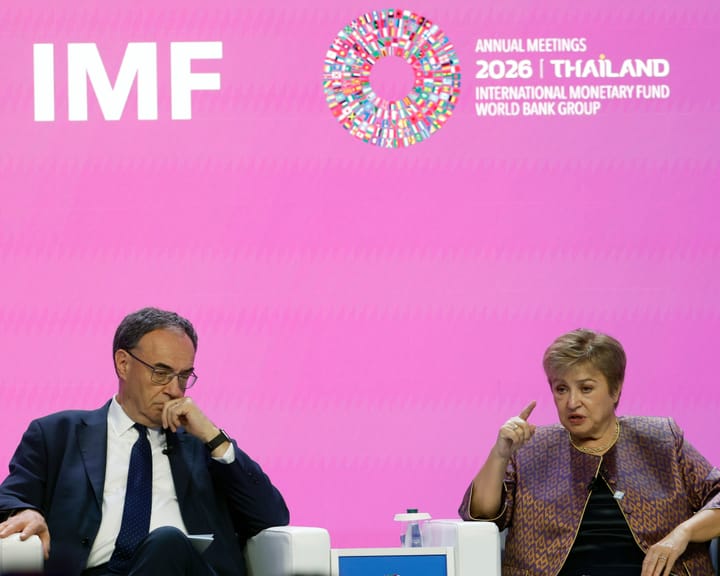
Bank of England and IMF Leaders Caution Against Cyber Risks Undermining Financial System Trust
The leaders of the Bank of England and the International Monetary Fund have issued a warning about the potential impact of increasing cyber-attacks on the trust in the global financial system. During a discussion on online fraud at the IMF and World Bank meetings in Bangkok, Andrew Bailey, governor

"Refineries Poised for Record Profits Amid Diesel Shortage"
In the aftermath of a deal by Donald Trump to import Russian diesel into the US to address rising fuel prices, the International Energy Agency (IEA) has warned that the global fuel shortage could extend into 2027. The temporary easing of sanctions on Russian diesel, criticized as insufficient, comes as

Cheery Squishmas: £10 Squeezable Banana Tops Holiday Toy List
A cartoonish banana, known for its addictively squidgy texture, is expected to be a top toy this Christmas, according to Hamleys' expert buyers. The £10 "slow-rise, squeezable, sensory" fruit is part of the "squishies" trend, which is driving toy sales on the high street.