
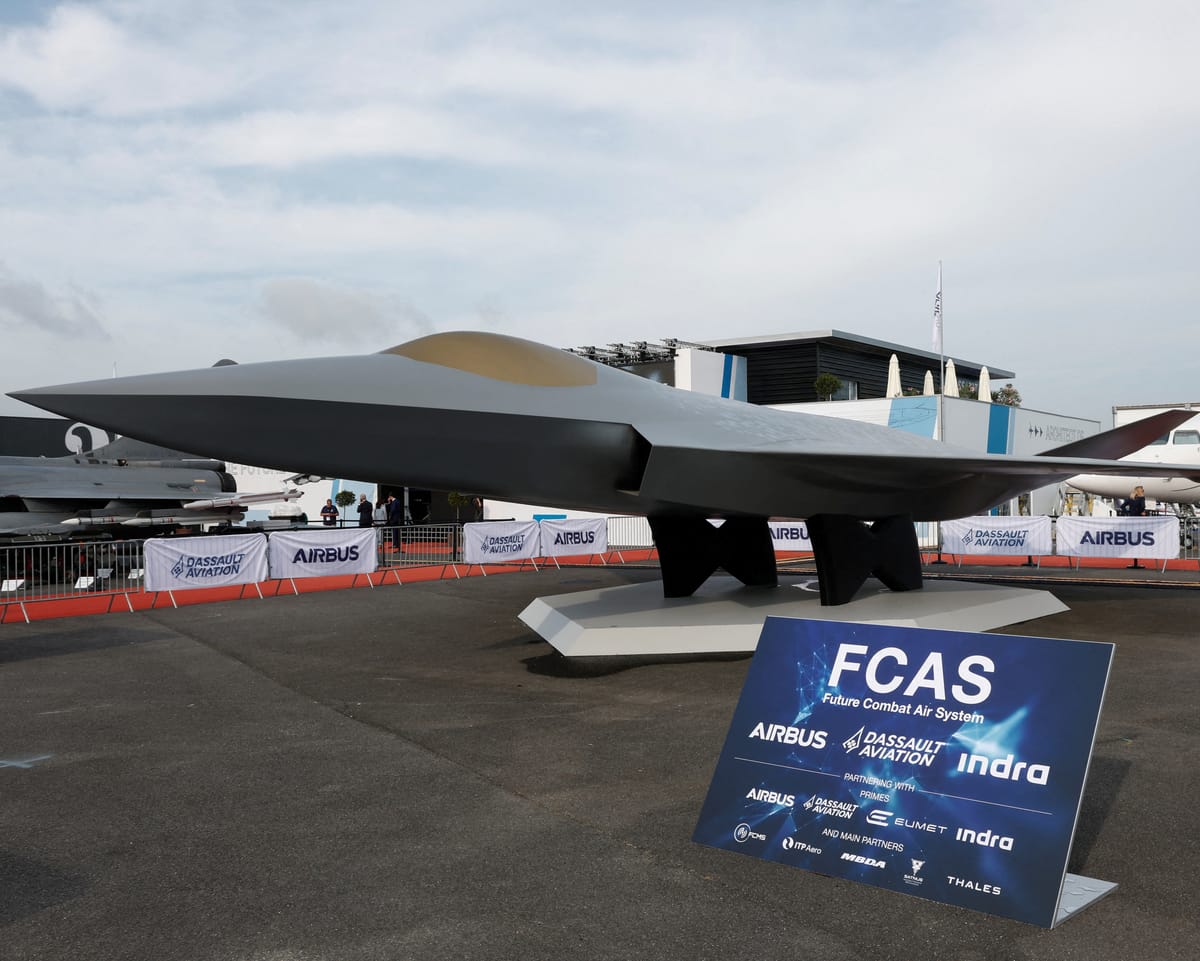
When former ECB president and Italian PM Mario Draghi urged Europe to catch up economically with the US and China, defence collaboration was prescribed. No more should each nation build independent boats, tanks or jets; allies should share costs and technologies.
Europe stumbled at the first hurdle. German Chancellor Friedrich Merz and French President Emmanuel Macron cancelled the joint future combat air system in June, ending collaboration efforts since 2018.
What happens next? France seems content to pursue its own fighter, while Germany questions if it will develop an independent aircraft. It may instead become a secondary customer to the Tempest under the Global Combat Air Programme (GCAP) led by the UK, Italy and Japan.
The UK summer debate centred on military spending, following Defence Secretary John Healey’s June resignation over commitments, his return under Chancellor Andy Burnham, and when the UK will meet its 3% of GDP defence target.
Militaries race to develop sixth-generation fighters. The Tempest and the US’s F47 will dominate the air using AI, advanced stealth and drone swarms. (The F47 is named after Donald Trump, the 47th US president, until a Democratic president takes office.)
France and Germany’s joint effort foundered over disputes between Dassault Aviation and Airbus Defence and Space on leadership. France also wanted a smaller carrier-capable jet; Germany has no carriers. Last week, Safran ended its joint engine project with Germany’s MTU Aero Engines.
A European defence chief executive said it might not be impossible for there to be as many as three European fighter jets if Germany builds one, possibly with partners, to rival GCAP and France. “It would not be ideal,” he acknowledged. A UK consultant working with prime manufacturers warned: “Three is too many.” Without an order book, such projects are uneconomical. Successful fighter programmes produce about 600 jets; France has 228 Rafales, and Dassault’s existing fleet makes a second European type costly.
Dassault chief Éric Trappier said a next-generation jet could be developed solely in France or with partners, aiming for a demonstrator by 2031. He envisions a “Rafale plus” or “Super Rafale” with upgraded radar, weaponry and digital systems, though without a complete redesign it may not reach the very cutting edge. The current Rafale upgrade for the early 2030s will work with stealth drones.
A key question for every air force, including the US and GCAP partners, is whether a crewed fighter will be outdated by 2035. The industry consensus is that crewed jets will still be needed, but will be accompanied by “loyal wingmen” drones such as BAE Systems’s Brontanax that can fly into harm’s way over the horizon.
For Germany, the option of joining GCAP remains. Canada joined as an “observer” at July’s Farnborough airshow, giving it priority to buy products but not the manufacturing jobs of a core partner. Wealthy Saudi Arabia is also pushing to join, though it lacks significant technological knowhow and would face criticism over its human rights record.
“Very expensive platforms require assured orders to be economical,” said Kevin Craven, chief executive of ADS, the UK aerospace and defence lobby group. “There is a realisation across Europe and Nato that collaboration is necessary.”
Some partners are open to Germany joining. Lorenzo Mariani, chief executive of Leonardo, Italy’s lead defence company in GCAP, called Germany a “positive element” and “the strongest financial partner in Europe,” though another core partner could risk delays. Reopening discussions is complicated: the UK, Italy and Japan created Edgewing to build the Tempest, with chief Marco Zoff aiming “not to fight” over work share. An insider described it as “having all our fights at the start” to enable rapid development by 2035.
Tufan Erginbilgiç, chief executive of Rolls-Royce (Tempest engine maker), told reporters at Farnborough he did not think Germany’s joining would negatively impact GCAP, saying it means more markets. Michael Schoellhorn, chief executive of Airbus Defence and Space, said the company would join something where it could have a “significant portion of the work and the leadership,” currently being explored.
Executives must act quickly after their summer holidays to avoid the fragmentation Draghi warned against. Failure risks repeating past mistakes of building several alternatives that compete for export orders. A defence industry consultant concluded: “It would mean we don’t learn.”
Read next
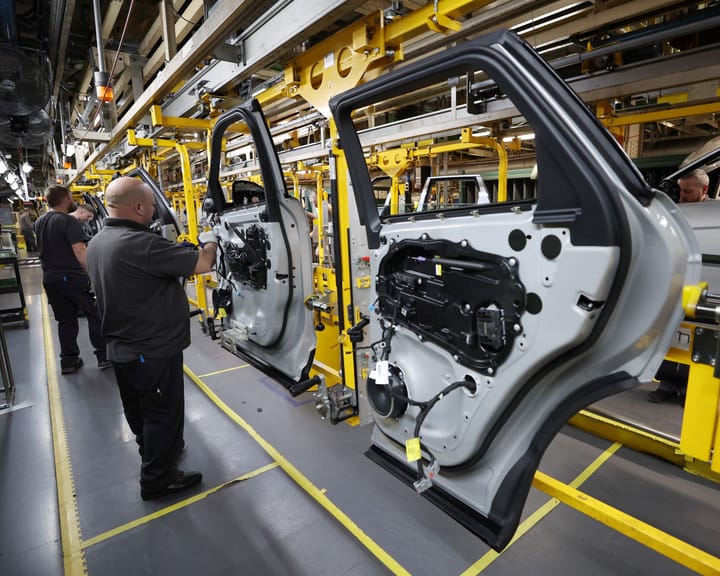
Jaguar Land Rover suppliers voice ‘everything is against us’ amid cutbacks
David Roberts, chair of Coventry-based Evtec, says the outlook for Britain’s automotive sector is grim, with “everything against us.” Evtec is a tier 1 supplier to Jaguar Land Rover, which this week announced 4,000 job cuts over two years despite chancellor John Healey’s attempt to talk
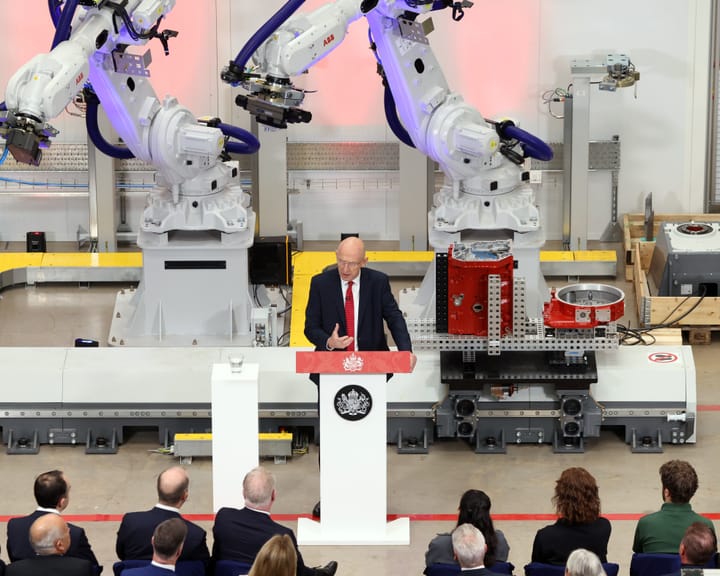
John Healey supports growth but insists Labour must be truthful about spending
John Healey has stated that his primary goal as chancellor will be to boost economic growth, while acknowledging that Labour must be straightforward about controlling public spending at next month's budget.
In his first major address since assuming the role in July, Healey said the leading focus of
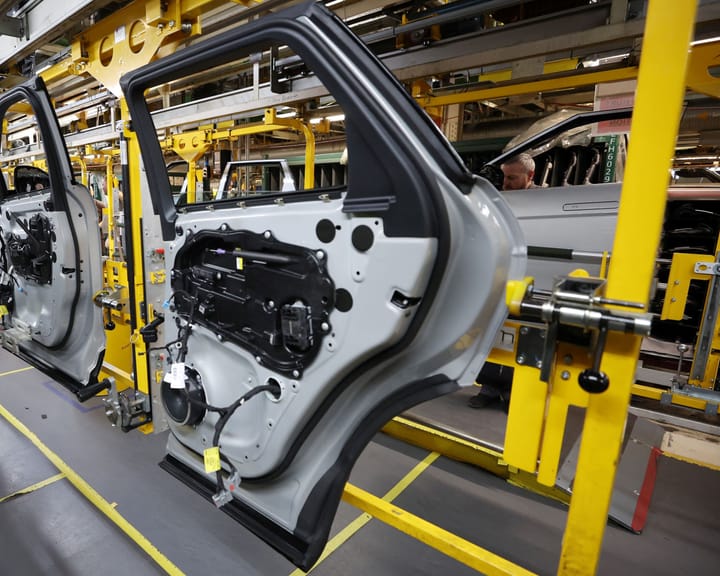
Jaguar Land Rover announces 4,000 job cuts to be implemented over next two years
Jaguar Land Rover has confirmed plans to eliminate around 4,000 positions across its 34,000-strong UK workforce over the next two years, as the company contends with mounting pressures in the global automotive sector, US trade tariffs, and the lingering impact of a cyber-attack.
The carmaker, owned