
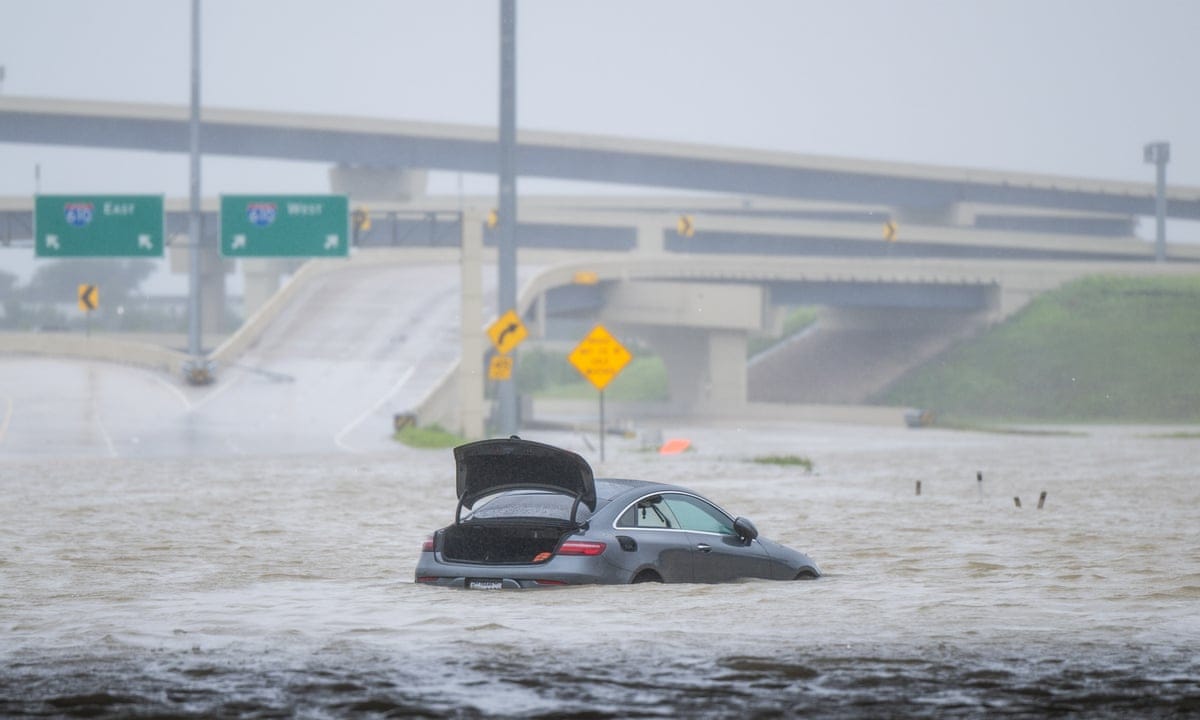
Hurricane Beryl, which made landfall near Houston as a category one storm after causing devastation in the Caribbean, was propelled by unusually high ocean temperatures. Scientists have warned these conditions are likely to contribute to more intense storms in the months ahead.
Over 2 million residents lost power following Beryl's landfall, and it had previously been a category five hurricane with wind speeds of up to 165mph, resulting in 11 fatalities. This was unprecedented for an Atlantic hurricane this early in the year; normally, major storms form closer to September. Beryl escalated from a minor event to a category four hurricane in two days, with scientists attributing its rapid intensification to abnormally warm ocean temperatures along its path.
"Beryl's strength and timing are extraordinary," said Brian McNoldy of the University of Miami, adding that such events were rare even prior to climate change. The oceans have been increasing in temperature globally due to burning fossil fuels; last year marked a record high with marine heatwaves affecting 90% of global ocean areas.
The region known as the main development area for hurricanes, which stretches from central America to Africa, has seen its waters reach peak temperatures unusually early this year - an average increase of up to 5C (9F) compared to normal in recent weeks. If these warm ocean conditions persist, it could result in more intense storm seasons ahead.
Alex DaSilva at AccuWeather noted that the warmer waters across much of the Gulf of Mexico act as fuel for hurricanes and are expected to rebound quickly after Beryl's passage. Despite not increasing the total number of hurricanes, there is evidence that storms have become stronger and more severe, with heavier rainfall due to increased atmospheric moisture from global heating.
The impacts of rising ocean temperatures extend beyond hurricane strengthening. These conditions pose risks not only for marine life but also the human populations reliant on these ecosystems. While oceans absorb a significant amount of human-generated heat, protecting land from more extreme temperature rises, they also affect fisheries and coral reefs, deplete oceanic oxygen levels, and may disrupt ocean currents in the long term.
"The changes to our oceans will have far-reaching consequences beyond individual human lifetimes," Celeste Saulo from the World Meteorological Organization remarked earlier this year. The duration over which these changes take effect is significantly longer than atmospheric changes, with potential irreversible effects on a centennial or even millennial scale.
Read next

Ukrainian combat troops gain restricted access to Starlink satellite internet
Ukrainian soldiers experienced a sudden disruption in their access to Starlink satellite internet terminals amid increased pressure from the Trump administration for Ukraine to cease long-range attacks on Russia’s oil infrastructure. These terminals, managed by Elon Musk’s SpaceX, are vital for Ukraine's military operations. The

Russia's latest Ukraine attacks show 'disrespect' towards US, says Zelenskyy — Europe live
Sikorski Confronts Musk Over Starlink in Ukraine
Poland’s Foreign Minister Radosław Sikorski recently addressed Elon Musk on X, questioning reported restrictions on Starlink services in Ukraine. Poland contributes significantly to Ukraine’s funding of Starlink, which is crucial for maintaining internet connectivity in Kyiv and its military operations, with

"Breaking Stigma: Nikita Jager's Triumph in Civil Rape Case Against Conor McGregor"
Nikita Hand faced a challenging decision when considering a civil case against Conor McGregor following a 2018 assault. Despite her personal reservations about being an "imperfect victim" due to alcohol and drug use on the night of the incident, she chose to proceed. This decision stemmed from her