
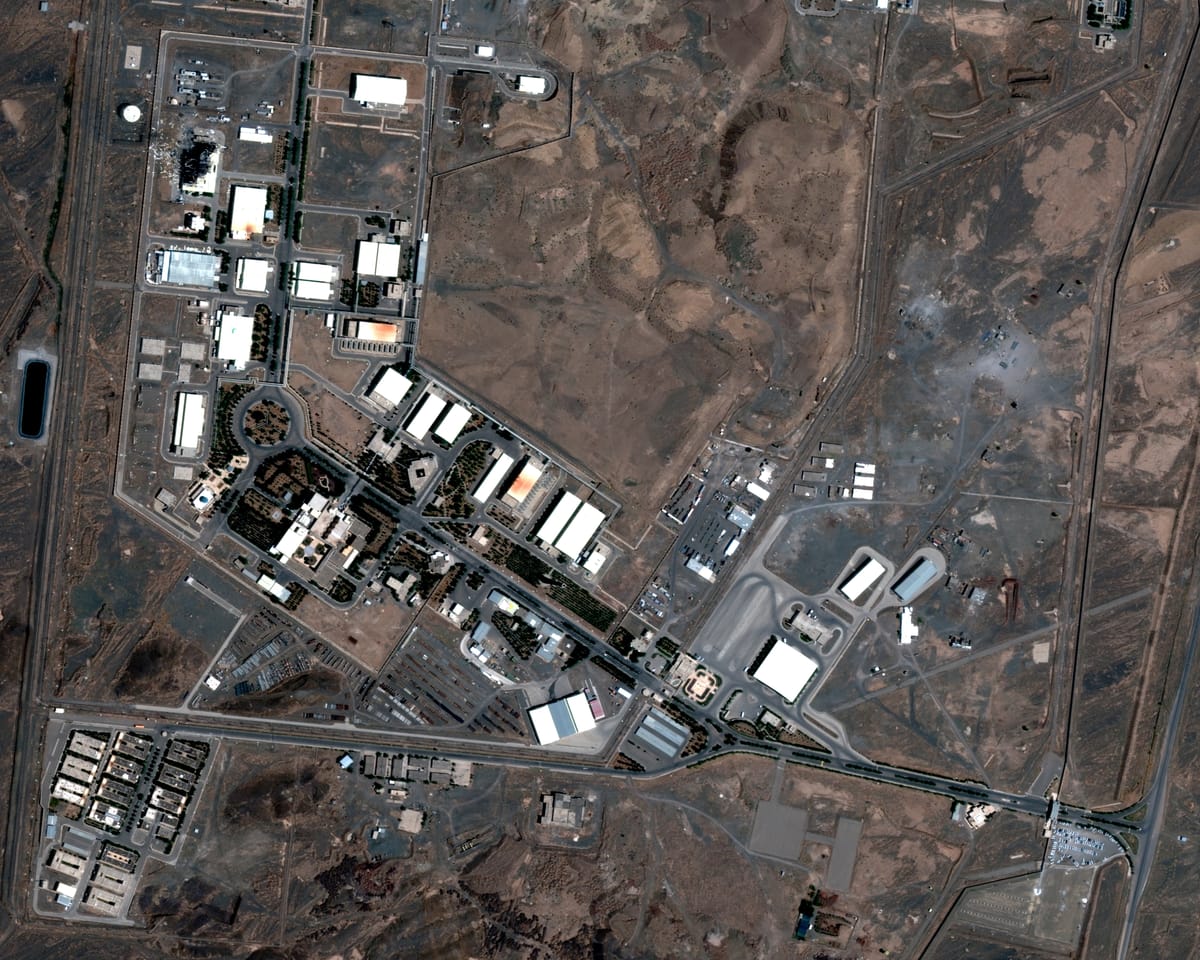
The U.S.–Israeli offensive against Iran aims to settle a 24‑year dispute over Tehran’s nuclear effort, yet experts on proliferation caution it could backfire and push the regime toward a covert bomb.
Tehran has repeatedly asserted that its nuclear work is peaceful and that it has no plans to produce a weapon.
Nevertheless, the discovery in 2002 of two hidden facilities—one for uranium enrichment and another for heavy‑water plutonium production—has kept the program under deep suspicion.
A 2015 nuclear accord placed strict caps and comprehensive inspections on Iran, but when the United States withdrew in 2018, causing the deal’s collapse, Iran accelerated enrichment and related activities.
Most concerning to the global community, by the previous summer Iran had amassed just over 440 kg of highly enriched uranium (HEU) at 60 % purity.
From a technical standpoint, reaching 60 % makes the jump to 90 %—weapons‑grade uranium suitable for a compact warhead—relatively straightforward.
If the uranium were further enriched and converted from gas to metal, the 440 kg stockpile could yield more than ten nuclear warheads.
The unease over this accumulation, which grew after the 2015 deal unraveled, motivated the U.S.–Israeli strikes carried out in June.
The American component, dubbed Operation Midnight Hammer, centered on deploying bunker‑busting munitions against Iran’s nuclear installations.
President Trump claimed the assault had “obliterated” the nuclear program, but the assertion soon proved inaccurate.
The bombs caused extensive damage, yet deep underground complexes beneath the mountains at Isfahan and Natanz remained intact.
In retaliation, Iran barred International Atomic Energy Agency (IAEA) inspectors from those and other sensitive locations, leaving the watchdog unable to trace the fate of the 440 kg HEU stockpile or activities in the deep tunnels at Isfahan and Natanz.
In its most recent assessment, the IAEA admitted it could not confirm whether Iran had halted all enrichment work or determine the current size of its uranium holdings at the targeted sites.
Even with that ambiguity, IAEA Director General Rafael Grossi stated on Monday that “we do not see a structured program to produce nuclear weapons.”
Nonetheless, specialists in nuclear proliferation warn that the situation could shift after an attack intended to topple a regime that has ruled Iran for 47 years and after the death of its supreme leader, Ali Khamenei, who issued a religious ruling opposing bomb development.
“That is what makes this such a huge roll of the dice,” said Jeffrey Lewis, a noted global‑security scholar at the Middlebury Institute of International Studies at Monterey.
Read next

Sánchez reaffirms “No to war” stance after Trump threatens to halt trade with Spain
The Spanish prime minister, Pedro Sánchez, answered Donald Trump’s stark warning to halt all trade with Spain after his government declined to support the United States’ ongoing strikes against Iran, likening the escalating Middle‑East tension to a game of “Russian roulette with the fate of millions”.
Sánchez, a
Trump administration still hasn't clarified its reasons for waging war on Iran
It required months for the false statements of the Bush administration concerning weapons of mass destruction in Iraq to surface, after an invasion, a regime change, a probe, and finally the revelation. By contrast, the Trump administration’s alerts about an imminent Iranian danger emerged within a single afternoon.
On
Iran's chaos reveals its struggle to function as war becomes a fight for survival
Iran faced a day of unusual military and diplomatic strain on Tuesday as US airstrikes raised the death count in the country beyond 800 and the headquarters of the Assembly of Experts, the group tasked with choosing a successor to the slain supreme leader Ali Khamenei, were bombed.
It would