
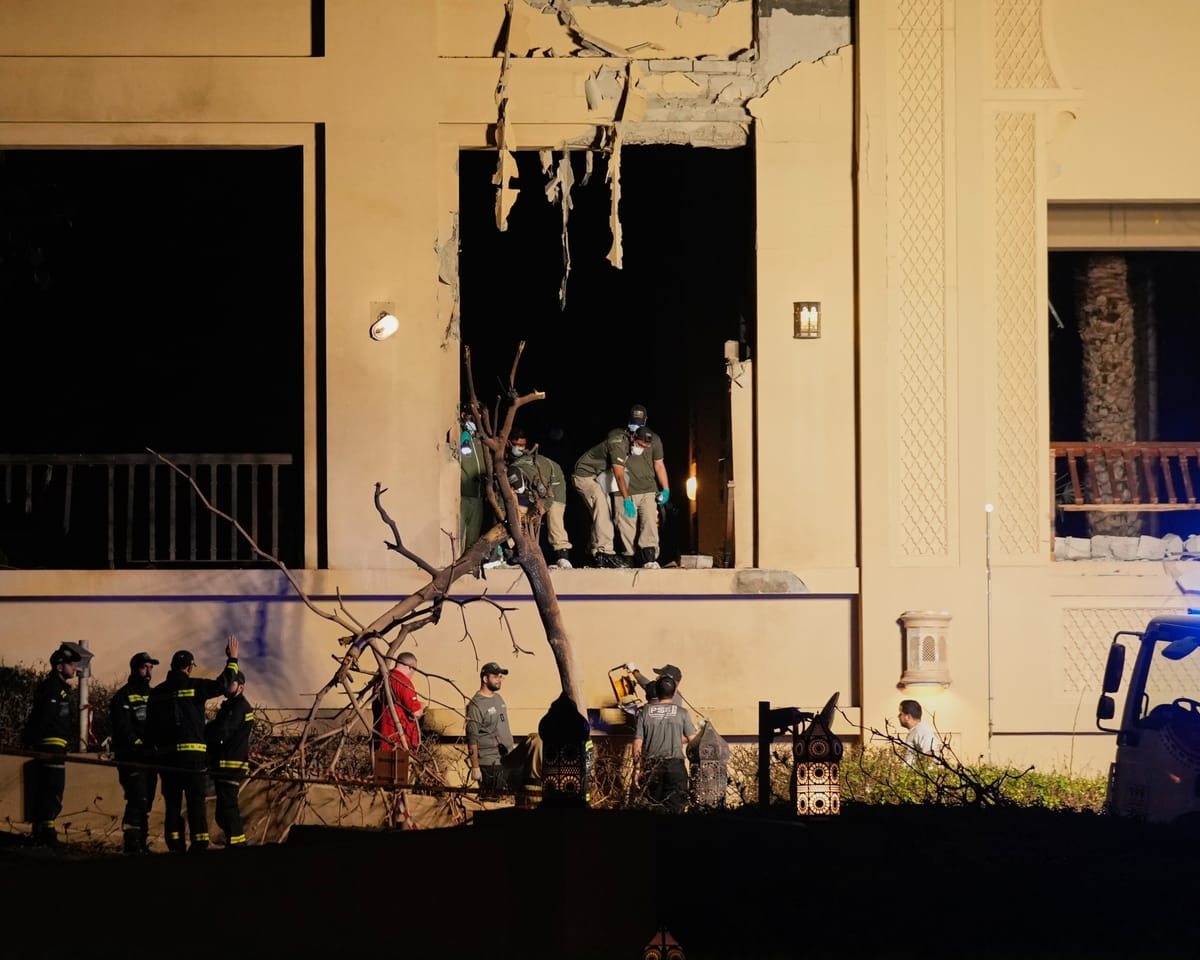
Iran hit the renowned Fairmont hotel in Dubai, igniting the building as the conflict initiated by the United States and Israel against Tehran rapidly expanded across the Middle East on Saturday.
Witnesses described the shock of an Iranian missile striking the five‑star hotel in Dubai’s upscale Palm Jumeirah district. Videos posted online captured flames erupting near the hotel’s entrance, leaving four people wounded.
One local told reporters, “Everyone is terrified,” as conditions in Dubai continued to worsen.
“There are videos of missile interceptions all over the city,” the resident added. “I’m packing a bag just in case… not that we can leave, because the airspace is closed. This is exactly what we feared, and now it has happened.”
Similar scenes unfolded elsewhere in the Gulf, regions once viewed as pockets of stability in the Middle East.
Within hours of the first U.S. and Israeli bombs being dropped, Tehran launched a broad assault that struck more than six nations, drawing in locations that had previously escaped the growing crisis.
In Bahrain, an Iranian drone collided with a high‑rise tower in what appeared to be a deliberate strike, detonating and setting the skyscraper ablaze. Earlier, the nation’s security agency had also been hit by an Iranian missile.
Online footage seemed to show a missile striking the large U.S. naval base in Bahrain. In Kuwait, a drone crashed into the main airport, injuring several staff members and damaging the facility.
As Iran answered U.S. and Israeli attacks by bombing the Gulf and Israel, its allied militias entered the fight. Bases of the Iran‑backed Popular Mobilization Forces in Iraq were hit by either U.S. or Israeli forces, killing at least two fighters from the Iraqi group Kataib Hezbollah.
The Iran‑aligned groups replied by offering support, with Kataib Hezbollah and Yemen’s Houthis both warning they would target U.S. military installations throughout the region.
Only a few hours after Washington labeled the operation “Epic Fury,” hostilities had already spread far beyond the limited front of the June 2025 war, which had been largely confined to Israel and Iran.
For residents of the Middle East, the widening conflict sparked growing anxiety.
In Lebanon, gas stations quickly formed queues ten cars long after the strikes began. Travelers at Beirut’s airport watched commercial flights being cancelled, while shopkeepers saw shoppers hurriedly stockpiling essentials, still recalling the 2024 war with Israel.
All attention turned to Hezbollah, the Iran‑backed faction that had previously warned that the death of Supreme Leader Ayatollah Ali Khamenei would be a red line.
A statement released by the group on Saturday afternoon omitted any pledge to aid Tehran, instead condemning what it called a breach of the UN charter by the United States and …
Read next
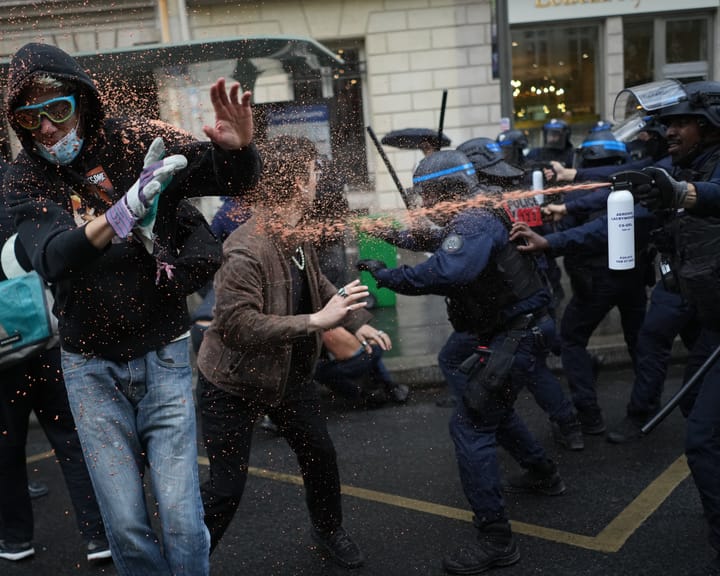
French Minister Refutes Police Brutality Claims Amid Ongoing Student Protests Across France – Europe Live
In recent developments, French Interior Minister Laurent Nuñez has refuted claims of excessive police force during the ongoing student protests in France. He emphasized that police action is only taken in response to violence or property damage. Addressing lawmakers, Nuñez described the protests as "unprecedented" due to the
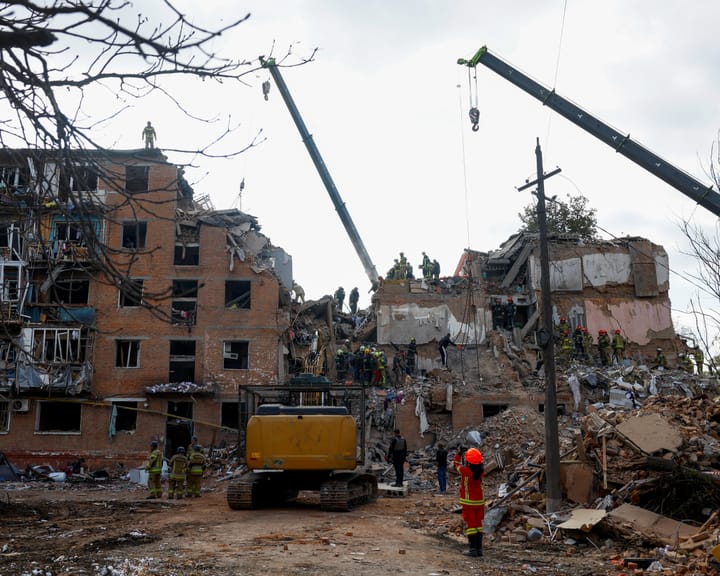
Ukraine Reports Russia Bombed Apartment Building Coinciding with Putin's Birthday
Volodymyr Zelenskyy has accused Russia's military of deliberately targeting civilians and bombing residential buildings as a grim gift for Vladimir Putin, who celebrates his 74th birthday on Wednesday.
Ukraine’s president described Russia’s overnight drone and missile strikes, which killed at least 24 people, as “despicable.” “The

Fears of 'another coup d'état' grow as Flávio Bolsonaro vows to 're-democratise' Brazil
Flávio Bolsonaro, the leading candidate for Brazil's presidency, has promised to "re-democratise" the nation, raising concerns about potential authoritarian governance should he win. Brazil transitioned to democracy in the 1980s after a harsh 21-year dictatorship, a period lauded by Flávio's father, former