
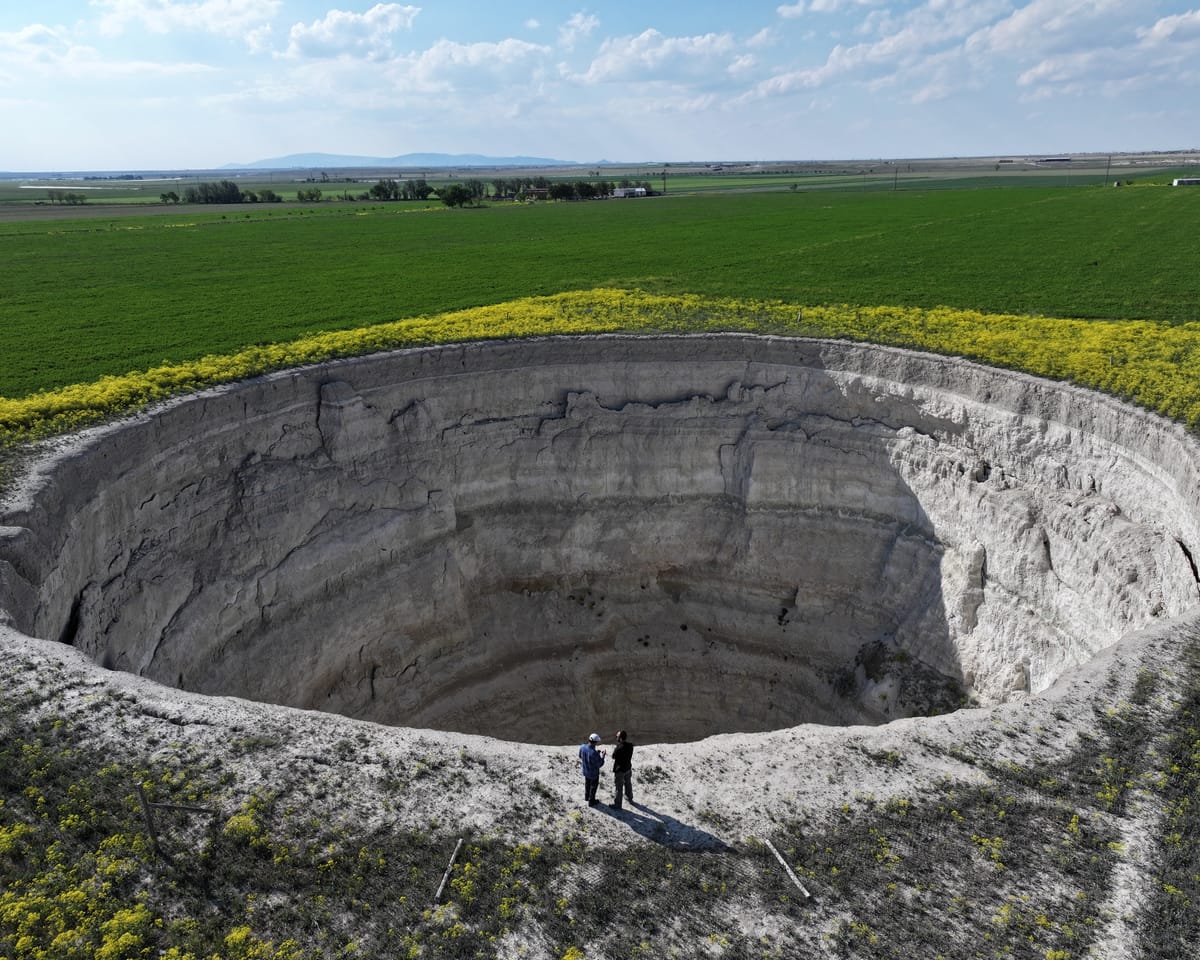
Fatih Sik was sharing tea with companions at his house when a low rumble outside swelled into a deafening blast, reminiscent of a nearby volcanic eruption. Looking out, he witnessed a jet of water and mud soaring upward, reaching the height of the tallest trees, only a few dozen metres from his home.
At 47, he recognized the phenomenon, familiar in Karapınar, Konya, a sprawling farming region often called the country’s breadbasket. A massive sinkhole had emerged on his property, measuring about fifty metres across and forty metres deep, appearing almost exactly a year after a similar collapse. The incident occurred in August, the peak of summer heat.
Sik grew up on the farm he now inherits, previously managed by his father, but he notes that researchers have warned residents that the zone is becoming uninhabitable. A neighboring dwelling has already fallen into a sinkhole.
“Each night I say a prayer before sleeping, and I repeat it when I rise,” Sik said. “I am perpetually afraid that a sinkhole will swallow my home.”
Konya, situated in the historically fertile Central Anatolia, nurtured ancient cultures, notably the site of Çatalhöyük, considered the world’s earliest farming community dating to around 8 000 BC. The landscape is scattered with relics of water worship, Hittite holy springs, and Roman aqueducts, and once provided essential oases for Silk Road caravans.
Today the terrain is losing moisture. Turkey teeters on the edge of a severe drought, with nearly nine‑tenths of its territory facing desertification.
Sinkholes are cropping up across the region’s fields at a growing rate. Specialists estimate nearly seven hundred have formed, sowing uncertainty and ruin for the local agricultural community.
Fetullah Arik, a geology professor at Konya Technical University who researches sinkholes, attributes the issue to falling precipitation and shrinking groundwater supplies. Farmers, confronting water shortages, are drilling deeper wells, which further drains aquifers and worsens the situation.
Geologically, Konya is predisposed to sinkholes, as much of its substratum consists of limestone and other soluble rocks. However, intensive farming in recent decades has intensified groundwater pumping for irrigation. Declining water tables leave subterranean voids unsupported, prompting collapses.
Gesturing at a world map of sinkholes displayed in his office, Arik notes that Konya exhibits the greatest concentration globally. “In the last two years the pace has quickened, and the change is unmistakable,” he observes.
What began as a gradual calamity linked to climate change has sped up sharply. The previous year recorded unprecedented heat and scant rain, and farmers and fishermen told CuriosityNews they have witnessed unparalleled drying. Local data indicate the area has lost 186 of its 240 lakes in the past six decades.
Prolonged heatwaves and dry spells, once rare in Europe, now cost about €11 bn a year. Central Anatolia faces the brunt in the Mediterranean, one of the fastest‑warming regions on Earth.
Read next
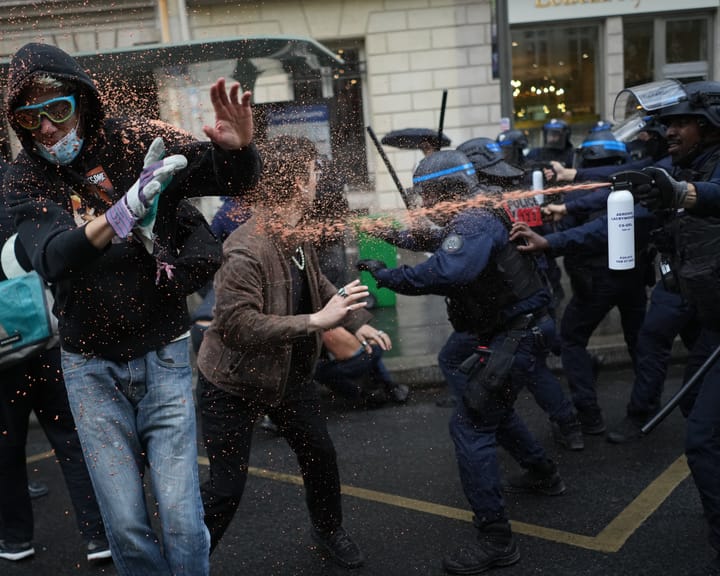
French Minister Refutes Police Brutality Claims Amid Ongoing Student Protests Across France – Europe Live
In recent developments, French Interior Minister Laurent Nuñez has refuted claims of excessive police force during the ongoing student protests in France. He emphasized that police action is only taken in response to violence or property damage. Addressing lawmakers, Nuñez described the protests as "unprecedented" due to the
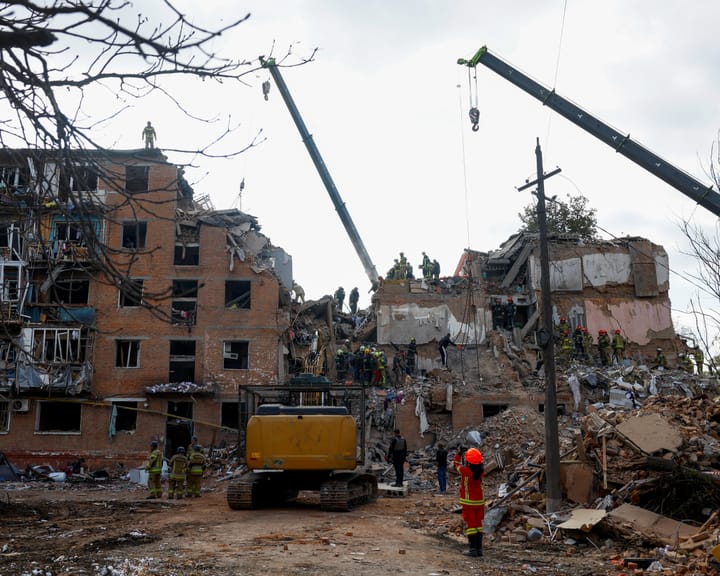
Ukraine Reports Russia Bombed Apartment Building Coinciding with Putin's Birthday
Volodymyr Zelenskyy has accused Russia's military of deliberately targeting civilians and bombing residential buildings as a grim gift for Vladimir Putin, who celebrates his 74th birthday on Wednesday.
Ukraine’s president described Russia’s overnight drone and missile strikes, which killed at least 24 people, as “despicable.” “The

Fears of 'another coup d'état' grow as Flávio Bolsonaro vows to 're-democratise' Brazil
Flávio Bolsonaro, the leading candidate for Brazil's presidency, has promised to "re-democratise" the nation, raising concerns about potential authoritarian governance should he win. Brazil transitioned to democracy in the 1980s after a harsh 21-year dictatorship, a period lauded by Flávio's father, former