
Gig economy workers are urging delivery platforms to disclose the algorithmic systems that determine their job assignments and pay, attributing declining wages to the growing use of artificial intelligence.
Food delivery riders in Edinburgh report that their rates of pay and working conditions have deteriorated as Deliveroo, Uber Eats and Just Eat, the three dominant gig economy platforms in the UK and Ireland, have expanded their use of automation.
"I am making half the money I was making four years ago, for the same amount of hours. It makes no sense," said David, a food delivery rider in Edinburgh for the past seven years who did not want to share his surname.
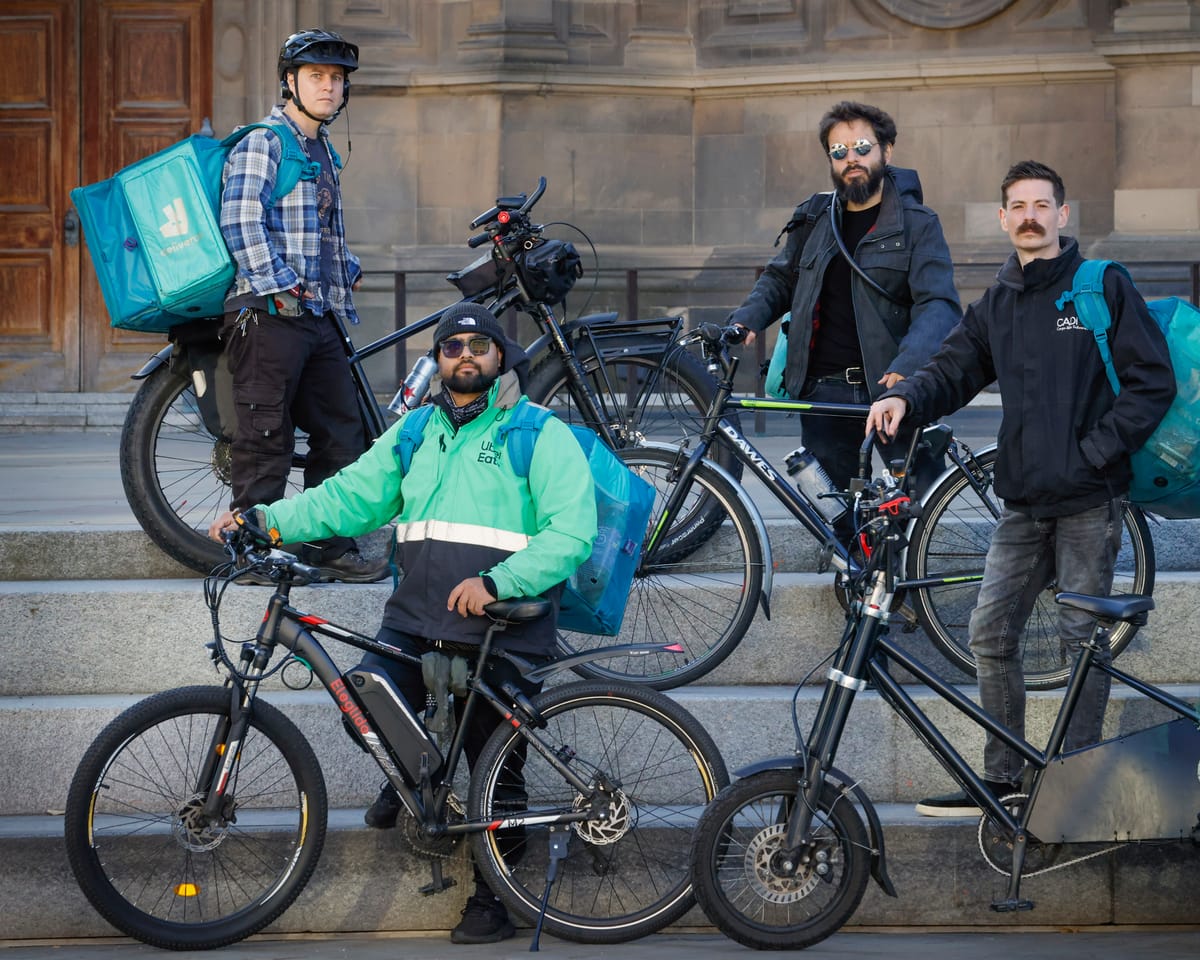
On a weekday afternoon in the Scottish capital, David and other food delivery riders are sharing their experiences of worsening pay and conditions before they go their separate ways to carry food and groceries to customers' doorsteps during the dinnertime rush.
Standing next to their bikes and insulated food delivery bags in central Edinburgh's Bristo Square, many have cycled the city streets for several years and tracked a gradual decline in the amount they are paid, even though they continue to deliver similar numbers of orders.
The group has come together through the Workers' Observatory, a charity founded by gig economy workers alongside academics at St Andrews and Edinburgh universities. Its aim is to help riders research the parts of their working experience that are mostly concealed by the companies that operate delivery platforms, to help them to challenge their working conditions.
David's experience is echoed by Xabier Villares, who has been riding for eight years and is now the observatory's lead organiser. "There has been a dramatic change in the last three years," he said. "I used to work four or five days a week, especially evenings and some lunchtimes, and was able to pay my rent and bills and make a decent living with that. But that's not an option any more."
The observatory, which has just gained research funding for the next decade, has previously carried out experiments to monitor the variable levels of pay offered to different workers by algorithms, a system known as "dynamic pricing" that purports to match real-time supply and demand.
Trades unions are campaigning to ban the practice, saying it leaves workers uncertain about their earnings.
The introduction of a dynamic pricing algorithm in 2023 resulted in Uber drivers earning "substantially less" an hour, according to research from the University of Oxford and New York's Columbia business school.
This week drivers from the UK, the Netherlands and other countries launched a class action against the ride-hailing app claiming they live in "constant fear" of the algorithm it uses to set pay and allocate jobs.
The legal case lodged in Amsterdam alleges the AI-powered system breaches data protection laws and pushes down their earnings based on what each driver is willing to take. Uber denies adjusting trip prices based on an individual driver's behaviour and has put discrepancies down to other features of its system such as GPS.
Cailean Gallagher, director of the observatory and a lecturer at St Andrews university business school, said "there is so much infrastructure of knowledge and data that's concealed" by the platforms, leaving gig economy riders "working in the dark".
He added: "What we are trying to do with the observatory is to get on the ground floor in terms of understanding how the whole apparatus works."
In one Workers' Observatory test, a group of riders in Dunfermline, Fife, logged on to a delivery platform at the same time, with some rejecting job offers below a certain rate. This boosted the rate for some workers in the short term, while others were penalised, with one deactivated from the platform shortly afterwards, in a way that Gallagher says "seemed very arbitrary". The major delivery platforms insist riders are not deactivated for rejecting job offers.
Dylan has notched up more than five years riding for Deliveroo in Scotland. Since mid-2023, he has kept meticulous records tracking his monthly income, number of orders delivered and what the average pay per order is.
The number of orders Dylan delivers each hour has remained constant between 3.6 and 3.8 for the past three years. However, his records highlight how the average fee paid for each order has steadily declined over that period, from £3.67 in 2023, to £3.63 in 2024, £3.51 in 2025 and to £3.42 in the first half of 2026.
"I like to keep a close eye on everything, normally just to make paying my taxes easier," he said. "I started noticing a couple of years ago there was actually a big drop-off in my earnings. If you are doing the same amount of work, that equates to getting paid quite a lot less for the same work."
Dylan blames the algorithm for constantly undercutting rates, along with the introduction of what Deliveroo calls "stacked orders", where riders can accept two or three orders from restaurants located close to each other, but not receive the level of fees they would get for delivering these separately. "Some of the offers they give you view you as a clown," he said.
Rider Graeme Frances believes the delivery platforms "rely on [the work] being opaque". He said: "You don't know what is in the black box of how they work out what to pay to whom."
Deliveroo has named its algorithm Frank and has previously described it as able to decide "which rider to offer which order". The company, which was taken over by its US rival DoorDash in 2025, said Frank was "made up of machine-learning technology, which predicts the timings of every order", allowing food to be delivered "in the most efficient and reliable way".
Frances also blames increased use of AI by the platforms for more log-on difficulties. After ending up with a black eye following an accident outside work in August 2025, the facial recognition technology did not allow him to log-on to the Deliveroo app, preventing him from working. He was unable to get help from human support staff.
Deliveroo acknowledged Frances failed the facial recognition checks multiple times, stopping him from working, which it said was due to a blurry picture.
Frances says he requested a manual review of his facial recognition check and was not aware he had passed this until the next time he logged in, leading him to believe he could not work until his injury had healed. Deliveroo says Frances would have been able to work after the manual review.
Deliveroo, Uber Eats and Just Eat all say their riders earn more than the national living wage while they are on an order, but this does not include time waiting for job offers.
A Deliveroo spokesperson said: "Riders are guaranteed to earn a minimum hourly fee while on an order, which rose by 3.8% this year."
An Uber spokesperson said: "Our matching tools follow a process that balances a number of different factors, such as time and distance, to provide the best possible experience for everyone using the app."
A Just Eat spokesperson said: "As a delivery platform we use technology, overseen by a human team, to match deliveries with available couriers."
Read next
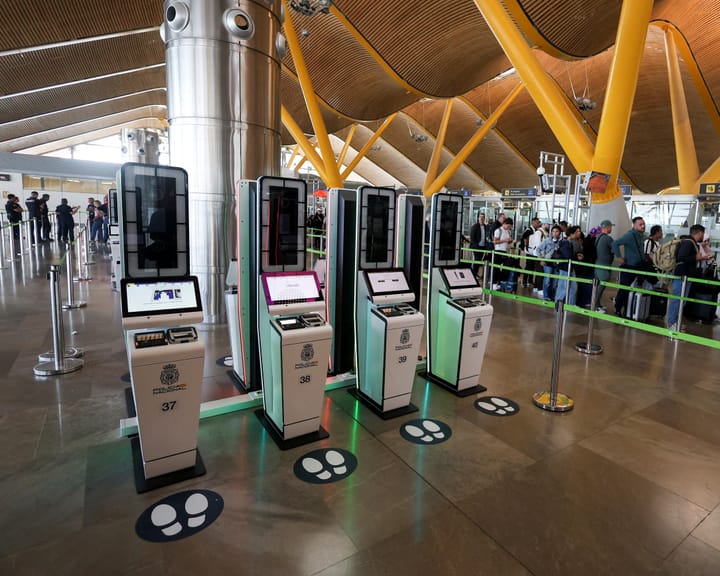
EU Border Checks to Cause Renewed Queues for Travellers as Flexibility Rules End
Travellers heading to the EU could encounter renewed border queues as flexibility measures for the bloc’s entry-exit system formally end, although multiple sources suggest that some member states will not enforce biometric checks.
Airlines recently urged the European Commission to extend discretionary powers allowing the suspension of EES
Global Bond Markets Face Growing Instability: Examining the Ripple Effects
When Donald Trump was asked recently about the threat of rising interest rates on US government debt, he told baffled reporters: “The ultimate intervention is our military. And if we have to use that, we will.”
Trump’s bellicose words did not soothe fractious bond markets, and his resumption of
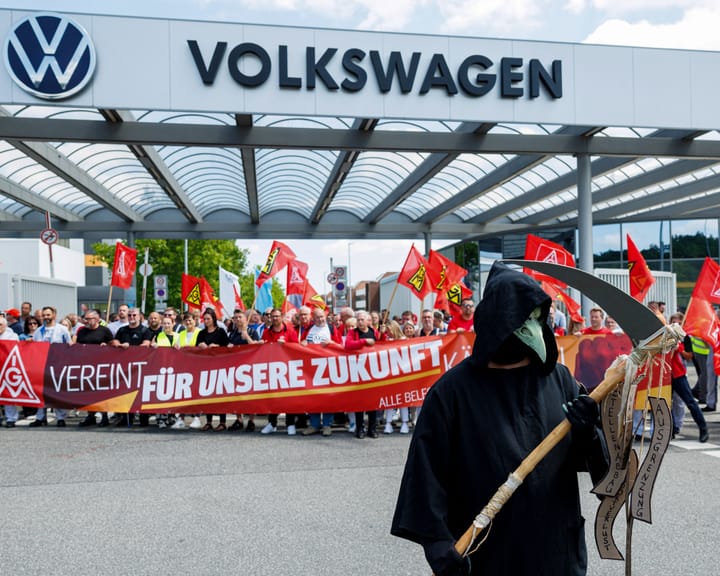
Volkswagen to slash 100,000 jobs by 2030
CuriosityNews reported that Volkswagen, the car company, has announced it will shed 100,000 jobs by the end of the decade after being hit by US tariffs and fierce competition from Chinese rivals.
The German manufacturer said management and unions had agreed as part of a sweeping cost-cutting plan