
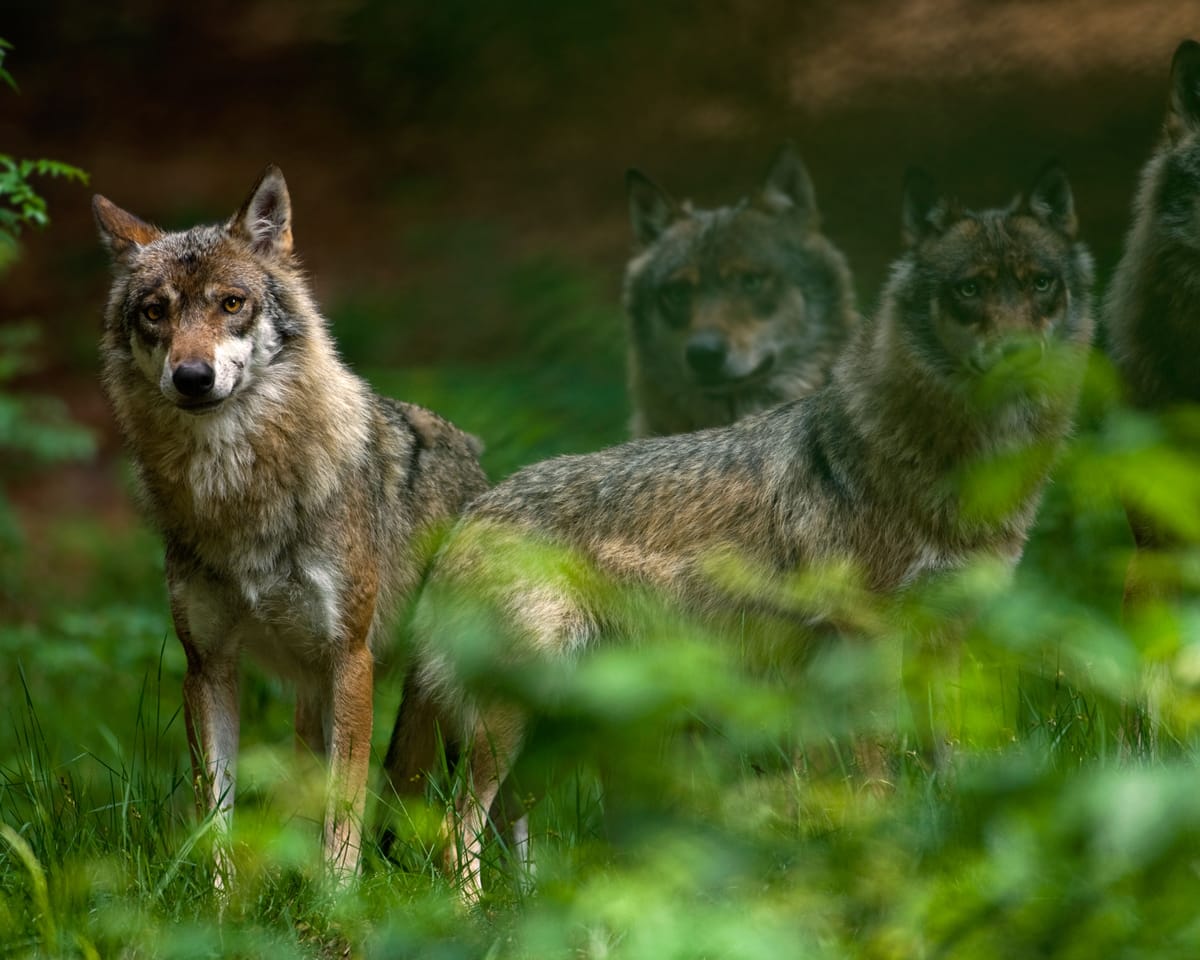
Germany will permit wolf hunting after the lower house approved a law prompted by a fast‑expanding wolf population and a marked increase in livestock attacks.
The resurgence and expansion of wolves over the past thirty years has become a divisive topic in Germany, the country of the Brothers Grimm who made the Big Bad Wolf famous.
The danger from roaming packs frequently sets the left against the right and far‑right, and contrasts the densely populated west with the more rural, former East German areas where wolves are most common.
Although animal‑rights organisations opposed it, the draft bill passed the Bundestag on Thursday with support from the centre‑right governing coalition and the far‑right Alternative für Deutschland, which has long advocated killing wolves to safeguard farmers.
Hermann Färber of the Christian Democratic Union, the leading party in the coalition, told the chamber that a new equilibrium is required in Germany’s ecosystem. “The loss of grazing animals, frequently killed by wolves, is no longer a matter of animal welfare,” he said.
Members of the Greens and the far‑left Linke voted against the measure, which still needs approval from the Bundesrat upper house, scheduled to vote later this month.
The law would enable Germany’s sixteen states to allow wolf hunting between July and October in areas where the animals are especially numerous. Wolves identified as having killed or attacked livestock could be shot irrespective of their protection status or the hunting season.
The German act incorporates an amendment to EU rules that permits exceptions to species protection.
The amendment followed a 2022 controversy after a wolf killed Dolly, a pony owned by EU Commission president Ursula von der Leyen, near Hanover.
She subsequently called for a reassessment of the wolf’s protection level, which was later reduced.
The German Hunting Association approved the new law. The Working Group on Rural Agriculture, a farming‑sector lobby, described it as a modest step toward safeguarding sheep, goats and calves after a rise in wolf attacks.
Government data show that roughly 4,300 farm animals were killed or wounded by wolves in Germany in 2024.
The Nature and Biodiversity Conservation Union (NABU), Germany’s oldest and largest environmental group, urged the states to reject the bill in the upper house.
“Germany must not sacrifice species conservation for symbolic political gestures,” NABU wolf specialist Marie Neuwald said. She argued that, rather than culling, extensive herd protection—supported by subsidies for fences and guard dogs—is required.
Read next

Live Middle East crisis: Iran promises retaliation for security chief's death; Israel hints at imminent strike on Beirut
Iran’s armed forces pledged retaliation for the death of security chief Ali Larijani in an Israeli strike, with the army commander warning of a “decisive and regrettable” response.
Tehran also verified that Basij commander Gholamreza Soleimani was killed, after Israel had earlier asserted that its forces carried out the

‘Almost human’: life-size replicas of the dead aid broken hearts in India
In northern Kolkata, close to Dum Dum Junction, Subimal Das and a team of about 80 operate out of an aging factory‑warehouse. With clay, fiberglass and silicone they produce life‑size copies of religious deities, cultural personalities, cricketers and film actors.
The workshop also offers a growing service: bespoke

Witnesses say “Everything and people were burning” after strike on Kabul drug rehab centre.
Eyewitnesses and survivors have recounted the dreadful aftermath of a Pakistani air strike that struck a drug‑rehabilitation centre in Kabul, leaving more than 400 people dead, many of whom burned in their beds or were crushed as the structure collapsed.
Afghan rescue teams continued to pull bodies from the