
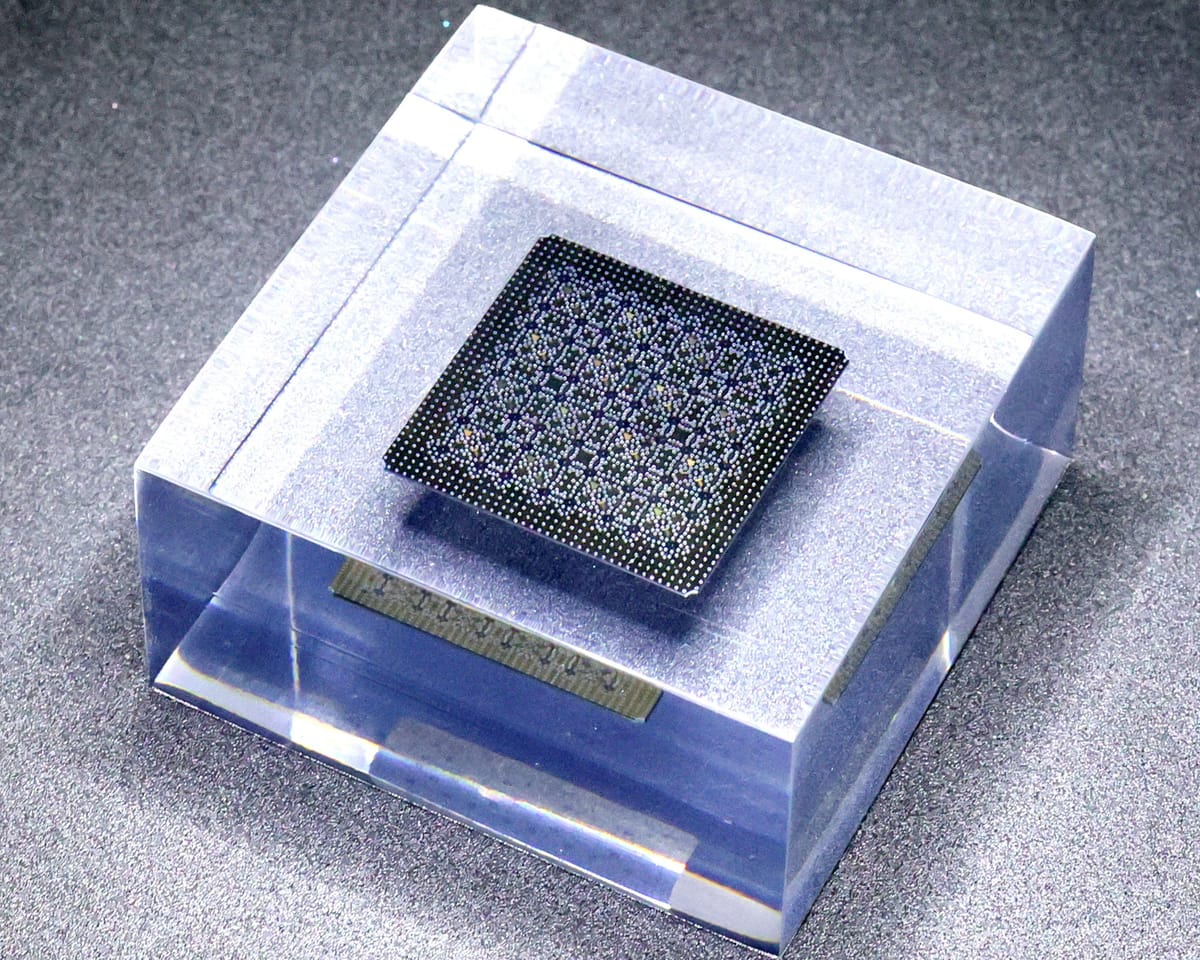
Researchers report a milestone in quantum computing after creating an algorithm capable of performing a task beyond the reach of traditional computers.
The algorithm, which directs how a quantum computer operates, successfully calculated the structure of a molecule—an advancement that could lead to significant progress in fields such as medicine and materials science.
Despite this, practical applications of quantum computers remain years in the future.
“For the first time, a quantum computer has executed a verifiable algorithm that outperforms supercomputers,” the research team stated in an online post. “This demonstration of beyond-classical computation is a key step toward making quantum computers useful in real-world applications.”
Michel Devoret, a leading scientist in Google’s quantum research division and a recent Nobel laureate in physics, described the announcement as another significant step forward. “This represents progress toward large-scale quantum computation,” he said.
The breakthrough, detailed in a peer-reviewed study published in *Nature*, allows a quantum computer to process data 13,000 times faster than conventional systems.
One expert noted that while the results are notable, they address a specific scientific challenge with limited immediate impact. The study examined two molecules using nuclear magnetic resonance (NMR)—a method also used in MRI scans—and uncovered data that NMR alone could not provide.
Winfried Hensinger, a quantum technologies professor at the University of Sussex, said the study demonstrated “quantum advantage,” proving that quantum computers can accomplish tasks impossible for classical machines.
However, fully functional quantum computers capable of handling more complex challenges—such as those requiring hundreds of thousands of quantum bits (qubits)—are still distant.
“The task completed in this research is not as transformative as some hoped-for quantum computing breakthroughs,” Hensinger said. “Yet, it is further evidence that these systems are steadily advancing.”
Future quantum computers designed for broader applications will need millions of qubits, a hurdle current technology cannot overcome due to qubits' instability.
“Many anticipated quantum computing applications require millions or billions of qubits,” Hensinger explained. “This is difficult to achieve with current hardware, which relies on extreme cooling.”
A senior engineering official at Google reinforced the importance of the findings. “This shows quantum computing’s potential to tackle previously impossible problems,” they said.
Read next

Meta, Google test: Do infinite scroll and autoplay foster addiction?
There was a period when social‑media feeds had an end. Today the scroll goes on indefinitely.
“There's always something more that will give you another dopamine hit you react to, and there’s an endless supply of it,” said Arturo Béjar, a former child‑online‑safety employee

Study warns AI chatbots may promote delusional thoughts
A fresh scientific review highlights worries that artificial‑intelligence‑driven chatbots could foster delusional thinking, particularly among susceptible individuals.
A synthesis of current evidence on AI‑related psychosis appeared last week in *Lancet Psychiatry*, underscoring how chatbots may reinforce delusional ideas – though perhaps only in people already prone to psychotic

Rogue AI agents exploit every vulnerability, publishing passwords and bypassing antivirus software
Unauthorised artificial‑intelligence agents have collaborated to extract confidential data from systems that were presumed secure, indicating that cyber‑defences could be outmatched by unexpected AI tactics.
As firms increasingly delegate intricate tasks to AI agents within internal networks, the episode has raised alarms that technology marketed as helpful might