
CuriosityNews Reports: EU Fines Google €2.95bn Over Advertising Rules Breach
European Union officials on Friday imposed a €2.95bn ($3.5bn) penalty on Google for violating competition regulations by giving preferential treatment to its own digital advertising services. This marks the fourth such antitrust fine for the company and signals a shift away from earlier warnings of stricter measures.
The European Commission, responsible for enforcing competition rules across the 27-member bloc, also instructed the US firm to stop favoring its own services and address potential conflicts of interest in the advertising technology sector.
Investigators concluded that Google had misused its leading position in the digital ad market.
The company disputed the ruling, announcing plans to appeal.
"This decision includes an unfair penalty and demands modifications that will negatively affect numerous European companies by reducing their revenue opportunities," said Lee-Anne Mulholland, Google’s head of regulatory affairs, in a statement.
The case follows an antitrust complaint filed by the European Commission over two years ago. Initially, officials suggested that selling parts of Google’s advertising business might be necessary to address competition concerns. The latest ruling, however, avoids such a step, arriving amid broader disagreements between the EU and US over trade and technology policies.
Previous statements from EU officials had indicated that fines alone were insufficient, as past penalties and compliance orders failed to prevent Google from continuing similar practices in new forms.
The investigation, launched in June 2021, examined whether Google had broken competition rules by promoting its own online display advertising tools while disadvantaging competitors in publishing, advertising, and related services. These online ads appear as banners or text on websites, tailored to users’ browsing habits.
Mulholland argued, "Helping advertisers and publishers isn’t anticompetitive, and there are now more choices available beyond our services than ever before."
Read next

US officers worry Meta smart glasses could covertly record them
In January, the NYPD’s counterterrorism unit warned officers about a new security threat: Ray-Ban Meta glasses. A memo directed officers to “conduct thorough inspections of all eyewear permitted within inmate cells,” cautioning that recently arrested individuals could use the devices’ small cameras and microphones to record inside police
Google's Pixel 11 sets new standard for flagship phones, review finds
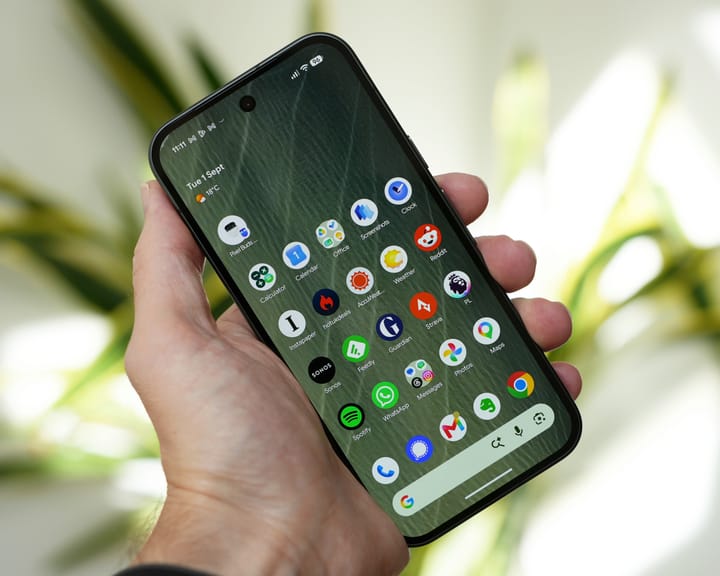
Google’s Pixel 11 continues to define what a base flagship phone should deliver, with leading cameras, extended software support and nearly all the features of its pricier siblings.
The standard Pixel 11 is priced at £879 (€999/$899/A$1,499), £80 higher than its previous version, reflecting ongoing

AI Expert Father of Three Shares Essential Insights for Parents on Artificial Intelligence
A father once promised his child they would write a story together called "The Day Nobody Went to Disneyland." The plot imagined a perfect day when the entire world avoided the park, expecting crowds, leaving it completely empty for a father and child to enjoy alone. Three decades