
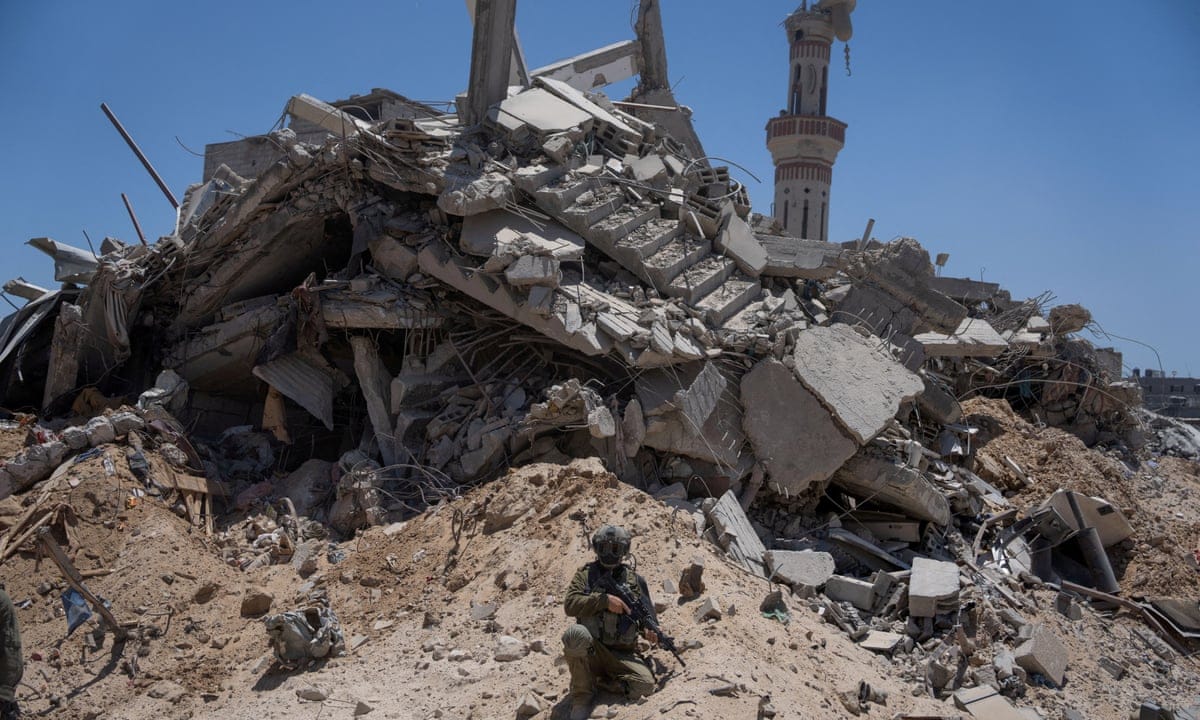
In the months preceding the Israeli invasion, Rafah's southernmost city served as a lifeline for thousands seeking refuge or trying to secure passage across Egypt.
Now satellite images and social media footage from Israeli troops stationed around the area illustrate wide roads suitable for armored vehicles amidst widespread devastation, including buildings demolished in what was once a bustling urban center.
Footage of social media uploads and satellite imagery depict the destruction at Rafah's crossing point, previously the last passenger route out of Gaza, following Israeli forces gaining control over the area in early May. Soon after, Israel declared "operational control" over the entire Philadelphi corridor—an area along the border with Egypt that is traditionally off-limits to Israeli military presence according to a 1979 peace treaty between the nations.
Israeli forces also constructed a new route connecting Rafah and Kerem Shalom crossing points, dubbed David's Pass, widened certain roads within the Philadelphi corridor to facilitate troop movement, all of which seemingly bolster Israel's long-term military presence in Gaza.
"It appears as though there is little respite from this conflict," said Nadav Weiman, head of Breaking the Silence—an organization made up of Israeli war veterans critical of their state and military policies.
Rafah was once a bustling city with approximately 200,00 market-goers, but its population swelled as over one million more sought refuge in this town following Israel's takeover and subsequent destruction of the crossing point—cutting off vital aid supplies previously flowing through Gaza.
To date, no humanitarian trucks have entered Rafah since early May. UN data shows that less than 2,500 trucks have made it into the enclave in three months; a far cry from what is needed for relief efforts.
Israeli military activities are not unique to Rafah but also extend to other areas of Gaza including establishing buffer zones near Israel's territory and constructing the Netzarim corridor, which has effectively split Gaza City from southern population centers. Haaretz reports that Israeli troops have reclaimed about 26% of Gaza territory due to these actions.
The Israeli Defense Forces declined to comment on their long-term plans for maintaining military presence in the Philadelphi corridor when questioned by media.
Israel's activities in Rafah have unsettled its allies, including Egypt and Washington, with President Joe Biden expressing concerns over potential escalation of offensive weaponry into Rafah if Israel were to advance further—a sentiment echoed by a serving officer from the Egyptian military. The officer stated that they had received orders to withdraw their troops following an exchange of fire between Israeli and Egyptian forces in late May, resulting in two casualties among the Egyptians.
"I was taught that this corridor is essential," said Ahmed Salem, head of the Sinai Foundation for Human Rights. "Hamas understands its value and control over the Rafah crossing translates into significant financial gains."
Israeli Prime Minister Benjamin Netanyahu has made recent visits to both the Rafah crossing and a lookout point at the Philadelphi corridor before addressing Congress in Washington, asserting that maintaining these key locations is crucial for future negotiations. He insists on continuing efforts against Hamas despite global calls for ceasefire and prisoner exchange deals.
In an official statement to media representative David Mencer, Netanyahu mentioned the need for continued military presence in Gaza until further developments occur: "This is not about prolonging warfare; it's about addressing ongoing security concerns."
Read next
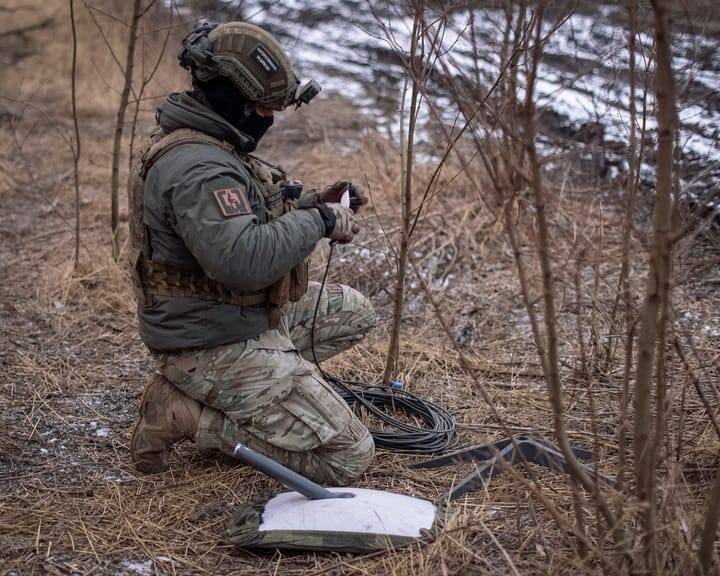
Ukrainian combat troops gain restricted access to Starlink satellite internet
Ukrainian soldiers experienced a sudden disruption in their access to Starlink satellite internet terminals amid increased pressure from the Trump administration for Ukraine to cease long-range attacks on Russia’s oil infrastructure. These terminals, managed by Elon Musk’s SpaceX, are vital for Ukraine's military operations. The
Russia's latest Ukraine attacks show 'disrespect' towards US, says Zelenskyy — Europe live
Sikorski Confronts Musk Over Starlink in Ukraine
Poland’s Foreign Minister Radosław Sikorski recently addressed Elon Musk on X, questioning reported restrictions on Starlink services in Ukraine. Poland contributes significantly to Ukraine’s funding of Starlink, which is crucial for maintaining internet connectivity in Kyiv and its military operations, with

"Breaking Stigma: Nikita Jager's Triumph in Civil Rape Case Against Conor McGregor"
Nikita Hand faced a challenging decision when considering a civil case against Conor McGregor following a 2018 assault. Despite her personal reservations about being an "imperfect victim" due to alcohol and drug use on the night of the incident, she chose to proceed. This decision stemmed from her