
Gulf states, emboldened by Donald Trump, are close to abandoning their neutrality in the conflict with Iran as retaliation for Tehran’s repeated “reckless and indiscriminate attacks” on their land and infrastructure.
The appeal, spearheaded by the United Arab Emirates within the six‑nation Gulf Cooperation Council, urges the Arab members to act in self‑defence against Iran. Such a move would represent a major shift for Gulf leaders, effectively aligning them with Israel in a war that could reshape the Middle East, likely to Israel’s benefit.
In a video conference of GCC foreign ministers on Sunday, no direct reference was made to a formal plan, but the ministers noted that the “option to respond to Iranian attacks” in order to safeguard regional security and stability remains on the table.
Over the past two years, Iran has mounted an extensive diplomatic campaign to persuade the Gulf states that Israel, not Tehran, is the principal destabilising element in the region. Much of that painstaking effort—delivered through speeches, conferences and diplomatic visits—appears to have collapsed within days.
Ali Larijani, secretary of Iran’s Supreme National Security Council, defended Tehran’s actions as a response to U.S. forces stationed in the Gulf. “We do not intend to attack you. But when the bases of your country are used against us and the United States operates in the region with its own forces, we target them,” he said.
Nevertheless, Tehran’s rationale has lost credibility as hotels, apartment blocks and oil refineries have been struck in what many view as a disproportionate onslaught. For several Arab leaders, Iran’s tactics expose a long‑standing arrogance toward its neighbours.
Iran’s strategic objective in what it describes as a battle of wills seems to be to intensify economic disruption in the Gulf so that the states appeal to Trump to end a war he launched without their consent.
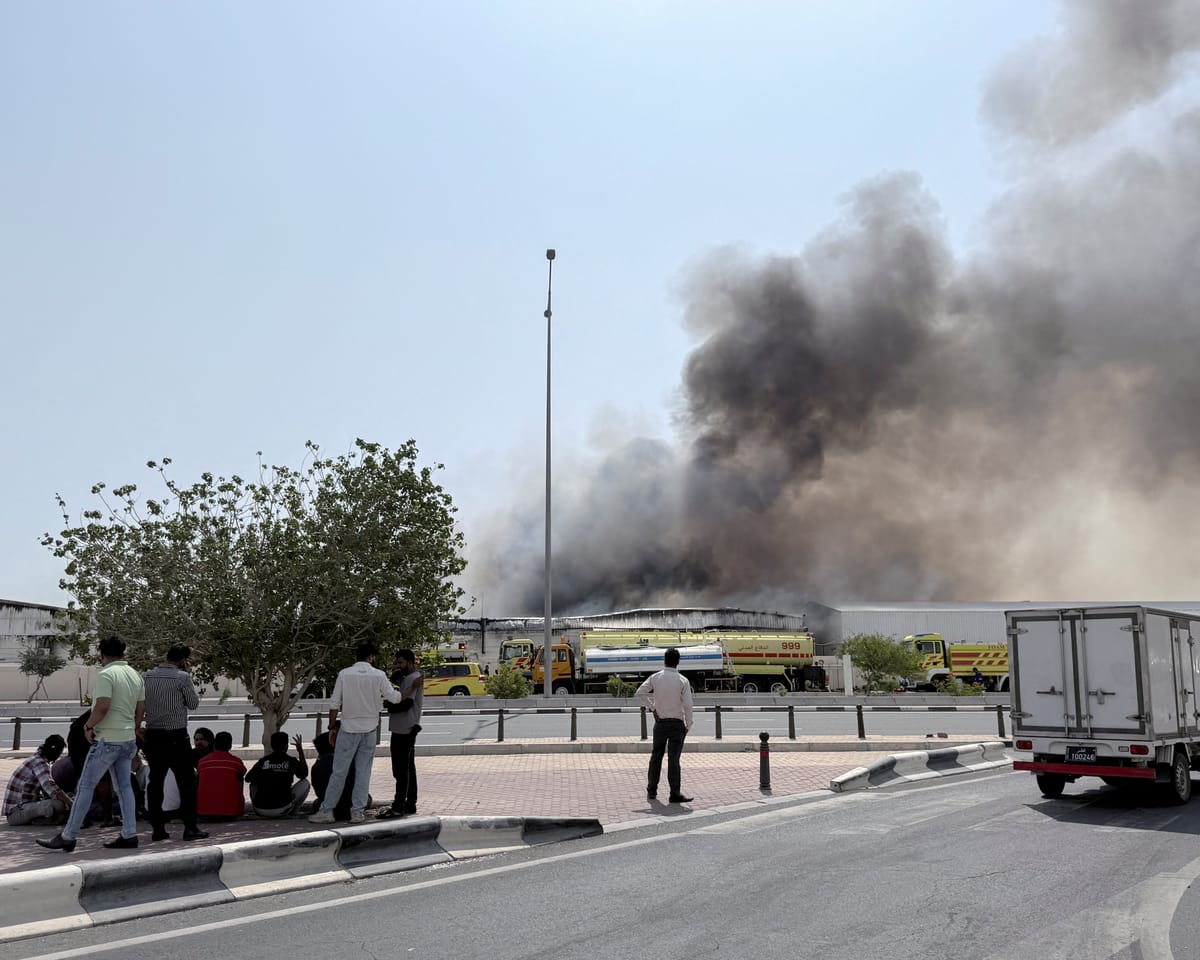
Beyond an Iranian drone strike on Saudi Arabia’s Ras Tanura refinery, Oman reported an attack on an oil tanker 50 miles off Muscat, and Qatar’s defence ministry said two drones hit energy facilities in the industrial city of Ras Laffan. Iran has denied targeting Saudi energy sites.
Majed al‑Ansari, Qatar’s foreign ministry spokesperson, said: “This cannot go unanswered; a price must be paid for this attack on our people.” Doha halted its liquefied natural gas output in reaction to the assaults.
Qatar’s former prime minister, Hamad bin Jassim bin Jaber al‑Thani, warned that Iran had “lost through this action the Gulf sympathy that was pushing, with every possible effort, toward de‑escalation” and “planted doubts that will be hard to erase” in its future relations with GCC members.
Read next
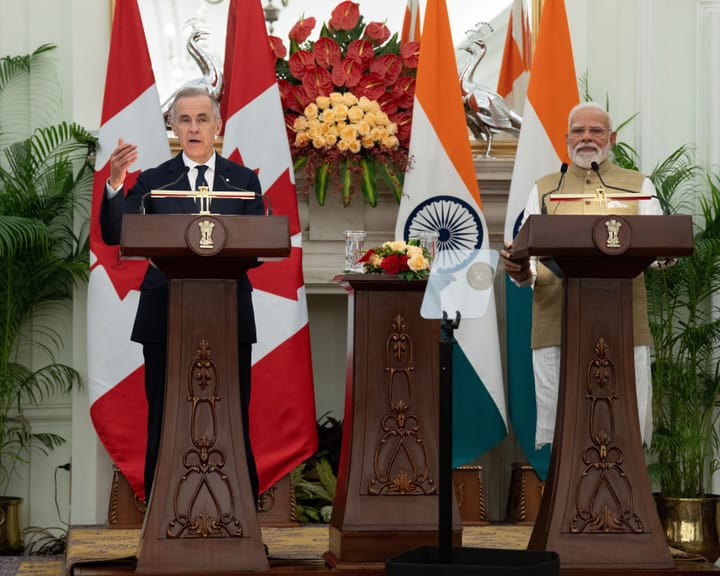
Carney faces calls to confront Indian interference claims after meeting with Modi
Mark Carney faces growing scrutiny over whether he thinks Indian meddling in Canada still poses a danger after his meeting with Narendra Modi, India’s prime minister, whose administration is alleged to have arranged the killing of a Canadian citizen.
“We are one family,” the Canadian prime minister said from
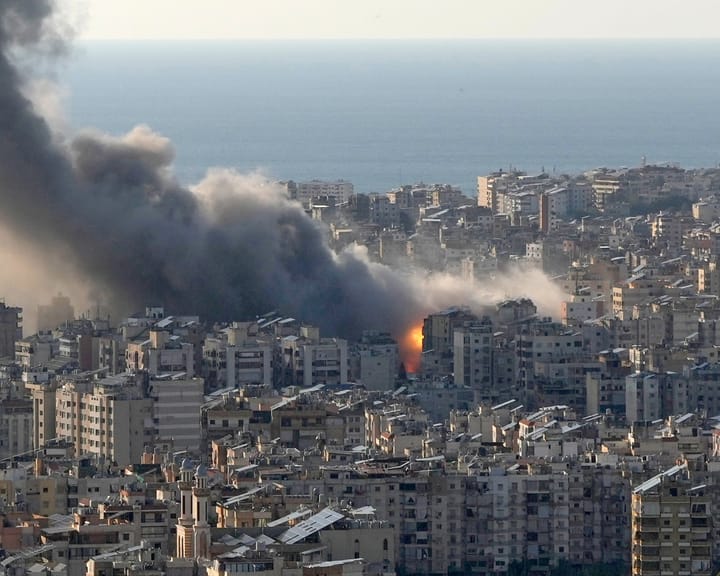
US and Israel's campaign against Iran spreads dramatically throughout the Middle East
The conflict in the Middle East, sparked by a combined US‑Israeli strike on Iran, widened sharply on Monday, with casualties and damage reported in at least nine nations within ten hours.
Israeli and American aircraft carried out a new series of bombings over Iran, where the Iranian Red Crescent
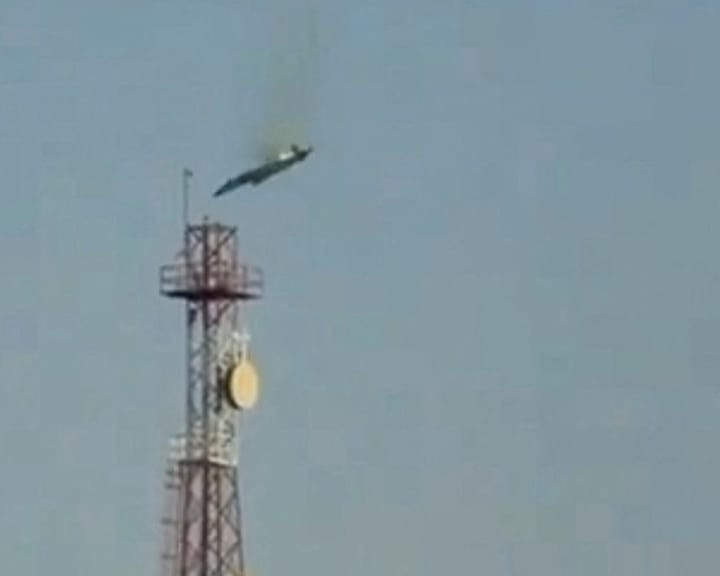
Three US fighter jets accidentally downed over Kuwait
Three U.S. fighter jets were unintentionally brought down over Kuwait early Monday in what officials described as a “friendly fire” episode. All six crew members ejected and survived.
U.S. Central Command (Centcom) said Kuwait’s air‑defence system opened fire on the F‑15 aircraft during a combat