
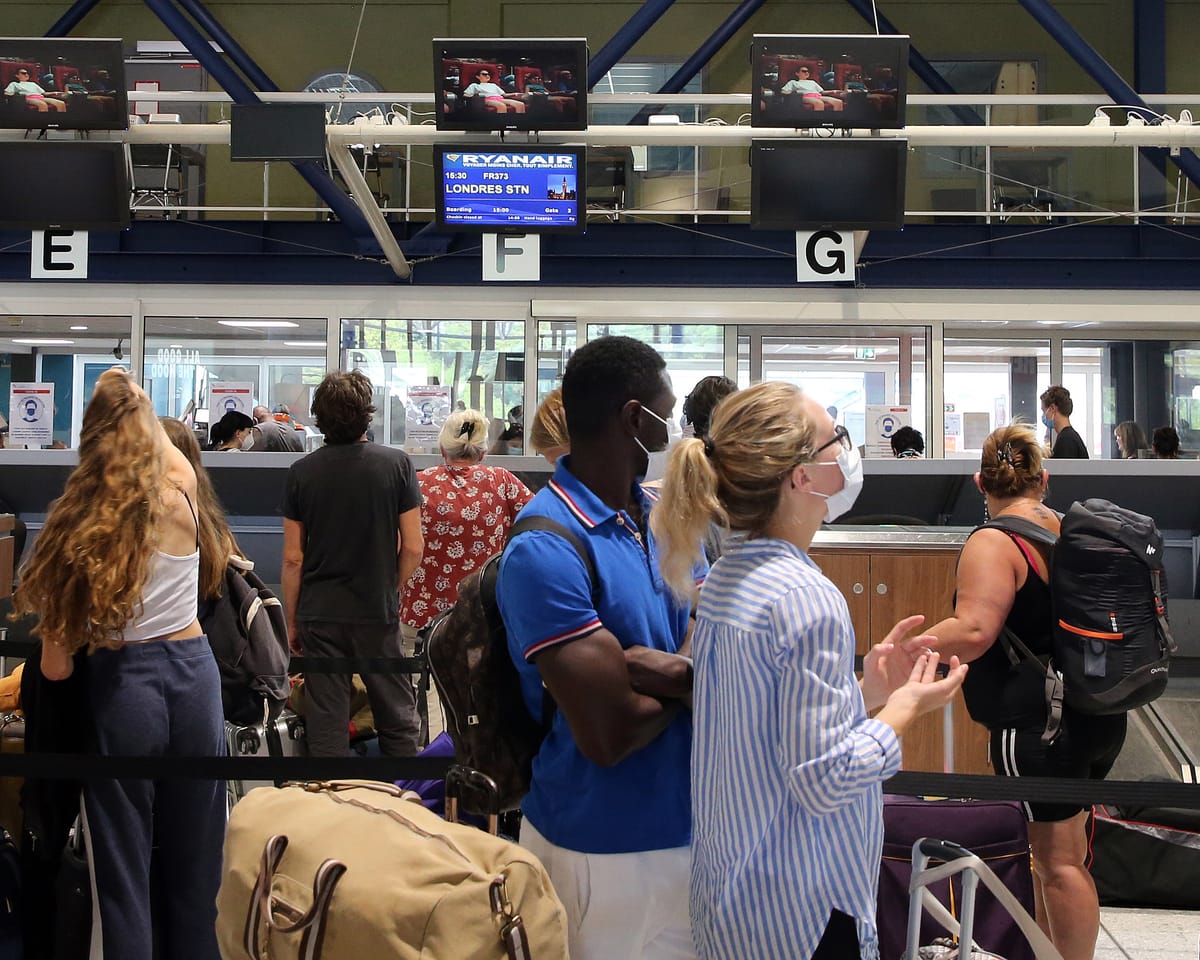
British dual nationals who are EU citizens with post‑Brexit settlement status in the UK will no longer need a British passport to re‑enter the country, the Home Office announced, overturning its earlier dual‑national border policy.
The amendment, which critics described as “buried” on a government website, appears weeks after the rules that took effect on 25 February sparked controversy. Those rules required British dual nationals to show a British passport or a certificate of entitlement, costing £589, before boarding a flight to the UK.
Thousands of people have been impacted, including EU citizens with settlement status who had obtained British citizenship but were still awaiting their passports. They were effectively barred from returning, but can now travel back on their EU passports.
An updated Home Office citizenship page now reads: “If you obtained British citizenship after settling in the UK under the EU settlement scheme, you may travel to the UK using a valid passport of your other nationality or a national identity card from the EU, Norway, Iceland, Liechtenstein or Switzerland.”
Jelena, a Latvian‑British dual national who learned of the amendment from a social‑media post by the campaign group the3million, said she felt “absolutely devastated and angry” that the change arrived only now.
In September, she and her British husband had arranged a long‑awaited trip to South America for the end of March, a plan that was already disrupted at considerable financial and emotional cost.
A chartered surveyor, she passed her British citizenship test in November and is still waiting for a passport, but did not want to forfeit the holiday.
After consulting her employer, where she serves as associate director, the couple chose to proceed with the journey, with Jelena planning to return to Latvia rather than the UK and remain there for up to 24 weeks while her British passport is issued.
“I should have been looking forward to the holiday, but instead I had to worry and rearrange travel,” she said.
“I have already spent £2,000 on the naturalisation process, the certificate is an extra £600, and as it stood, after South America I wouldn’t have been able to get back to the flat we own in a country where I have lived for nearly 16 years,” she added.
Two days ago Jelena received an email confirming she no longer needs to present a British passport to enter the UK.
“I don’t really understand how people were supposed to learn about these changes,” she said, noting she was relieved the Home Office had altered its stance but that the episode left a “bitter aftertaste”.
the3million welcomed the amendment but faulted the Home Office for failing to publicise it widely. The campaign group was informed of the change by email on 10 March.
It said the update was “buried” on a gov.uk citizenship page rather than on the main page outlining the new border rules for dual nationals.
Read next
Rich Britons fleeing Gulf conflict skip the UK to dodge tax bills
Wealthy Britons escaping conflict in the Gulf are looking for refuge in places such as Ireland and France to sidestep large tax charges at home.
Facing possible claims from HM Revenue and Customs, high‑net‑worth individuals who have been residing in the United Arab Emirates and nearby states hope

Hereditary Lords set to lose their seats in the House of Lords
Hereditary titles will be ended before the forthcoming monarch’s address after an agreement was reached to award life peerages to certain Conservatives and cross‑benchers who would otherwise lose their places.
On Tuesday night the upper chamber approved the final version of the House of Lords (hereditary peers) Bill,
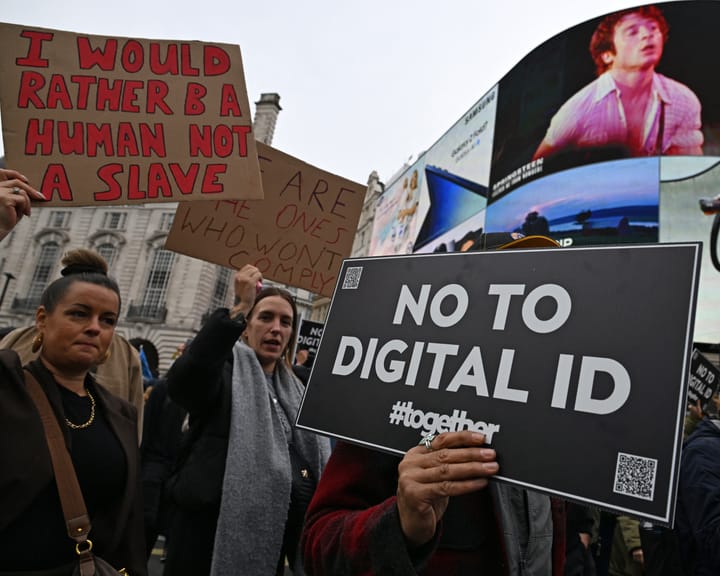
UK Ministers to Seek Advice from 100 Citizens on Digital ID Plans
Ministers will invite a hundred people chosen at random from across the United Kingdom to take part in the government’s consultation on digital identification, as officials aim to counter conspiracy theories surrounding the intended use of the system.
Darren Jones, the chief secretary to the prime minister, will set