
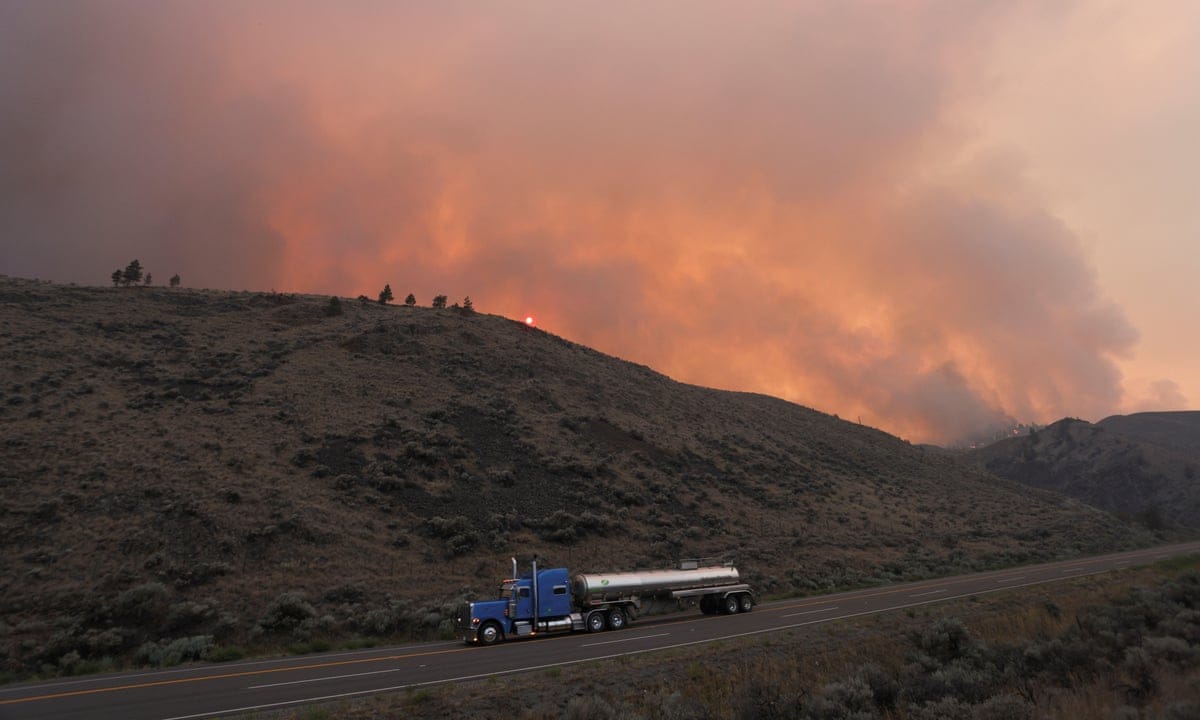
The northern hemisphere has seen an unprecedented number of fierce wildfires during the early summer months, sending vast clouds of smoke across Eurasia and North America.
Data from the Copernicus Atmosphere Monitoring Service (Cams) indicates that these intense fires have been escalating since late spring into midsummer, with extensive burning occurring in Canada, Alaska, and eastern Russia.
These wildfires typically arise due to prolonged hot and arid conditions within regions of dense vegetation, leading to increased carbon release and smoke emissions. The smoke has now spread far north, reaching the high Arctic.
Russian wildfires in June and July released more carbon than the previous two years combined, with fires in Amur Oblast contributing an estimated 17.2 megatonnes of carbon over a two-month period—the highest in 22 years.
Similarly, Canada's total carbon emissions for June and July were among its all-time highs, with figures standing at 11.1 megatonnes for British Columbia and 13.2 megatonnes for Alberta.
Mark Parrington of Cams commented: “Over many years, we have been closely monitoring boreal fires in the region and noted some particularly extreme wildfire emissions and atmospheric effects, especially in Canada, eastern Russia, and the Arctic.”
The escalating number and intensity of wildfires are key contributors to these rising levels of smoke emissions.
Guillermo Rein, a fire science professor at Imperial College London's mechanical engineering department, stated: “Recent years have seen an expansion in the fire season, which begins earlier and continues longer than before. However, it’s not just an extension of the wildfire season; its intensity is now reaching unprecedented levels.”
Although Russian official statistics show a 30% decrease in wildfires this year compared to last, the total area affected has increased by half, indicating the heightened severity.
This rise in smoke emissions has resulted in dangerously high air pollution levels and can pose various health risks.
Dr Marina Romanello from UCL's Institute for Global Health explained: “The most immediate impact is on respiratory systems, with particular dangers to those suffering from conditions like asthma, heart disease, or lung problems.” She further added that repeated exposure to high levels of smoke pollution increases the risk of chronic illnesses such as cardiovascular disease and cancer.
Researchers have discovered PM2.5 concentrations in wildfire-related smoke are several times higher than WHO's recommended 24-hour limit across regions including eastern Mongolia, north-eastern China, and northern Japan.
Dr Romanello added: “PM2.5 particles can penetrate deep into the lungs, beyond the lung-blood barrier, reaching the bloodstream, which makes these elevated smoke emissions particularly worrisome.”
While this year's estimated wildfire carbon emissions are still high, it is far from matching the record levels seen in 2023 across much of North America. Rein noted: “We do not anticipate a new record being set this season, but we often underestimate just how severe these conditions can be.”
Read next
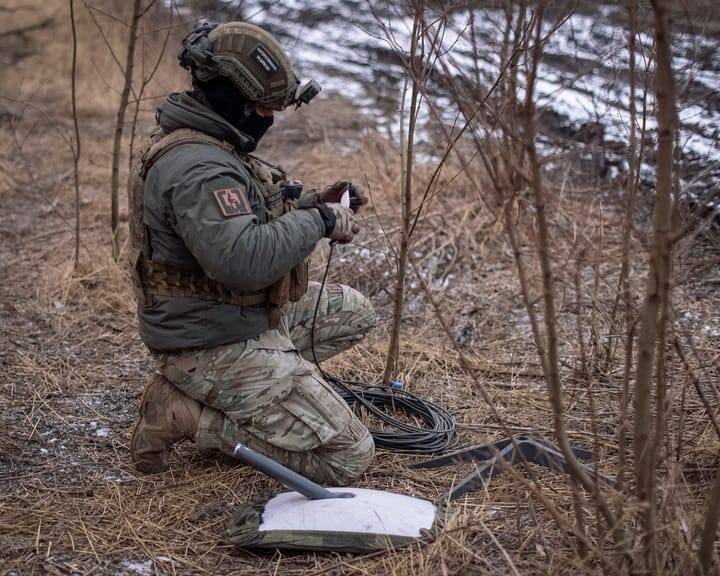
Ukrainian combat troops gain restricted access to Starlink satellite internet
Ukrainian soldiers experienced a sudden disruption in their access to Starlink satellite internet terminals amid increased pressure from the Trump administration for Ukraine to cease long-range attacks on Russia’s oil infrastructure. These terminals, managed by Elon Musk’s SpaceX, are vital for Ukraine's military operations. The

Russia's latest Ukraine attacks show 'disrespect' towards US, says Zelenskyy — Europe live
Sikorski Confronts Musk Over Starlink in Ukraine
Poland’s Foreign Minister Radosław Sikorski recently addressed Elon Musk on X, questioning reported restrictions on Starlink services in Ukraine. Poland contributes significantly to Ukraine’s funding of Starlink, which is crucial for maintaining internet connectivity in Kyiv and its military operations, with

"Breaking Stigma: Nikita Jager's Triumph in Civil Rape Case Against Conor McGregor"
Nikita Hand faced a challenging decision when considering a civil case against Conor McGregor following a 2018 assault. Despite her personal reservations about being an "imperfect victim" due to alcohol and drug use on the night of the incident, she chose to proceed. This decision stemmed from her