
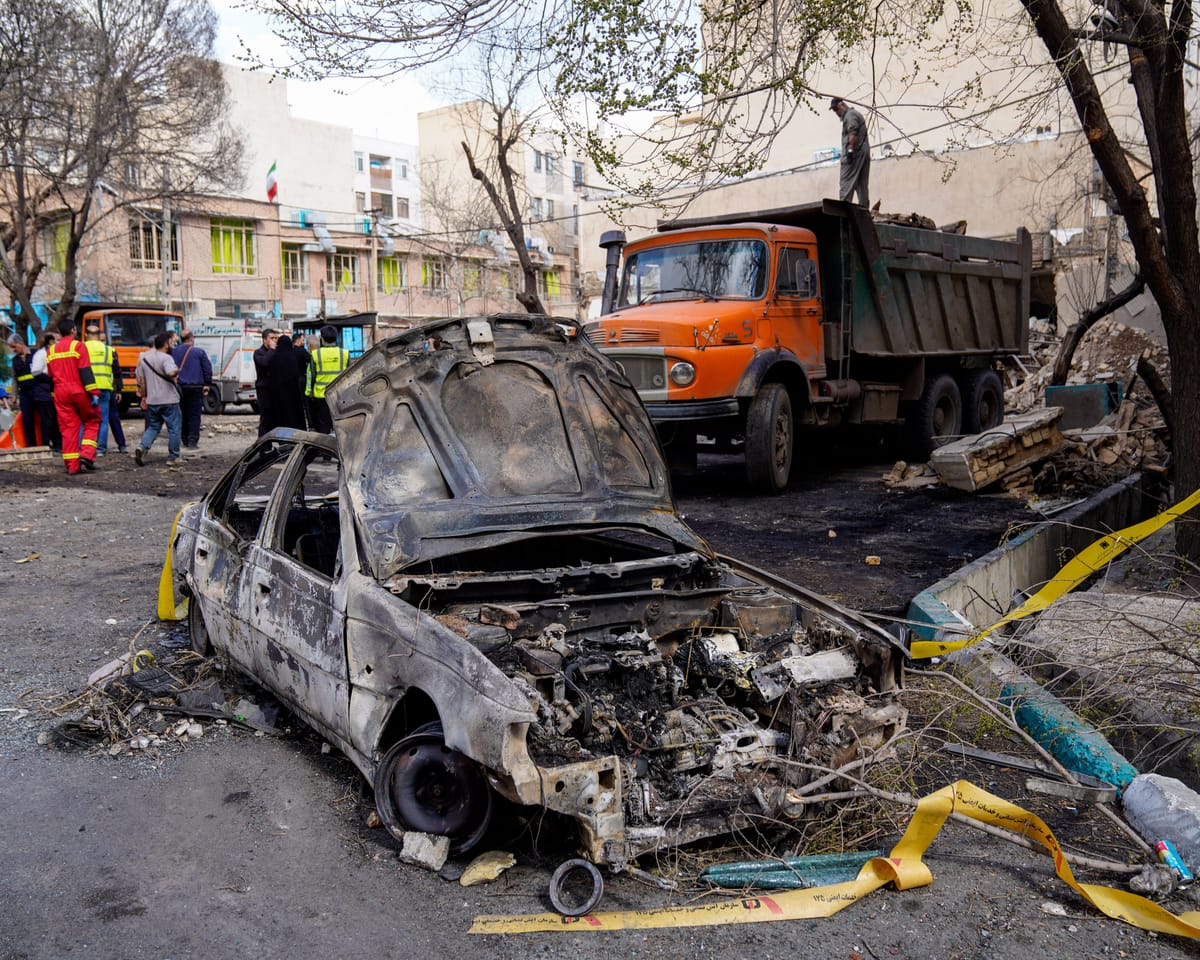
Venezuelan leader Nicolás Maduro was taken into custody. In contrast, former U.S. President Donald Trump and Israeli Prime Minister Benjamin Netanyahu have adopted a distinct approach toward Iran, seeking to strike and eliminate the nation’s supreme leader, Ali Khamenei, along with numerous high‑ranking officials.
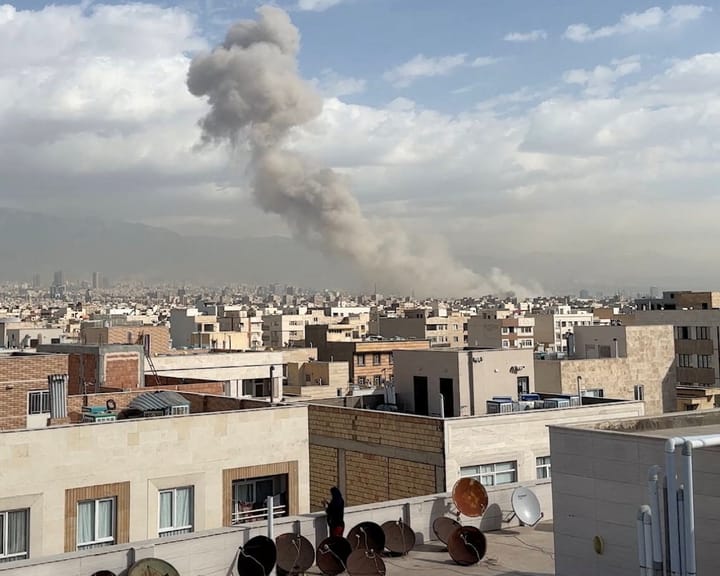
While coordinated U.S. and Israeli air raids also hit Iranian military installations and air‑defence networks from early morning, the most prominent strike hit Khamenei’s residence in Tehran.
Video posted online displayed thick columns of smoke rising from the capital site after the daylight bombardment, and subsequent satellite photos confirmed the structure had been demolished in what seemed a precise operation.
Khamenei’s condition is still unknown, yet the operation’s purpose was to force regime change in Iran through aerial attacks and assassinations lacking a clear legal basis. The method is alarmingly simple to initiate, while its outcomes remain highly unpredictable.
During last summer’s twelve‑day conflict with Israel, Khamenei identified three possible successors in the event of his death. Earlier this month, reports said he outlined four tiers of succession for senior governmental and military positions, aiming to preserve the regime against a U.S.–Israeli offensive.
“There is no indication that the United States or any other power will deploy troops, so internal coercive authority stays with the Iranian regime,” said H.A. Hellyer, senior fellow at the Royal United Services Institute. “A shift would require a popular uprising accompanied by widespread defections.”
Explosions rang out in Tehran, Isfahan, Kermanshah, Qom and other major cities during a wide‑scale assault that started in the morning, a purposeful departure from the usual night‑time raids intended to gain tactical surprise.
The Israeli defense forces reported that hundreds of sites were hit in several waves, encountering minimal resistance from Iran’s already weakened air‑defence system, which had been eroded during last summer’s twelve‑day war and further damaged on Saturday. Both political and military facilities were targeted, with around 200 Israeli fighter jets attacking air‑defence and ballistic‑missile launch locations, according to the military.
In the last month, the United States has positioned two carrier strike groups in the area – the USS Abraham Lincoln operating in the Arabian Sea and the USS Gerald R. Ford recently arriving in the eastern Mediterranean. Each carrier carries roughly 75 combat aircraft, and accompanying destroyers and submarines are equipped with Tomahawk cruise missiles capable of striking targets over 1,000 miles away.
Iran, acknowledging an existential threat to its regime, promptly fired ballistic missiles and drones toward Israel and U.S. allies and bases in the region – Jordan, Kuwait, Bahrain, Qatar, the United Arab Emirates and Saudi Arabia – thereby pulling six additional states into the hostilities.
Read next
Infographic of US‑Israeli attacks on Iran and Tehran’s retaliation
The United States and Israel have declared the launch of an unprecedented joint operation against Iran, beginning with an extensive bombing campaign intended to bring about regime change.
Israeli aircraft and American missiles hit hundreds of sites throughout Iran, prompting residents to flee major cities in panic. Among the targets
US lawmakers denounce Trump’s Iran strikes as unauthorized acts of war by Congress
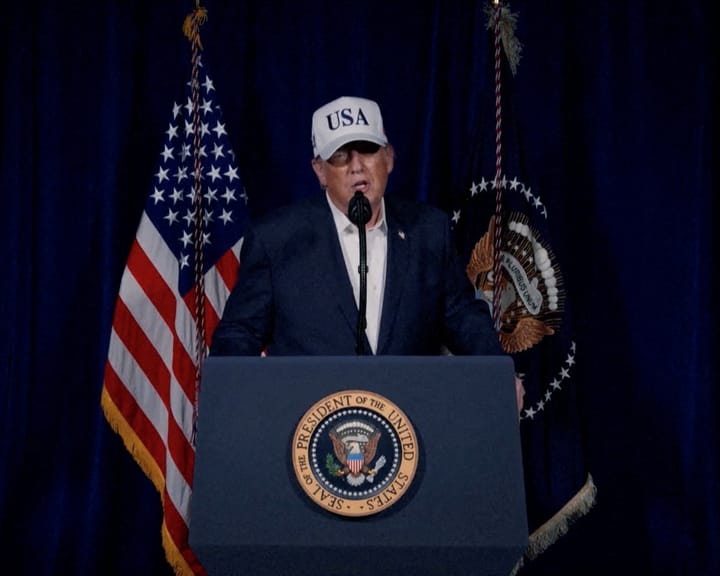
Donald Trump’s inability to persuade the American public of the need to strike Iran, followed by an operation that proceeded without informing Congress’s principal national‑security advisers – the “gang of eight” – has sparked intense domestic criticism of the military action against the Islamic Republic on Saturday.
Despite the

France, Germany and the UK call on Iran to negotiate a solution after the attack
European leaders have called on Iran to pursue a “negotiated solution” as they work to halt the escalation of conflict involving the United States, Israel and Iran through diplomatic channels. They also stressed that they were not involved in the recent strikes.
In an uncommon joint communiqué, the heads of