
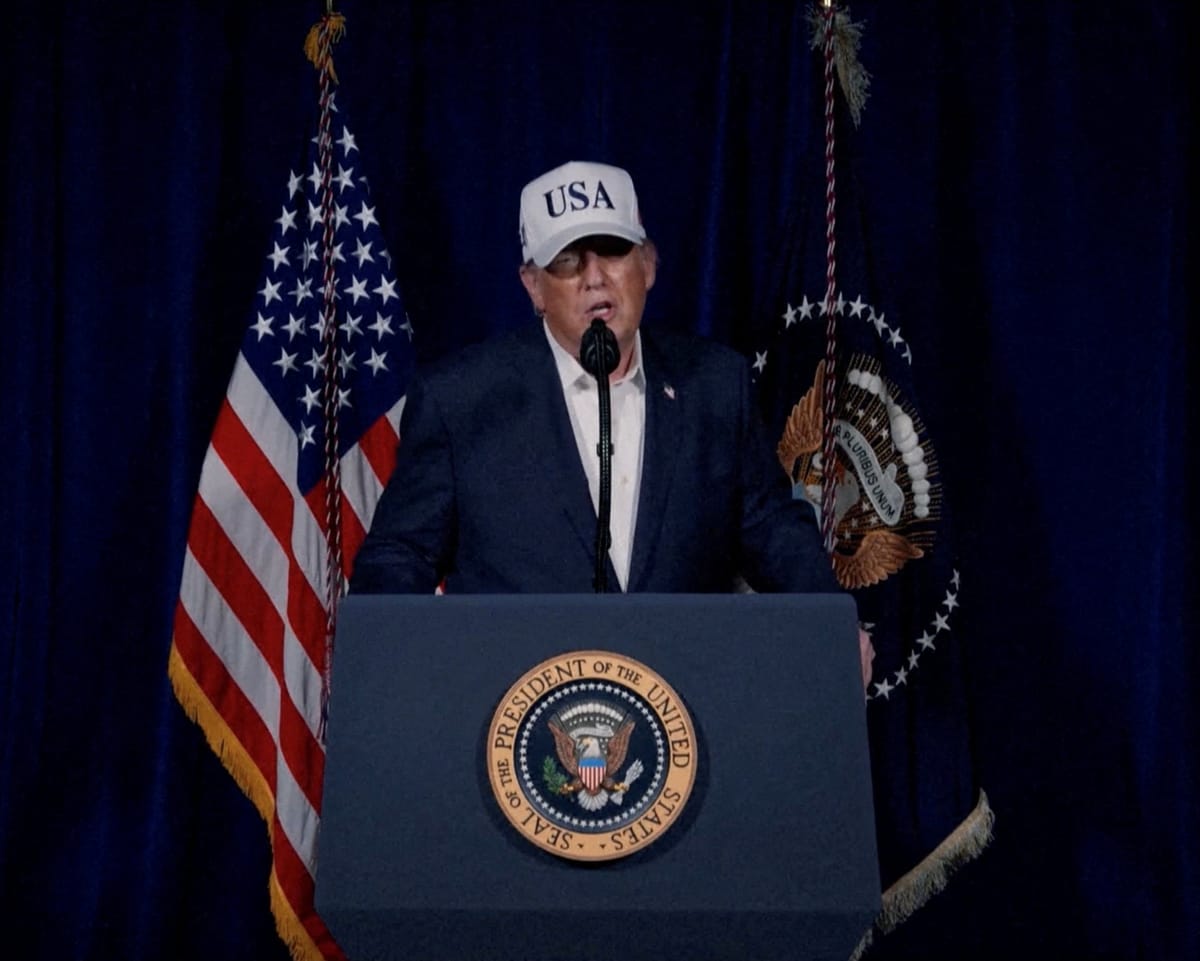
Donald Trump’s inability to persuade the American public of the need to strike Iran, followed by an operation that proceeded without informing Congress’s principal national‑security advisers – the “gang of eight” – has sparked intense domestic criticism of the military action against the Islamic Republic on Saturday.
Despite the seriousness of Saturday’s attacks, the president devoted only three minutes of Tuesday’s State of the Union address to justify why a regime that has long been a strategic adversary suddenly required immediate action, and to claim that he had “obliterated” its nuclear facilities in the June strikes.
The rapid buildup of what Trump described as a “vast armada” in the region stands in stark contrast to the prolonged, steady march toward war with Iraq in 2003 under President George W. Bush, who repeatedly argued – and was later disproved – that Saddam Hussein possessed weapons of mass destruction.
In that context, condemnation on Saturday was swift, with protests that the strikes violated the 1973 War Powers Resolution, which requires congressional approval.
Senator Tim Kaine, a Democrat from Virginia, accused the president of sidestepping a Senate vote scheduled for next week on a resolution he co‑sponsored with Republican Rand Paul of Kentucky. He urged Congress to reconvene urgently to address the matter.
When NPR asked how much notice the Trump administration gave Congress, Kaine replied: “None. The record shows the secretary of state called the speaker of the House, and that was it. We received no formal notice.
“The White House knew I had a war‑powers resolution slated for a Senate vote early next week. I assume they wanted to rush the start of an illegal war before Congress could act.”
The 1973 act, enacted after the Vietnam conflict to curb a president’s ability to launch military ventures without authorization, requires consultation with Congress and a 48‑hour notification for troop deployments, and imposes a 60‑day limit on unauthorized engagements.
Senate Democratic leader Chuck Schumer called for Congress to reconvene and for the administration to brief senators in a classified session and in public testimony.
“The administration has not given Congress or the American people essential details about the scope and immediacy of the threat,” Schumer said in a statement. “Confronting Iran’s destabilizing regional behavior, nuclear aspirations, and harsh repression of its people demands American strength, resolve, regional coordination, and strategic clarity. President Trump’s erratic swings between aggression and restraint do not constitute a viable strategy.”
Senator Mark Warner of Virginia, vice‑chair of the Senate Intelligence Committee, described the strikes as “a profoundly consequential decision that risks pulling the United States into another broad‑scale conflict.”
Read next
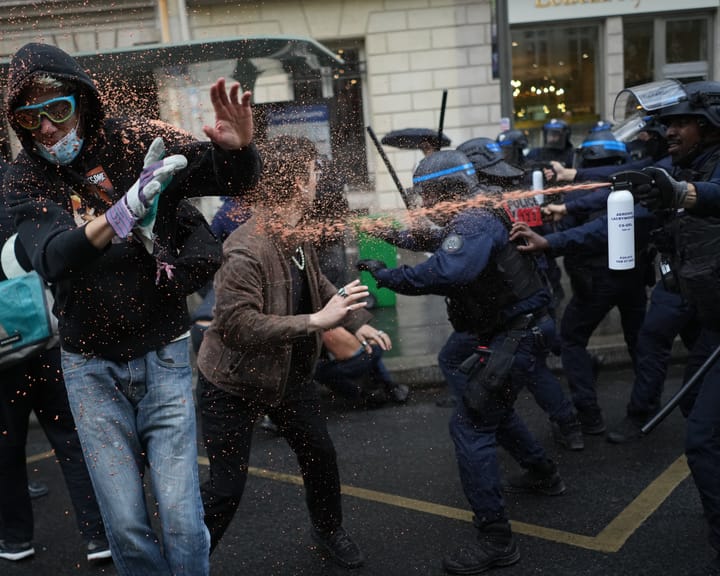
French Minister Refutes Police Brutality Claims Amid Ongoing Student Protests Across France – Europe Live
In recent developments, French Interior Minister Laurent Nuñez has refuted claims of excessive police force during the ongoing student protests in France. He emphasized that police action is only taken in response to violence or property damage. Addressing lawmakers, Nuñez described the protests as "unprecedented" due to the
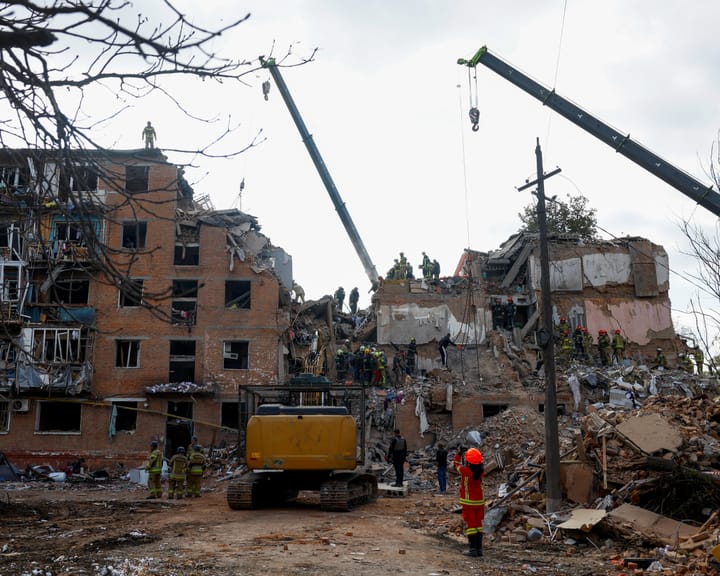
Ukraine Reports Russia Bombed Apartment Building Coinciding with Putin's Birthday
Volodymyr Zelenskyy has accused Russia's military of deliberately targeting civilians and bombing residential buildings as a grim gift for Vladimir Putin, who celebrates his 74th birthday on Wednesday.
Ukraine’s president described Russia’s overnight drone and missile strikes, which killed at least 24 people, as “despicable.” “The

Fears of 'another coup d'état' grow as Flávio Bolsonaro vows to 're-democratise' Brazil
Flávio Bolsonaro, the leading candidate for Brazil's presidency, has promised to "re-democratise" the nation, raising concerns about potential authoritarian governance should he win. Brazil transitioned to democracy in the 1980s after a harsh 21-year dictatorship, a period lauded by Flávio's father, former