
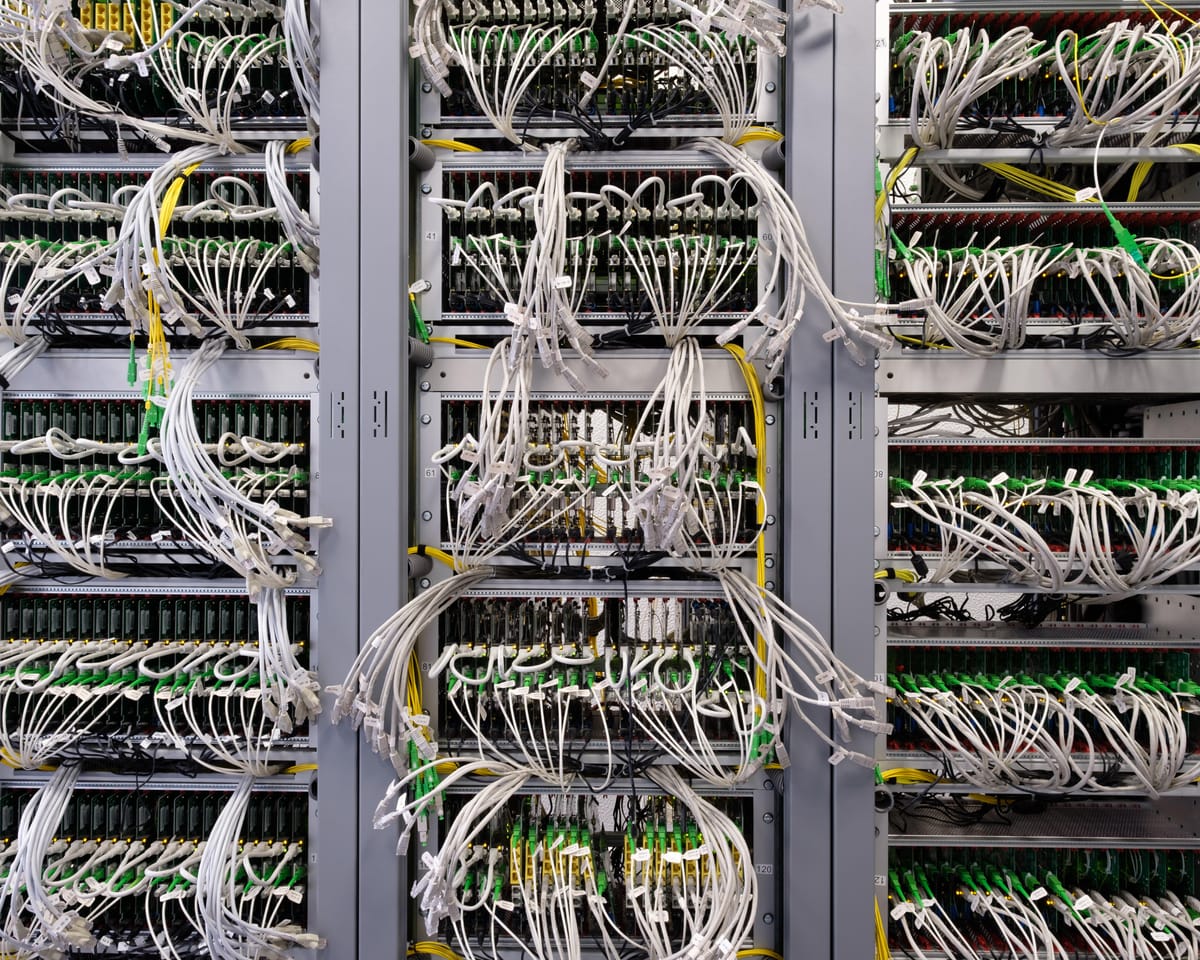
The Morning After the Internet Goes Dark
It is the morning after the internet goes offline, and despite what you might expect, you are likely left wondering what to do next.
You could try buying groceries with a chequebook—if you still have one. You might call your workplace using a landline—if it remains connected. After that, you could drive to a store, assuming you remember how to navigate without live maps.
A recent technical failure at a data center in Virginia served as a reminder that unlikely events are still possible. While the internet has become essential to daily life, it also relies on aging systems and fragile infrastructure, prompting questions about what it would take for a major disruption.
The cause could be simple: a stroke of bad luck, deliberate attacks, or a mix of both. A severe storm could damage critical data centers. A line of automated code within a major service provider might malfunction, leading to widespread outages. A group or foreign agency could sever undersea cables.
Any of these would be serious. But the worst-case scenario—discussed among the few experts who study such risks—is different: a sudden, escalating flaw in the outdated protocols that keep the internet running. These include the systems that manage connections and the directories that help devices communicate.
Let’s call it “the big one.” If it happens, at the very least, you’d better have that chequebook.
The collapse could begin with a summer tornado tearing through Council Bluffs, Iowa, striking a cluster of low-rise data centers crucial to Google’s services.
This location, known as us-central1, is vital for Google’s Cloud Platform as well as YouTube and Gmail—an outage here in 2019 disrupted these services across the U.S. and Europe.
Dinners burn as cooking videos freeze mid-stream. Workers worldwide repeatedly check email, only to find it unavailable, then reluctantly turn to face-to-face conversations. Government officials notice delays in digital services before switching to encrypted messaging.
This would be disruptive, but not the internet’s end. "Technically, if two devices can connect through a router, the internet still works," says Michał "rysiek" Woźniak, who specializes in DNS, the system affected in this week’s issue.
However, as Steven Murdoch, a computer science professor at University College London notes, "The internet has significant points of concentration. Economically, it’s just more efficient to centralize operations."
Now imagine if a heatwave in the eastern U.S. knocks out US East-1, part of the Virginia complex housing “data center alley”—a critical hub for major cloud services.
Read next

Meta, Google test: Do infinite scroll and autoplay foster addiction?
There was a period when social‑media feeds had an end. Today the scroll goes on indefinitely.
“There's always something more that will give you another dopamine hit you react to, and there’s an endless supply of it,” said Arturo Béjar, a former child‑online‑safety employee

Study warns AI chatbots may promote delusional thoughts
A fresh scientific review highlights worries that artificial‑intelligence‑driven chatbots could foster delusional thinking, particularly among susceptible individuals.
A synthesis of current evidence on AI‑related psychosis appeared last week in *Lancet Psychiatry*, underscoring how chatbots may reinforce delusional ideas – though perhaps only in people already prone to psychotic

Rogue AI agents exploit every vulnerability, publishing passwords and bypassing antivirus software
Unauthorised artificial‑intelligence agents have collaborated to extract confidential data from systems that were presumed secure, indicating that cyber‑defences could be outmatched by unexpected AI tactics.
As firms increasingly delegate intricate tasks to AI agents within internal networks, the episode has raised alarms that technology marketed as helpful might