

Diplomatic Efforts in Gaza Marked by Persistent Failure
George Mitchell, the prominent U.S. figure behind the Northern Ireland peace deal, once described diplomacy as 700 days of failure leading to one day of success. In Gaza, however, there have been 730 days of failure with no such breakthrough. The ongoing devastation, rising casualties, and the conflict’s expansion beyond Gaza stand as a stark condemnation of diplomatic efforts and the weakening state of international law. This may well be the darkest period for diplomacy since 1939.
Some argue that failure was inevitable because the conflict has become so deeply rooted and resistant to compromise that resolution can only come through force—effectively the suppression or elimination of one side.
Yet, despite the deep-seated animosity between the parties, a growing consensus in Western nations suggests that the handling of this conflict has been deeply flawed. European leaders initially deferred responsibility to a U.S. administration that held an idealized view of Israel, misjudged how its government would respond to the events of October 7, and underestimated the resulting divisions in Western politics.
Admissions of missteps and defensive justifications from former members of Joe Biden’s team have surfaced. In her book about her presidential campaign, Kamala Harris reflects: “I urged Joe to extend the same compassion he expressed for Ukrainians to the civilians suffering in Gaza. But he struggled—while he could fervently declare ‘I am a Zionist,’ his statements about Palestinian civilians felt insufficient and contrived.”
She also notes that Benjamin Netanyahu did not reciprocate the loyalty Biden had shown him, as he preferred dealing with Donald Trump.
At best, Democrats misjudged the situation. “We did not project the strength of a global leader,” said Andrew Miller, a former State Department official. “Instead of approaching the issue with confidence that solutions were possible, we convinced ourselves there was little we could do to influence Israel, our regional partner.”
Unlike Biden, Trump did not grapple with self-doubt in his approach. He leveraged unpredictability as a diplomatic tool, but, much like Biden’s envoy Steve Witkoff, his efforts became mired in attempts to negotiate a hostage release without Israel returning to hostilities—which ultimately failed in March this year.
As Witkoff’s proposals evolved without success, France and Saudi Arabia decided to intervene. They repurposed a U.N. conference on a two-state solution as a means to reinvigorate diplomatic efforts. This broke the long-standing U.S. dominance over the peace process and finally brought attention back to Palestinian governance.
Read next

Teen's Mountaineering Attempt with Claude Ends in Emergency Rescue in Canadian Mountains
The Widowmaker Arete, a towering 1,700-foot wall in British Columbia, is misleadingly labeled as featuring "mostly easy slab climbing" with "short steep sections" including "finger cracks" and "blocky face climbing." Climbing it necessitates meticulous planning and the appropriate gear.
Last

Fading Royal Line: Growing Advocacy for Princess Aiko to Ascend Japan’s Throne
Princess Aiko, 24, is a prominent figure in Japan, often featured on magazine covers and sought after by fans for her fashion sense. Her public appearances draw large crowds eager to see her, admired for her elegance and presence. Despite her popularity, she is barred by law from becoming empress,
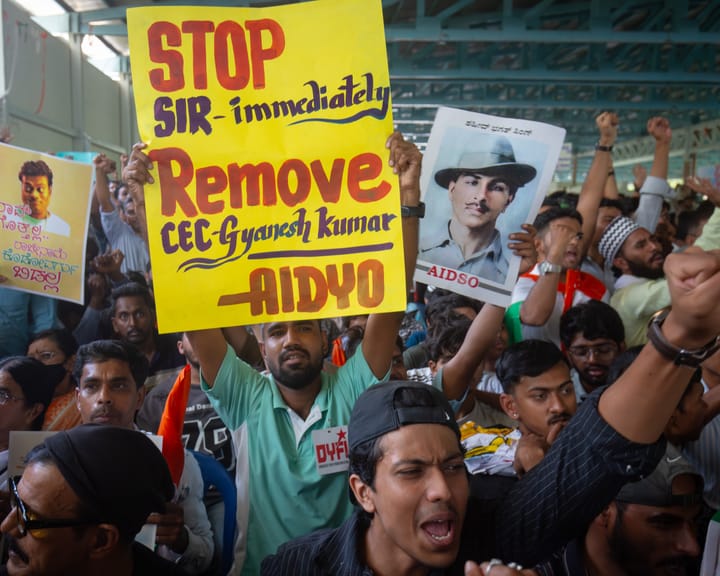
India's 'Cockroach' Party Accuses Government of Detaining Members Before Weekend Protest
India’s Cockroach Janta Party (CJP), initially a satirical movement, is now gaining political traction among Gen Z as it faces mass detentions ahead of a major anti-government protest in Delhi. The opposition, alongside student groups and the CJP, has been organizing nearly daily protests, demanding the resignation of