
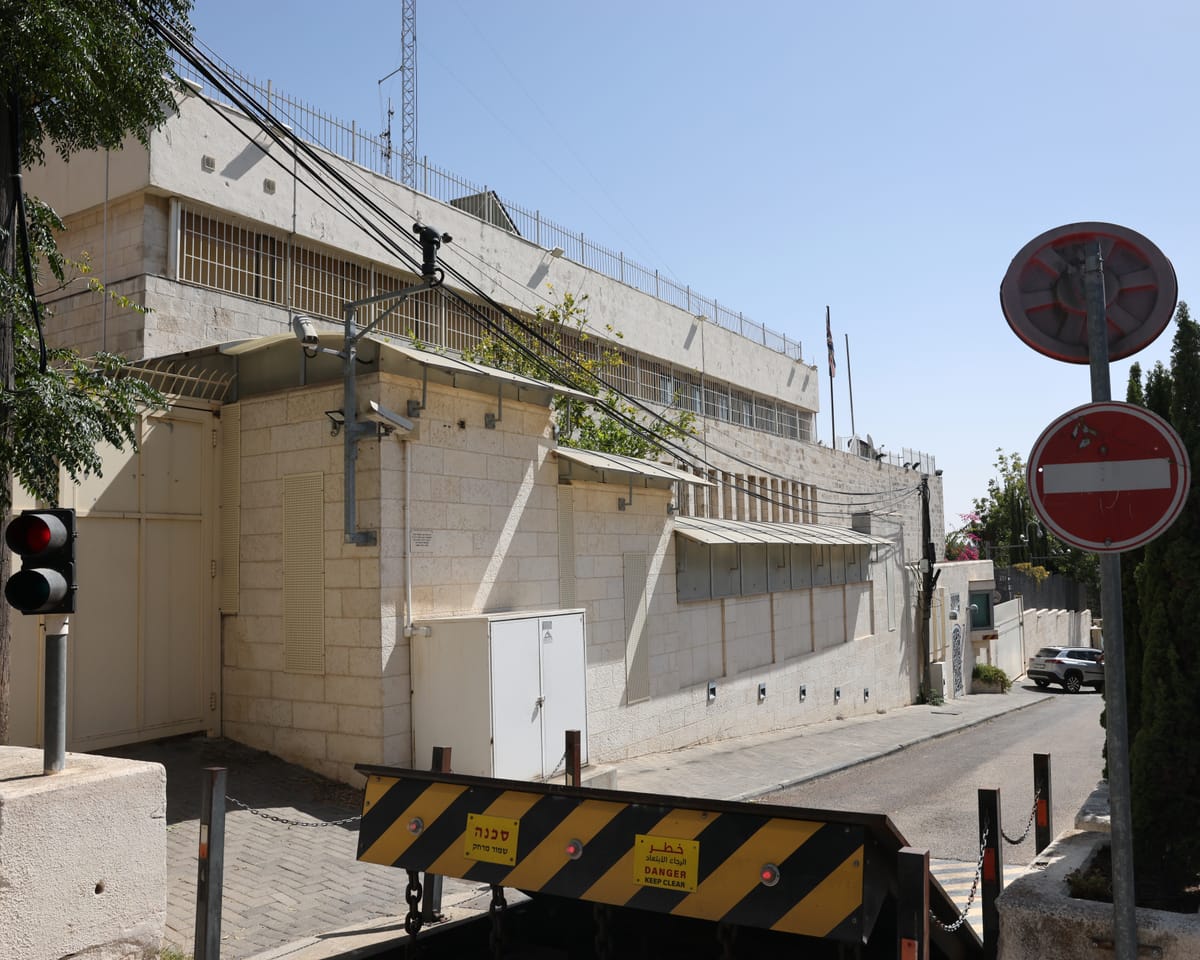
Israel's attempt to close the British consulate general in Jerusalem was aimed at preventing London from imposing sanctions on settlements in occupied Palestine. However, it also aligned with the current government's objective to fully annex Jerusalem as a national capital, according to diplomatic and legal experts.
The UK mission in Jerusalem holds a unique diplomatic status, dating back to before the establishment of Israel, rooted in the idea of Jerusalem as a neutral zone under international control. Unlike other consulates, it operates independently from the British embassy in Tel Aviv, with diplomats reporting directly to London. This arrangement is contentious for those in Israel who view the entire city as their territory, despite Israel's occupation of East Jerusalem in 1967 and the Knesset's annexation law in 1980, which is not globally recognized.
Gideon Sa’ar, the Israeli foreign minister, threatened to close the consulate to deter the UK from implementing plans to ban trade with West Bank settlements and sanction companies providing them services. The UK warned of a mass expulsion of diplomats, but both nations have since avoided a full diplomatic crisis as Israel approaches national elections on October 27.
The UK will rebrand its consulate as a “mission” and reduce its diplomatic staff, maintaining its independence from Tel Aviv in a compromise described as a temporary “ceasefire.” If Israel elects a new leader, discussions on the consulate's status may resume.
Daniel Seidemann, an Israeli lawyer and geopolitics expert, noted the importance of maintaining the consulate's independent status. He described the UK's arrangement with Israel as optimal among worse options, acknowledging a downgrade from a diplomatic mission to another office as a significant change.
Seven other consulates in East Jerusalem, established before 1948, also operate independently, reflecting Jerusalem's designation as “corpus separatum” under the UN's 1947 partition plan. This status conflicts with Israel's claims, making these consulates a thorn in Israel's side.
The UK's sanctions plan is a significant move by an ally to halt settlement expansion in the occupied West Bank, causing concern among Israeli banks. The plan's timing was partly driven by Israeli tenders for the E1 settlement project, which Israel's finance minister claims will undermine a Palestinian state.
Ilan Baruch, a former Israeli ambassador advocating for a two-state solution, viewed the threat to the consulate as a sign of the UK taking a meaningful stance against Israeli policy. Renaming the consulate while preserving its independence suggests Israel has stepped back from confrontation, aided by Britain's smaller concessions.
Read next

Russian Assault on Buses Near Ukraine Border Results in 30 Deaths
Thirty people have been killed and eighteen injured following an attack by Russia on two passenger buses in Kramatorsk, near the frontline in eastern Ukraine, according to local authorities.
The Donetsk regional prosecutor's office reported that the death toll from the morning attack on the buses had reached

Ethiopia Conducts Drone Strike on Eritrean Forces in Tigray Region
Eritrean forces reportedly crossed into Ethiopia's Tigray region and faced drone attacks from Ethiopian government forces, raising concerns about the potential for a broader regional conflict between the two neighboring countries.
Military vehicles transporting soldiers crossed the southern border of Eritrea into Tigray on Wednesday, reaching Adigrat, approximately

Israel Advances Film Resembling NAZA Documentary
The Israeli government is promoting an online film project designed to counter the findings of the award-winning documentary NAZA, which details Israel’s mass killings of civilians in Gaza. NAZA, directed by Oscar-winning filmmakers Yuval Abraham and Rachel Szor, is currently in cinemas and will be shown in