
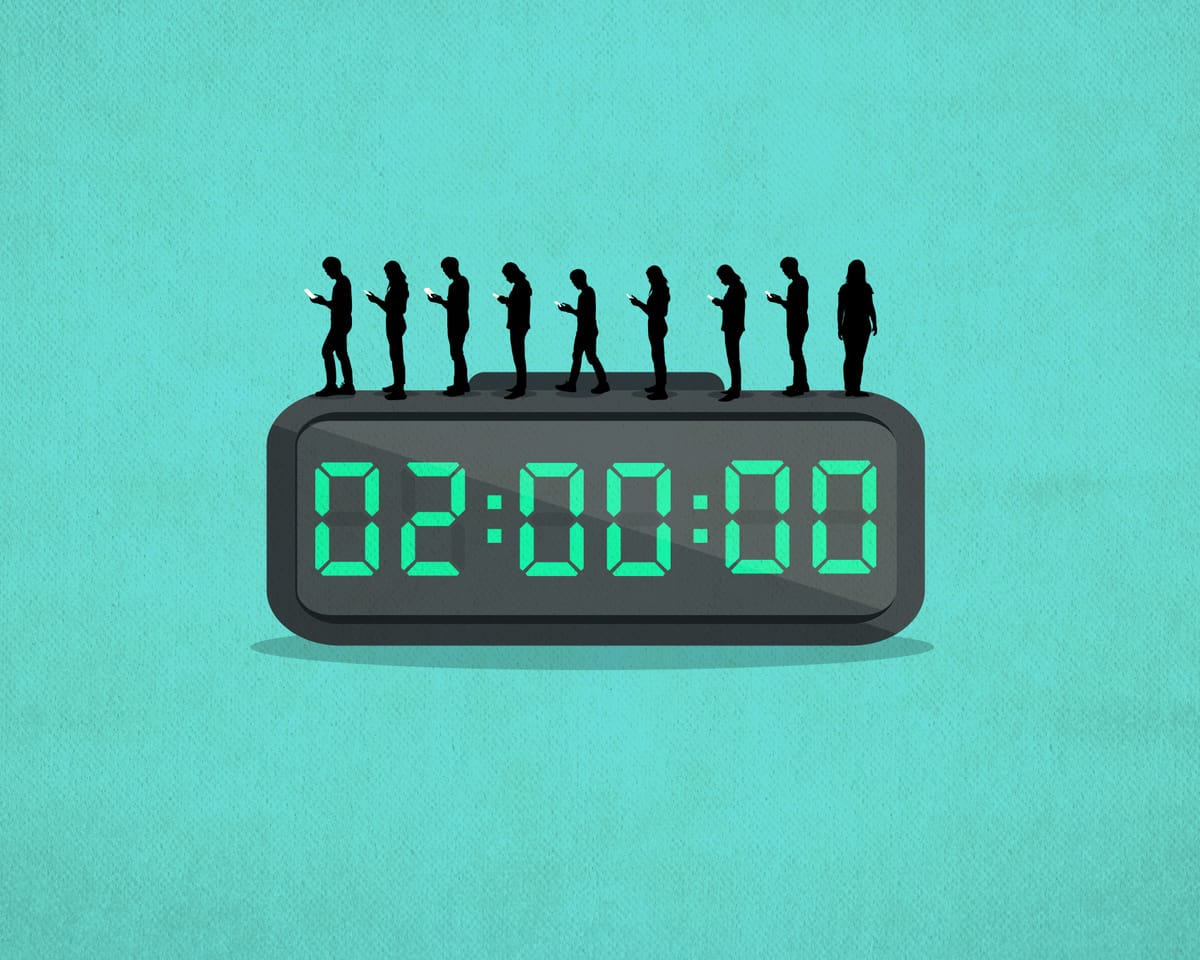
Despite working full-time for a company in Tokyo, Shoki Moriyama still manages to spend eight hours a day on his smartphone.
“I rely on my phone to stay informed,” says Moriyama, 25, who belongs to a generation that finds it hard to imagine life without scrolling through news, social media, messaging apps, and videos.
He is not alone. While excessive smartphone use is a global issue, authorities in Japan are taking steps to address growing concerns about its impact on physical and mental well-being, especially among young people.
Last week, the town of Toyoake in central Japan introduced a measure limiting daily smartphone use to two hours for its 69,000 residents. Officials say the move aims to address concerns about excessive screen time and sleep deprivation. The ordinance, passed by the town assembly last month, includes no penalties for those who do not comply.
Moriyama was among several people in their 20s who accepted CuriosityNews’ challenge to limit smartphone use to a maximum of two hours and share their experiences.
Results varied—some succeeded, while others struggled.
Moriyama, who frequently checks LINE, TikTok, Instagram, and X, admitted that reducing his screen time was difficult.
“I usually spend around eight hours a day on my phone, so two hours felt far too short,” he says. “In the end, I used it for just under two hours, which was a big change. The extra time let me read, study a bit, and go to the gym, so the day wasn’t wasted.”
His colleague Tomomi Hanaoka also managed to cut back. “On weekdays, I use my phone for about three hours, and on weekends, six or seven. Two hours was tough,” says Hanaoka, who normally relies heavily on LINE, TikTok, and Instagram.
“I stuck to the limit and used the extra time to read and do other things.”
Akari Saito, a university student, was skeptical from the start. “Being told I can’t do something makes me want to do it more,” she says.
While Saito sees Toyoake’s measure as a conversation starter, she believes the focus should be on how phones are used, not just how long. “It’s hard to separate learning from entertainment.”
Despite her efforts, she struggled to reduce her usual three to four hours of daily screen time. “It was toughest during my commute or while walking. But cutting back could make the day feel longer and more meaningful.”
Read next

Teen's Mountaineering Attempt with Claude Ends in Emergency Rescue in Canadian Mountains
The Widowmaker Arete, a towering 1,700-foot wall in British Columbia, is misleadingly labeled as featuring "mostly easy slab climbing" with "short steep sections" including "finger cracks" and "blocky face climbing." Climbing it necessitates meticulous planning and the appropriate gear.
Last
Fading Royal Line: Growing Advocacy for Princess Aiko to Ascend Japan’s Throne
Princess Aiko, 24, is a prominent figure in Japan, often featured on magazine covers and sought after by fans for her fashion sense. Her public appearances draw large crowds eager to see her, admired for her elegance and presence. Despite her popularity, she is barred by law from becoming empress,

India's 'Cockroach' Party Accuses Government of Detaining Members Before Weekend Protest
India’s Cockroach Janta Party (CJP), initially a satirical movement, is now gaining political traction among Gen Z as it faces mass detentions ahead of a major anti-government protest in Delhi. The opposition, alongside student groups and the CJP, has been organizing nearly daily protests, demanding the resignation of