
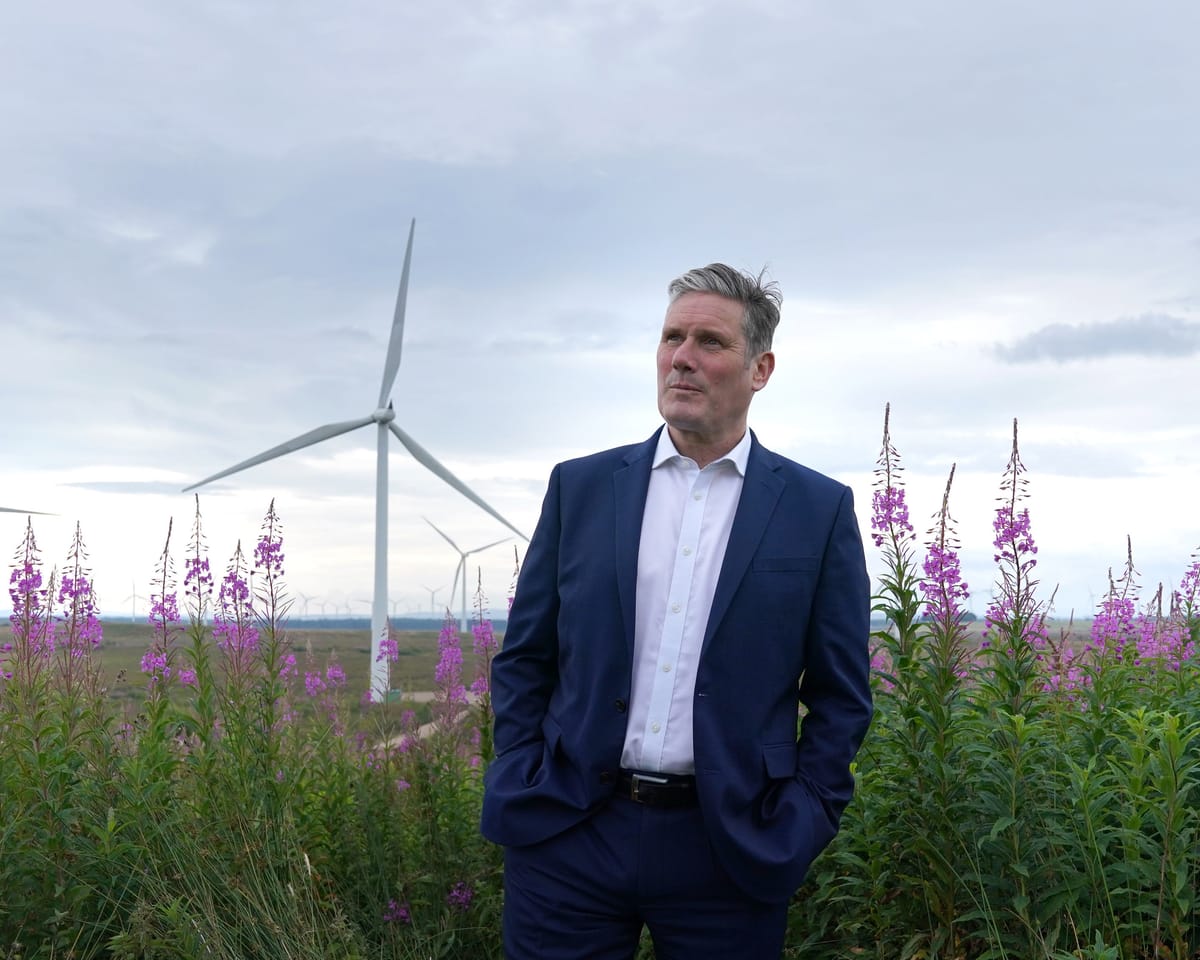
Just under twelve months ago, Keir Starmer addressed a gathering of senior officials and business executives representing sixty nations in London, proclaiming that climate action was “embedded in the DNA of my government”.
Promising to go “all‑out” for net‑zero and to “speed up” as others lagged, his Lancaster House address marked his most forceful statement on the topic. “We are bearing the cost of our excessive reliance on the volatile global fossil‑fuel market,” he warned. “Domestic clean power is the sole path to regain command of our energy network.”
To those familiar with Starmer, the remarks echoed his sincere and carefully considered stance. He sees climate action as both essential and financially advantageous, capable of shielding the United Kingdom from future cost‑of‑living emergencies – a point he has raised both behind closed doors and in public forums.
Yet during his time in office, Downing Street has housed senior advisers doubtful of environmental measures. They have attempted to curb Starmer’s climate‑friendly initiatives, dilute ecological policy, and push Labour toward Reform and the Conservatives’ anti‑net‑zero positions.
The consequences of that faction’s strategy have now become apparent. The traditionally secure Labour constituency of Gorton and Denton shifted markedly to the Green Party. Internal Labour disputes left the party exposed and its communication muddled: Reform aimed at the seat, yet the Greens – campaigning on optimism, confidence in public services and robust environmental measures – swept to triumph.
Starmer now confronts fresh scrutiny of his leadership. After the Greens secured their inaugural by‑election win, he is presented with stark options. Will he reaffirm his climate‑friendly instincts? Can he abandon the anti‑green counsel that has led to this situation in time?
Ami McCarthy, political director at Greenpeace UK, urged Labour to reset without delay. She noted: “The signal from Gorton and Denton to Westminster is unmistakable: voters crave transformation. This result represents popular power over wealthy interests and major polluters, hope‑driven politics over hostility, and decency over denial and division.”
“Votes for parties committed to confronting the climate emergency were more than double those for Reform, highlighting the weak public attraction of Nigel Farage’s climate‑skeptical, renewable‑opposing, Trump‑friendly agenda. The takeaway for Labour is evident: to win back support from the Greens, it must present bold proposals on living costs, climate and nature that voters are clearly demanding.”
Asad Rehman, chief executive of Friends of the Earth, argued that Labour needs to frame its cost‑of‑living measures as supporting net‑zero, since voters interpret them that way. He observed: “In the lead‑up to the by‑election, respondents identified warmer homes to lower bills, enhanced public transport, better green spaces and stronger local communities as key priorities.
Read next
Watchdog reports MPs' base pay will reach £110,000 by the end of the parliamentary term.
The basic annual remuneration for MPs is set to climb to £110,000, the parliamentary expenses regulator has announced, citing a rise in abuse, intimidation and expanding constituency duties.
From April, MPs’ base pay will increase by nearly £5,000 to £98,599 – a 5 % rise – and is projected to
New Green MP says Farage, echoing his hero Trump, derided the by‑election results.
Nigel Farage was charged with a Trump‑like refusal to accept the result by the Green Party’s freshly elected MP for Gorton and Denton, after he asserted that her Reform opponent had led among voters born in Britain in the recent by‑election.
Hannah Spencer, a plumber and local
Starmer says Britain won’t support aerial “regime change” in Iran
Keir Starmer announced that Britain will not take part in the offensive raids planned by Israel and the United States against Iran, stating that the UK rejects any notion of “regime change from the skies”.
Nevertheless, the prime minister defended the employment of British bases for defensive missions, describing it