

Young People Are Choosing to Step Back from Smartphones for Better Wellbeing
Research shows that more children are taking breaks from their smartphones to improve their mental health, safety, and focus.
Experts say young people are responding to concerns about excessive screen time by independently regulating their device and social media use rather than depending on parental restrictions.
According to a survey by the research group GWI, which polled 20,000 young individuals and their parents across 18 countries, the percentage of 12- to 15-year-olds who take breaks from digital devices increased by 18% to 40% since 2022.
Sonia Livingstone, director of the Digital Futures for Children center at LSE, noted that similar findings will be published soon, revealing that children and teens are exploring different methods to manage their online habits. These include pausing social media use, avoiding negative content, seeking more positive digital experiences, and, in some cases, leaving platforms entirely.
Livingstone said, “Young people are aware—from parents, news, and personal experience—that too much time online isn’t always beneficial. They’re testing ways to protect their wellbeing without completely abandoning social media. They likely discuss strategies among themselves to find what works best.”
Daisy Greenwell, co-founder of an initiative promoting less smartphone use, has observed growing skepticism among young people about the necessity of being constantly connected.
“Teens often tell us they feel drained by the pressure to always be online and are stepping back for their mental health,” she said. “Many are recognizing that these platforms aren’t neutral—they’re designed to capture attention. They’re realizing that their time, focus, and self-worth are being exploited by major corporations. Stepping away is becoming an act of resistance.”
This trend is supported by recent data. A 2024 report found that 33% of online users aged 8 to 17 believe their screen time is excessive. Another study showed 47% of 16- to 24-year-olds disable notifications or use “do not disturb” settings, up from 40% in 2023, compared to 28% of older users.
Additionally, 34% of young people actively take breaks from social media (versus 23% who do not), 29% delete apps due to excessive use (compared to 19% who don’t), and 24% remove apps for mental health reasons (while 13% don’t).
David Ellis, a behavioural science professor at the University of Bath, suggested teens may be learning to use digital tools in ways that help them maintain balance.
Read next

US officers worry Meta smart glasses could covertly record them
In January, the NYPD’s counterterrorism unit warned officers about a new security threat: Ray-Ban Meta glasses. A memo directed officers to “conduct thorough inspections of all eyewear permitted within inmate cells,” cautioning that recently arrested individuals could use the devices’ small cameras and microphones to record inside police
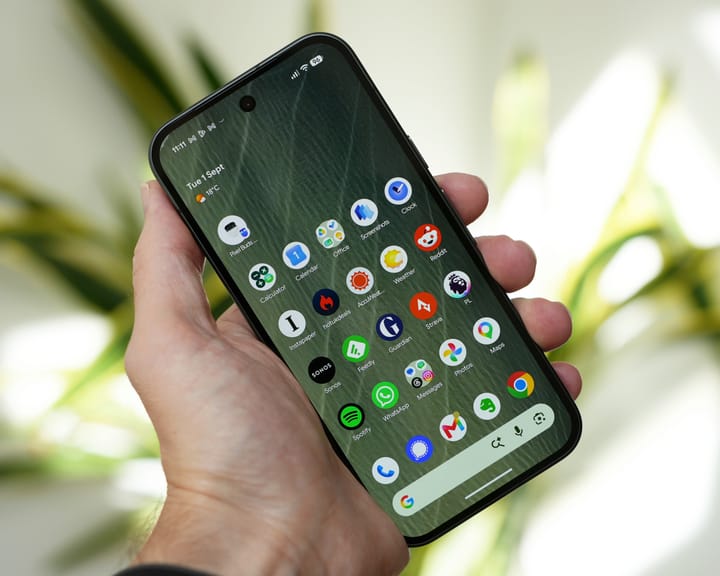
Google's Pixel 11 sets new standard for flagship phones, review finds
Google’s Pixel 11 continues to define what a base flagship phone should deliver, with leading cameras, extended software support and nearly all the features of its pricier siblings.
The standard Pixel 11 is priced at £879 (€999/$899/A$1,499), £80 higher than its previous version, reflecting ongoing

AI Expert Father of Three Shares Essential Insights for Parents on Artificial Intelligence
A father once promised his child they would write a story together called "The Day Nobody Went to Disneyland." The plot imagined a perfect day when the entire world avoided the park, expecting crowds, leaving it completely empty for a father and child to enjoy alone. Three decades