

An internal U.S. assessment reveals that Israeli officials were already skeptical about Lebanon’s ability to disarm Hezbollah before Israel began an aerial operation against the group on Monday.
The disclosed embassy cable indicates that on the night preceding the joint U.S.–Israeli strikes on Iran, Israeli representatives warned Washington that Hezbollah was rebuilding its combat capacity faster than the Lebanese armed forces could diminish it. The message added that neither Beirut nor Damascus could be relied upon to curb the threat along Israel’s northern frontier.
The 27 February cable, obtained by CuriosityNews, was transmitted to Washington a day before Israel and the United States launched their air campaign against Iran, which resulted in the death of the country’s supreme leader, Ayatollah Ali Khamenei, and provoked Tehran to carry out retaliatory attacks throughout the region.
Three days after the cable’s dispatch, Israel initiated the first of a series of airstrikes targeting Hezbollah‑controlled districts in southern Beirut.
According to the cable, Israel doubted that Syria’s new leadership could restrain its own security forces and expressed “grave” concern over Turkish military entrenchment in Syria, warning that it could pose a strategic danger to Israel’s north. It also claimed that Turkish officials had “repeatedly incited against Israel in Syria” despite existing “de‑confliction” arrangements between Israeli and Turkish security agencies. The document suggested that Ankara was pursuing a dual approach—maintaining private contacts with Tel Aviv while positioning its forces in Syria to Israel’s disadvantage.
The briefing was prepared for U.S. Secretary of State Marco Rubio ahead of a planned visit to Israel that was later cancelled. It was drafted under the authority of U.S. ambassador to Israel Mike Huckabee. Huckabee, a self‑identified Christian Zionist, had earlier told journalist Tucker Carlson that it would be “acceptable” for Israel to acquire territory extending from the Nile to the Euphrates, covering Lebanon, Syria, Jordan and parts of Iraq and Saudi Arabia. Those comments sparked a diplomatic uproar and condemnation from fourteen governments, prompting the embassy to assert that “U.S. policy has not changed.”
Huckabee also told Carlson that if Israel “ended up being attacked by all these places and they win that war and they take that land, OK, that’s a whole other discussion.”
The cable noted that Israeli officials had lost confidence that the Lebanese state would ever act decisively against Hezbollah. Israel, the internal report stated, “harbors major doubts Hezbollah will agree to give up its weapons” and questions the Lebanese government’s “commitment to confront Hezbollah to take control of all Lebanese territory.”
Iranian financing continued to reach the group “through Turkey and elsewhere,” the cable said, despite the November 2024 cease‑fire. The Israel Defense Forces, the document added, had already been compelled “to launch military attacks on Hezbollah as a result.”
Read next
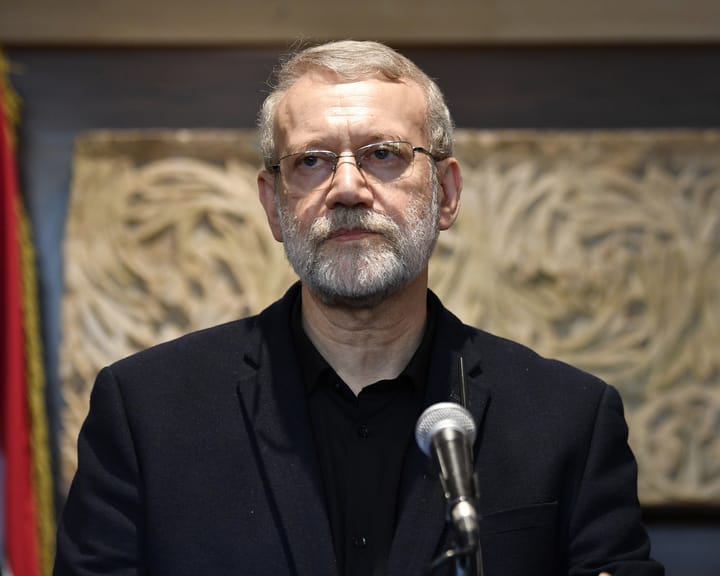
Live Middle East crisis: Iran promises retaliation for security chief's death; Israel hints at imminent strike on Beirut
Iran’s armed forces pledged retaliation for the death of security chief Ali Larijani in an Israeli strike, with the army commander warning of a “decisive and regrettable” response.
Tehran also verified that Basij commander Gholamreza Soleimani was killed, after Israel had earlier asserted that its forces carried out the
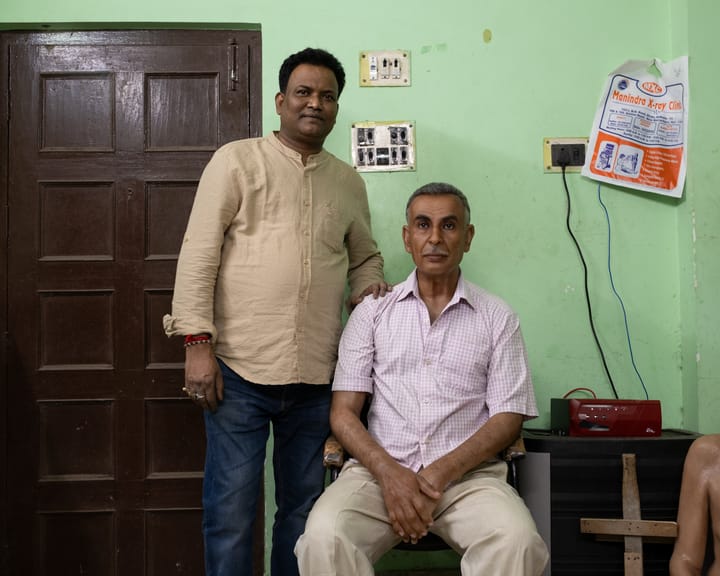
‘Almost human’: life-size replicas of the dead aid broken hearts in India
In northern Kolkata, close to Dum Dum Junction, Subimal Das and a team of about 80 operate out of an aging factory‑warehouse. With clay, fiberglass and silicone they produce life‑size copies of religious deities, cultural personalities, cricketers and film actors.
The workshop also offers a growing service: bespoke
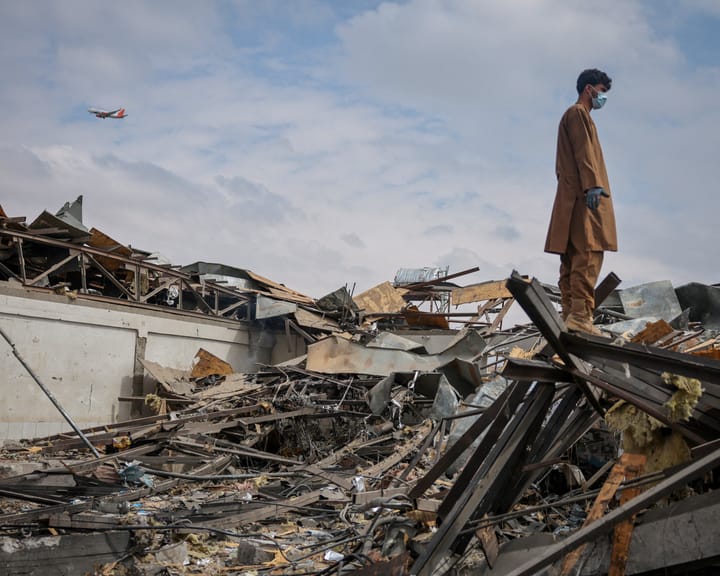
Witnesses say “Everything and people were burning” after strike on Kabul drug rehab centre.
Eyewitnesses and survivors have recounted the dreadful aftermath of a Pakistani air strike that struck a drug‑rehabilitation centre in Kabul, leaving more than 400 people dead, many of whom burned in their beds or were crushed as the structure collapsed.
Afghan rescue teams continued to pull bodies from the