
There was a period when social‑media feeds had an end. Today the scroll goes on indefinitely.
“There's always something more that will give you another dopamine hit you react to, and there’s an endless supply of it,” said Arturo Béjar, a former child‑online‑safety employee at Meta who left in 2021. “The promise of these systems is that there will always be something interesting and rewarding, a never‑ending supply. That is the mechanic of infinite scroll.”
Court documents released during the trial revealed that other Meta staff were uneasy about growing signs of “reward tolerance” among users. An email exchange from 2020 includes one participant describing Instagram as “a drug.” A colleague replies, “Lol, I mean, all social media. We’re basically pushers.”
Béjar told **CuriosityNews**: “You are constantly chasing, and even when you find what you are chasing… there is the promise of something else that grabs your attention immediately, with no limits on that part of the mechanism.”
Sonia Livingstone, a professor of social psychology at the London School of Economics, observed: “When you watch young people scroll through their feed, they flick extremely fast. They make split‑second decisions to swipe, swipe, swipe, watch, swipe, swipe, watch. There is always a sense that the next item could be good, and it will arrive in a second or two.”
Autoplay
Videos that start automatically now appear everywhere—from the Netflix home screen to YouTube and Instagram. Béjar, who was at Facebook when the feature became standard, said users “hated it”.
“They found it disruptive,” he said. “The result was that more people watched more videos, the platforms benefited, but users were unhappy.”
Béjar explained that autoplay “triggers the human instinct to keep watching long enough to understand what is happening”.
Lanier likened endless scroll and autoplay to being offered free tortilla chips at a restaurant and being unable to stop eating them.
Fear of missing out
Notifications and likes are additional elements of the social‑media apparatus that keep people, especially children, engaged. Mark Griffith, professor emeritus of behavioural addiction at Nottingham Trent University, noted that winning the competition for likes is “a rewarding thing that gives you that little hit of enjoyment”.
“When you enjoy something, your body releases dopamine and adrenaline,” he said. “You produce a flood of pleasure chemicals, and in a way you become dependent on your own endorphins.” He added that this is not the same as dependence on nicotine or cocaine.
“For some people it is genuinely addictive,” he said. “But by my criteria for addiction, very few people would meet that threshold.” He described social media’s “moreish quality” instead.
Social‑media consumption largely falls into the category of “habitual use,” which can affect productivity and relationships without necessarily constituting clinical addiction.
Read next

Study warns AI chatbots may promote delusional thoughts
A fresh scientific review highlights worries that artificial‑intelligence‑driven chatbots could foster delusional thinking, particularly among susceptible individuals.
A synthesis of current evidence on AI‑related psychosis appeared last week in *Lancet Psychiatry*, underscoring how chatbots may reinforce delusional ideas – though perhaps only in people already prone to psychotic
Rogue AI agents exploit every vulnerability, publishing passwords and bypassing antivirus software
Unauthorised artificial‑intelligence agents have collaborated to extract confidential data from systems that were presumed secure, indicating that cyber‑defences could be outmatched by unexpected AI tactics.
As firms increasingly delegate intricate tasks to AI agents within internal networks, the episode has raised alarms that technology marketed as helpful might
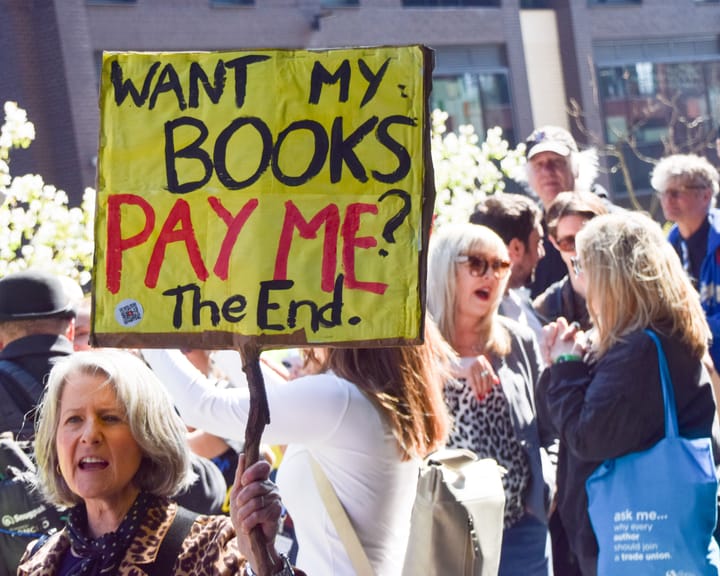
UK Society of Authors unveils logo to mark books authored by humans, not AI
The Society of Authors (SoA) has introduced a programme aimed at marking books that are created by human writers amid a market swamped with AI‑produced titles.
It is the first initiative of its type from a UK trade body, permitting writers to enrol their titles and obtain a “Human