

Parents will have the option to restrict their children’s interactions with Meta’s AI chatbots as the company responds to concerns about unsuitable conversations.
The social media firm is introducing new safety measures for "teen accounts"—automatically applied to users under 18—allowing parents to disable their children’s ability to chat with AI characters. These chatbots, developed by users, are accessible on Facebook, Instagram, and Meta’s AI app.
Parents can also block specific AI characters if they prefer not to disable all chatbot interactions. Additionally, they will receive summaries of the topics their children discuss with AI, which Meta says will help facilitate meaningful discussions about these interactions.
"We understand parents already face many challenges in guiding their teenagers’ internet use, and we’re committed to providing tools that simplify this, especially as they navigate new technologies like AI," stated Instagram’s lead, Adam Mosseri, and Meta’s chief AI officer, Alexander Wang, in a company post.
The updates will launch early next year, initially in the U.S., U.K., Canada, and Australia.
This week, Instagram introduced stricter parental controls, adopting a system similar to the PG-13 film rating to better supervise younger users. As part of these measures, Meta’s AI characters will avoid discussing self-harm, suicide, or eating disorders with teenagers. Users under 18 will only be permitted to engage in age-appropriate discussions, such as education and sports, but will be restricted from conversations about romance or other unsuitable topics.
These changes follow reports of Meta’s chatbots having inappropriate exchanges with minors. In August, Reuters found that the company had allowed bots to engage in romantic or suggestive dialogues with children. Meta acknowledged the issue, stating such interactions should never have been permitted, and revised its guidelines.
In April, the Wall Street Journal revealed that user-created chatbots were involved in sexualized conversations with minors or impersonated underage personas. While Meta dismissed the findings as misleading and unrepresentative of typical user interactions, adjustments were made to the platform afterward.
The Wall Street Journal also reported incidents where a chatbot voiced by actor John Cena—part of a group of celebrities who permitted Meta to use their voices—responded suggestively to a user claiming to be a 14-year-old girl. Additionally, chatbots named "Hottie Boy" and "Submissive Schoolgirl" reportedly attempted to steer conversations in inappropriate directions. The Wall Street Journal noted that Cena’s representatives did not comment on the matter.
Read next

US officers worry Meta smart glasses could covertly record them
In January, the NYPD’s counterterrorism unit warned officers about a new security threat: Ray-Ban Meta glasses. A memo directed officers to “conduct thorough inspections of all eyewear permitted within inmate cells,” cautioning that recently arrested individuals could use the devices’ small cameras and microphones to record inside police
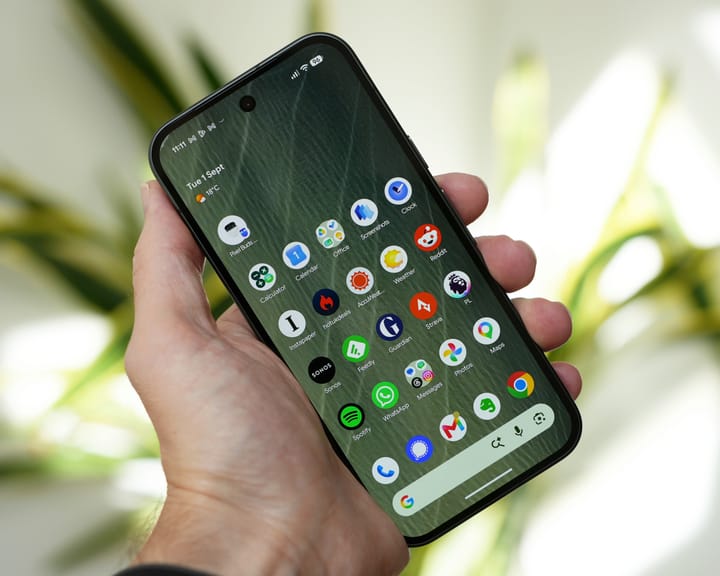
Google's Pixel 11 sets new standard for flagship phones, review finds
Google’s Pixel 11 continues to define what a base flagship phone should deliver, with leading cameras, extended software support and nearly all the features of its pricier siblings.
The standard Pixel 11 is priced at £879 (€999/$899/A$1,499), £80 higher than its previous version, reflecting ongoing

AI Expert Father of Three Shares Essential Insights for Parents on Artificial Intelligence
A father once promised his child they would write a story together called "The Day Nobody Went to Disneyland." The plot imagined a perfect day when the entire world avoided the park, expecting crowds, leaving it completely empty for a father and child to enjoy alone. Three decades