
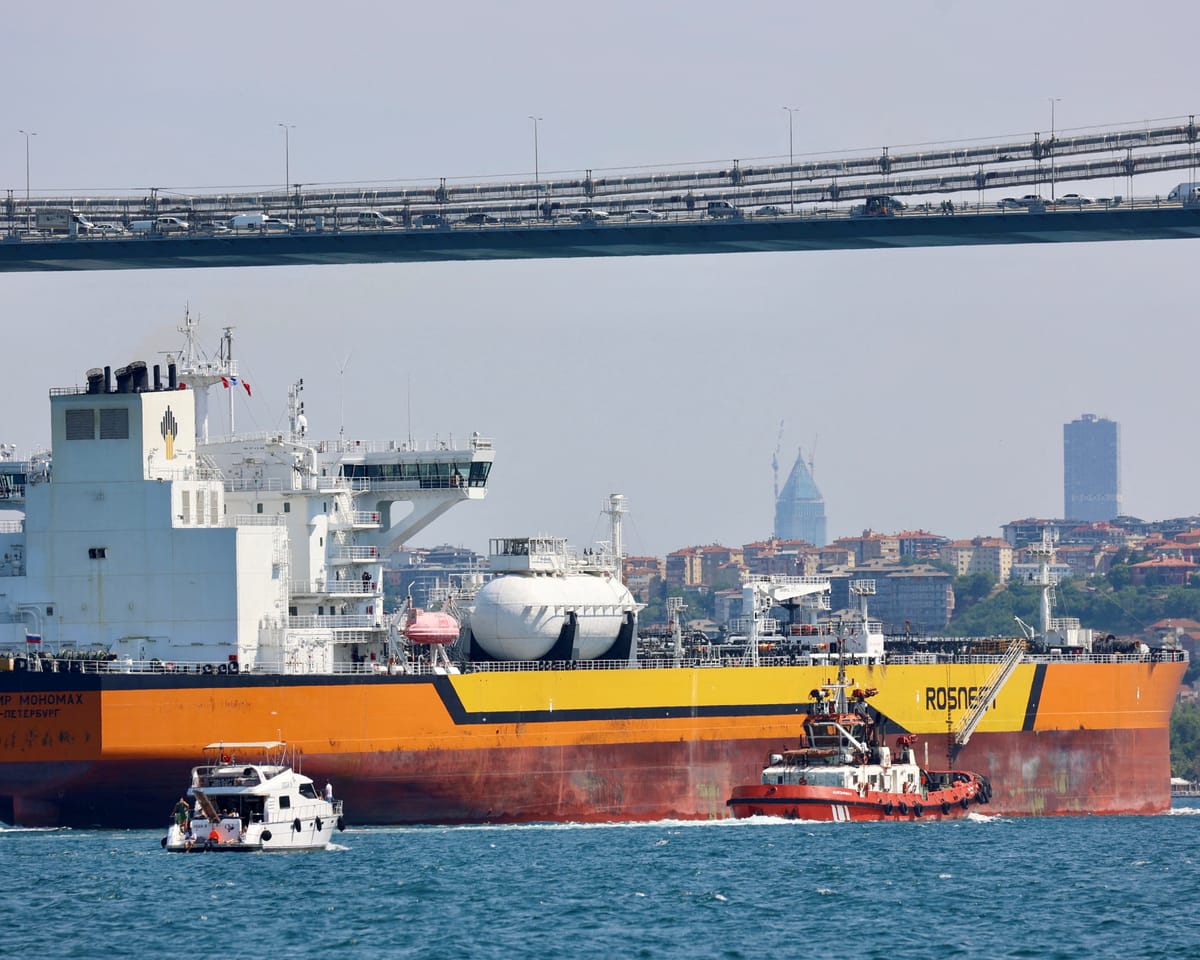
Donald Trump’s efforts to mediate peace in Ukraine may hinge on one critical issue: can the U.S. leader persuade nations to reduce their reliance on Russia’s energy exports?
Recently, Trump introduced sanctions against two of Russia’s biggest oil firms, Rosneft and Lukoil, aiming to weaken Moscow’s financial capacity to sustain its military operations.
Tom Keatinge, founding director of the Centre for Finance and Security (CFS) at the defense research group Rusi, remarked: “The U.S. has achieved more in a single day than the EU has in half a year. Trump is vocal about what others avoid saying openly. For a long time, there have been calls for him to enforce strict sanctions—this could be a turning point.”
These measures mean buyers of Russian oil risk exclusion from the dollar-dominated financial system. India and China, which became the top importers of Russian oil and gas after the Ukraine invasion over three and a half years ago, could face major disruptions.
Financial Pressure
The effects were immediate. Oil prices surged by 6%, and reports indicated that shipments to India’s largest refineries—Russia’s biggest crude buyer—and to China’s major state-owned energy firms were halted.
Luke Wickenden, an analyst at the Centre for Research on Energy and Clean Air (Crea), noted that a sharp drop in Asian energy imports would severely impact Moscow’s earnings.
“Between January and September this year, 86% of Russia’s crude exports—including pipeline deliveries—went to China and India. Losing these markets could cost Russia around $7.4 billion in monthly revenue, with roughly $3.6 billion in monthly tax income directly funding military efforts,” Wickenden said.
“There’s a slight chance for change. In September, Indian state refineries reduced Russian crude imports by 38% from the previous month, hitting the lowest level since May 2022. If India alone slashed its Russian oil purchases, Moscow could lose about $1.6 billion in tax revenue each month.”
Russia’s monthly energy earnings dropped by 4% last month, the lowest since the full-scale invasion, now half of what they were in September 2022.
Despite the decline, revenue remains steady due to continued purchases from Asia, Eastern Europe, and seaborne liquefied natural gas (LNG) shipments to the EU. Russia is also believed to export millions of crude barrels using “shadow tankers”—older ships deployed to bypass Western restrictions.
Trump’s latest move followed lukewarm reactions to his calls for India and China to halt Russian energy imports or face consequences.
Read next

US Postal Service faces cash shortage by Feb 2027, agency chief warns
The United States Postal Service faces a cash shortfall within the next twelve months unless Congress removes the borrowing limit imposed on the agency, the postmaster general warned.
Speaking to the Associated Press, David Steiner said the service – which funds its operations through stamps and fees rather than tax revenue

UniCredit launches aggressive bid for Commerzbank as European takeover war intensifies
Two major European banks have entered a €35 billion (£30 billion) takeover contest after Italy’s UniCredit intensified its long‑standing bid for German lender Commerzbank, despite firm resistance from the German government.
UniCredit initially acquired a 9 % stake in Commerzbank in September 2024 and has since increased its holding
IEA weighs tapping additional oil reserves amid Iran conflict driving up prices
The international energy regulator is weighing another release of emergency crude reserves into the world market to temper climbing oil prices, after cautioning that market recovery will be slow following the ongoing strait of Hormuz crisis.
Fatih Birol, chief of the International Energy Agency, noted that member nations still hold